 how-to
How to Tell If Solar Panels Are Dirty: 7 Signs to Check
Table of Contents
- Start With Your Monitoring Data, Not the Roof
- How to Check Solar Panel Output Against Expected Production
- 7 Signs Solar Panels Need Cleaning
- How to Inspect Panels Safely From the Ground
- How Much Output Soiling Actually Costs You
- How Often Should Solar Panels Be Cleaned?
- How to Clean Solar Panels Yourself (and When Not To)
- Frequently Asked Questions
Last Updated: October 20, 2026
Start With Your Monitoring Data, Not the Roof
Most homeowners climb a ladder before they check a single number, but knowing how to tell if solar panels are dirty starts with data.
Solar panel soiling is the buildup of dust, pollen, bird droppings, and other debris on the glass surface of your modules.
A dirty array and a failing inverter can produce the same symptom. One needs a wash. The other needs a technician.
Below, we walk through the exact checks we recommend, in order, starting with the numbers.
How to Check Solar Panel Output Against Expected Production
Comparing actual output to expected production is the fastest way to spot soiling. Your inverter or monitoring app records daily, weekly, and monthly kilowatt-hour totals. Your installer's commissioning report lists what the system should produce in clear conditions.
Pull both numbers for the same period and compare them. A gap of a few percent is normal. A steady, widening gap over several weeks points to a surface problem.
Reading Daily and Weekly Trends in Your Monitoring App
Daily numbers bounce around with clouds and heat. Weekly and monthly trends tell the real story.
Look for a smooth, gradual decline in production on clear days. That slow slide is the classic soiling signature. A sudden cliff usually means equipment, not dirt.
- Check the same hour each day for a fair comparison
- Note clear-sky days only, and skip cloudy ones
- Compare this month to the same month last year
- Watch for one panel or string lagging the others
Ruling Out Shading, Weather, and Equipment Faults
Before you blame dirt, rule out the other suspects. A new tree branch, a fallen leaf pile, or a failed optimizer can mimic soiling.
The U.S. Department of Energy solar energy basics explains how shading on even one cell can drag down a whole string.
Then check the inverter for error codes. A dirty panel does not throw a fault code. A tripped inverter does.
7 Signs Solar Panels Need Cleaning
Here are the seven signs we check on every inspection, in the order that saves you the most time.
- A slow output decline on clear days over several weeks
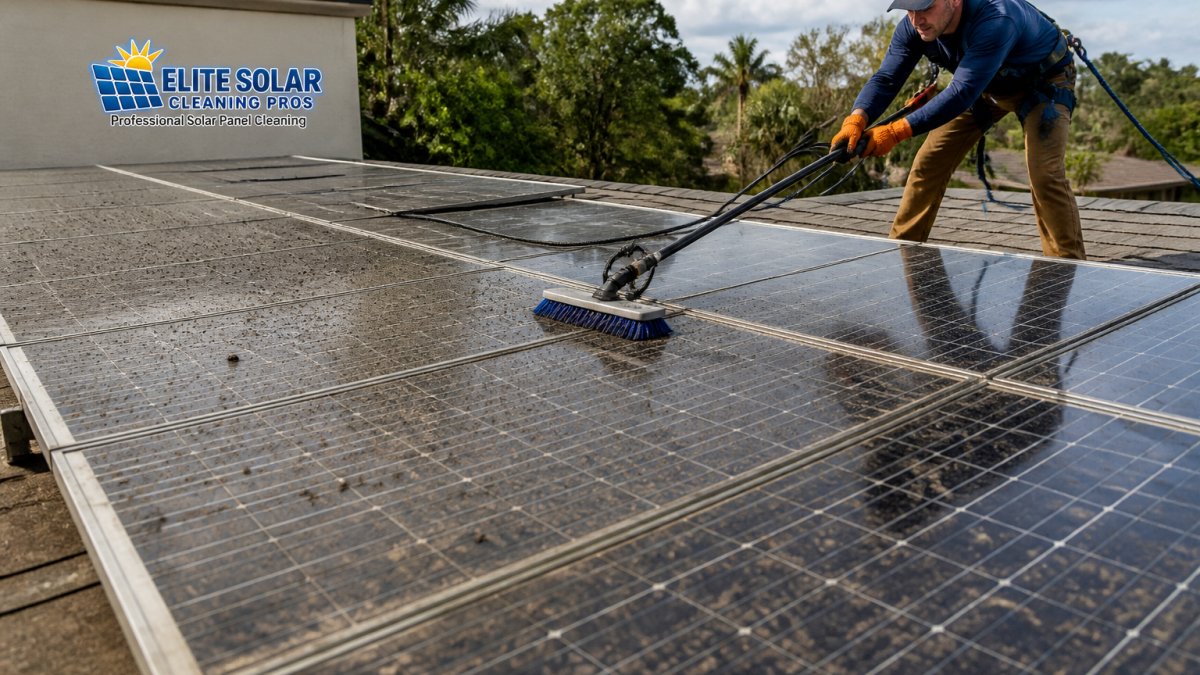
- Visible dust film that dulls the glass to a flat gray
- Yellow pollen streaks after spring blooms
- White water spots from hard-water sprinklers or rain
- Bird droppings as dark, crusty splats
- Leaf and debris piles along the lower frame edge
- One panel or string producing less than its neighbors
If two or more of these show up together, soiling is almost certain.
What Each Type of Residue Looks Like
Different debris leaves different marks, and each one tells you something.
- Dust and dirt: an even, dull haze across the whole array
- Pollen: fine yellow powder, often in streaks near the top edge
- Bird droppings: dark, chalky, or crusty spots that resist light rain
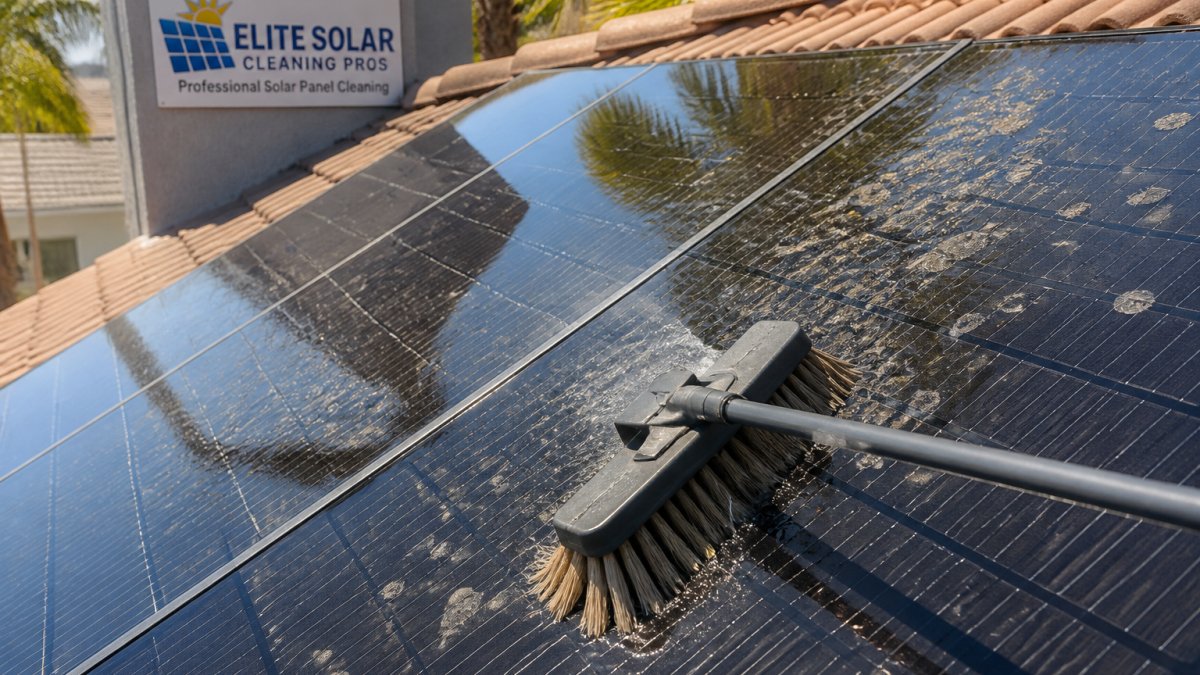
- Water spots: round white rings where droplets dried in place
Knowing the residue type helps you pick the right cleaning method instead of scrubbing everything the same way.
How to Inspect Panels Safely From the Ground
You can confirm most soiling without ever touching your roof. Stand back on the lawn in bright, angled light, ideally morning or late afternoon when the sun rakes across the glass.
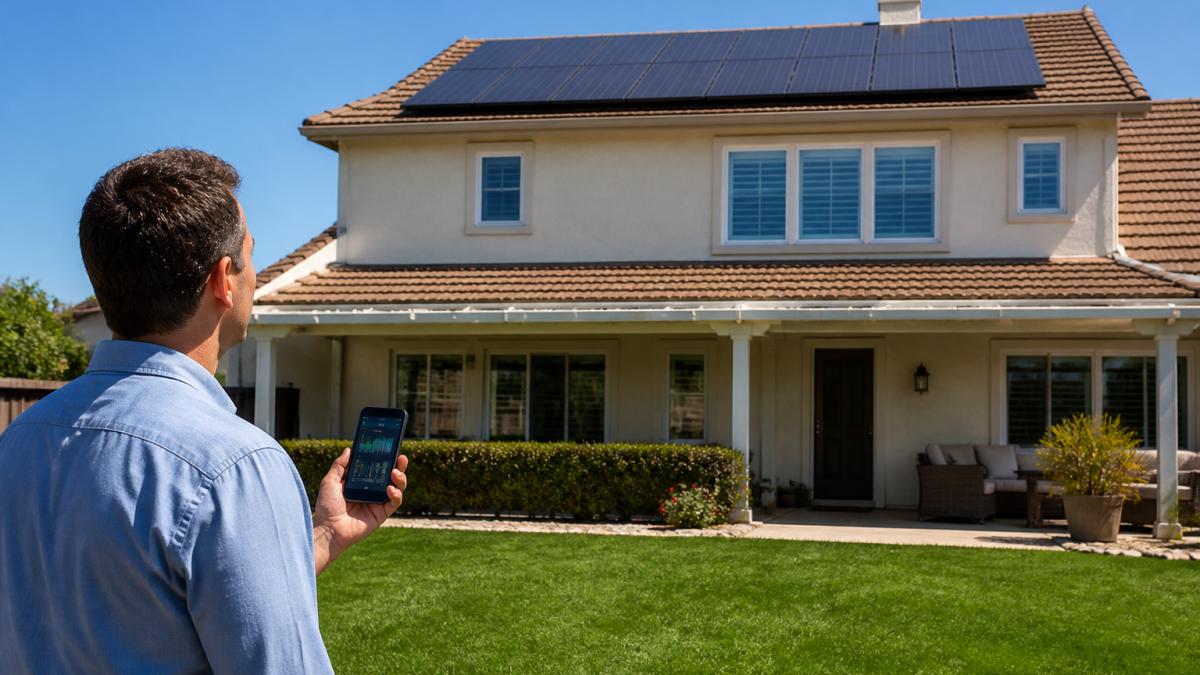
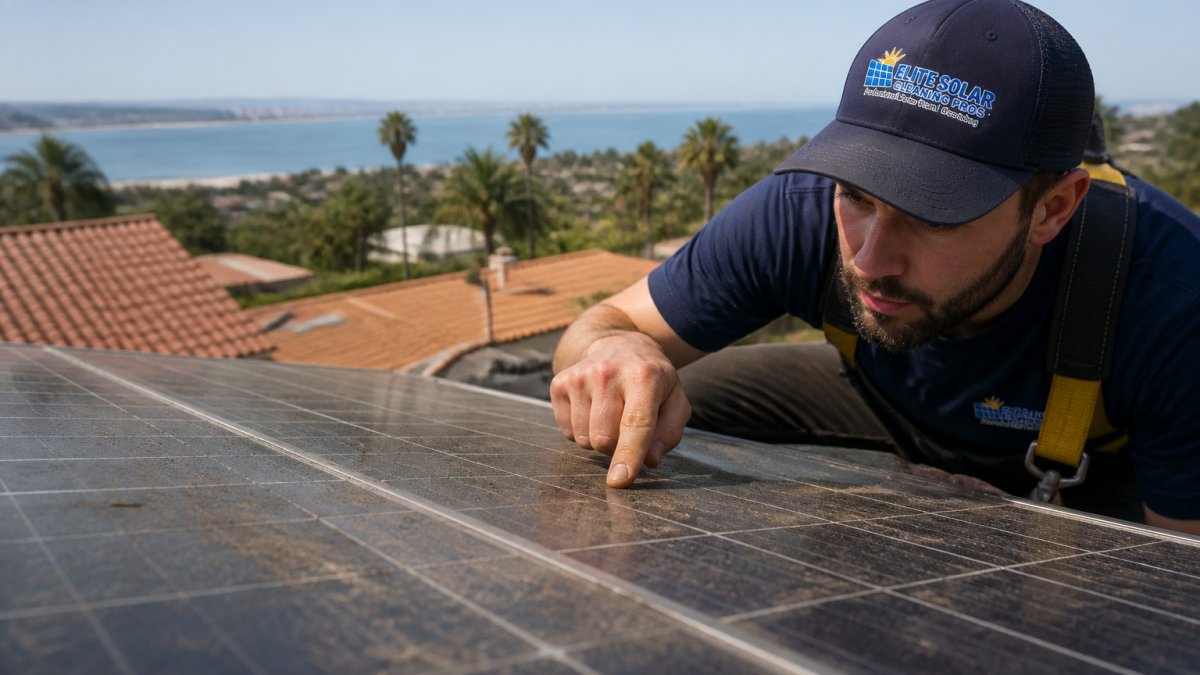
Use binoculars or your phone's zoom to scan each row. Look for the residue patterns above. Check the lower edges where debris collects.
Walk the full perimeter. One dirty corner can drag down a whole string.
If you cannot see the array clearly from the ground, that is your signal to call a professional rather than grab a ladder.
How Much Output Soiling Actually Costs You
Soiling losses are real, but they are rarely catastrophic, and the honest way to size them is to isolate them from everything else that moves your production number. Most practitioners find that a lightly soiled residential array loses a modest slice of production, and that the loss climbs slowly during dry, dusty stretches rather than appearing overnight. The mistake is treating every dip in your app as a soiling dollar figure.
Building a Like-for-Like Comparison
To attribute output loss to dirt, you need two production periods that are otherwise comparable. Use this sequence:
- Pick clear-sky days only. Filter out cloudy, rainy, and hazy days so weather is not doing the work for you.
- Match the season. Compare this week to the same week last year, or to a nearby week with similar sun angle and day length.
- Normalize for temperature. Panels lose efficiency as they heat up, so a hot July afternoon can look like soiling when it is really thermal derating. Compare similar-temperature days, or note the temperature difference before you draw a conclusion.
- Check the time window. Compare the same hours of the day, not a full day against a partial one.
- Confirm the system is healthy. A clean inverter with no fault codes and no new shading sources keeps equipment out of the comparison.
The remaining gap between expected and actual production, on matched days, is your best estimate of soiling loss. Multiply that gap in kilowatt-hours by your electric rate to translate it into dollars. If your rate is $0.16 per kWh and you estimate a 40 kWh shortfall over a matched period, that is about $6.40 of lost value for that window, small on its own, but it compounds across weeks of buildup.
Why One Number Does Not Fit Every Roof
The cost depends on your local environment. Homes near farmland, highways, or wildfire zones see faster buildup than homes in clean coastal air. Bird-heavy areas and homes with sprinkler overspray collect grime faster.
A common pattern is a slow, steady loss through a dry season, followed by a step back up after a cleaning. That step is the cleanest evidence you will get, because it holds weather and season roughly constant on either side of the wash.
The Cost Side of the Ledger
Weigh the lost production against what cleaning costs. A DIY wash with a water-fed pole and plain water is nearly free in materials. A professional cleaning is a service expense, so the question is whether restored output and avoided long-term staining justify it. For most homes, the case for cleaning is strongest when monitoring shows a sustained gap and visible residue is confirmed from the ground, not when a single bad day spooks you into booking service.
How Often Should Solar Panels Be Cleaned?
There is no single schedule that fits every home, and any article that hands you a fixed number is guessing about your roof. Cleaning frequency depends on where you live, what surrounds your property, how fast your output drifts, and what kind of residue lands on the glass.
Use Monitoring Trends as the Trigger
Treat your production data as the schedule, not the calendar. When output on matched clear-sky days drops noticeably and stays down after you have ruled out weather, shading, and inverter faults, it is time to clean. A common pattern is an annual cleaning, with an extra wash in dry, dusty seasons or after heavy pollen. Homes near fields, construction, or busy roads often need more frequent service.
Why Rain Is Often Not Enough
Rain helps, but it is not a substitute for cleaning, and the reason is mechanical rather than mysterious. A light rain does not have the volume or angle to sheet debris off the glass; instead it wets the dust and lets it dry into streaks. Sticky deposits, pollen, bird droppings, tree sap, and hard-water minerals, bond to the surface and are not dissolved by ordinary rainfall.
Match the Schedule to the Residue
Different residues behave differently, and that changes how often you need to act:
- Dust and dirt: an even, dull haze that builds slowly; often the easiest to rinse and the slowest to cost you output.
- Pollen: fine yellow powder that arrives in a short seasonal burst and sticks; a spring wash usually pays for itself.
- Bird droppings: dark, chalky, or crusty spots that resist light rain and can etch glass if left through hot weather.
- Water spots: round white rings from hard-water sprinklers or drying droplets; these are mineral deposits and often need deionized water to lift cleanly.
Weather and Location Factors
Dry, dusty stretches accelerate buildup. Coastal air is generally cleaner but can carry salt film. Wildfire smoke seasons leave ash that behaves differently from ordinary dust. Homes downwind of farmland, gravel roads, or construction see faster soiling than homes in clean suburban air. Bird-heavy areas and homes with sprinkler overspray collect grime faster than either.
A Practical Default
If you want a starting point rather than a rule, inspect from the ground each season and clean when monitoring shows a sustained gap plus visible residue. That approach beats a fixed calendar because it responds to your actual roof instead of an average one.
How to Clean Solar Panels Yourself (and When Not To)
You can clean your own panels if they are safely reachable from the ground and your installer allows it. Here is the safe sequence.
- Turn off the system if your manual recommends it before washing
- Work from the ground with a soft brush or water-fed pole
- Rinse first to lift loose dust and grit
- Wash with plain water and a soft, non-abrasive tool
- Rinse again to prevent spotting
- Never use hard water, soaps, or abrasive pads
- Do it early morning or evening when panels are cool
Skip the DIY route when panels are high, steep, or hard to reach, or when your roof has loose fittings or cracks.
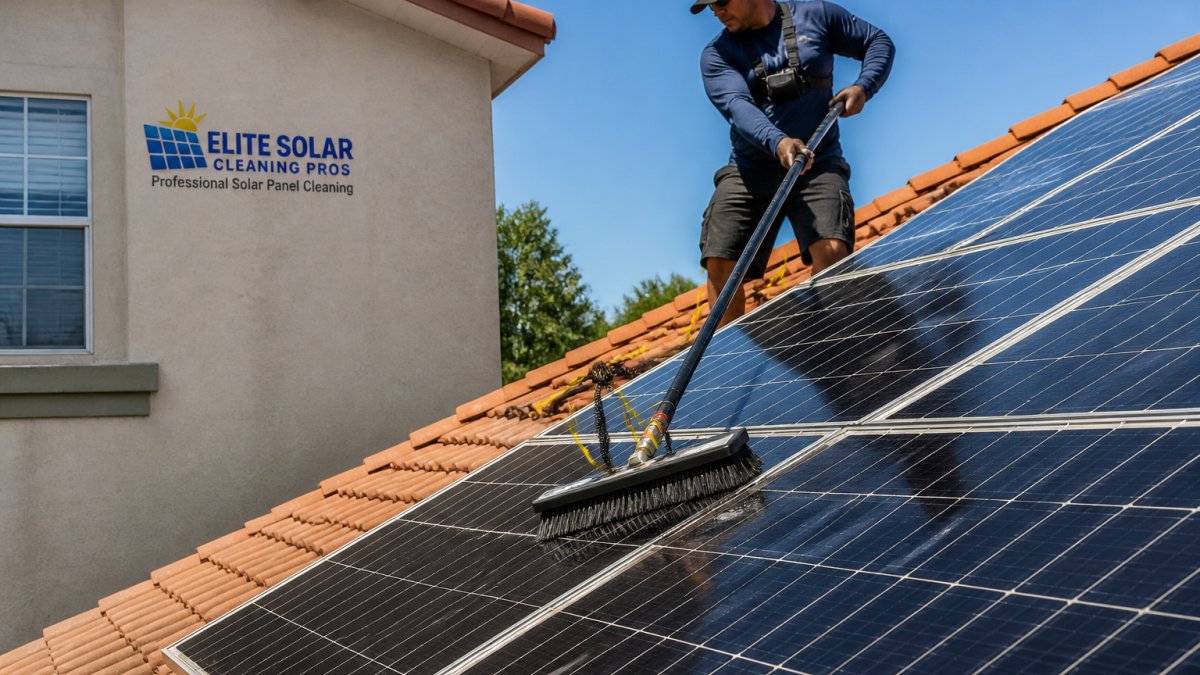
Elite Solar Cleaning Pros uses eco-friendly deionized water cleaning, which lifts grime without harsh chemicals or abrasive scrubbing.
Frequently Asked Questions
How can you tell if solar panels are dirty without getting on the roof?
Compare your monitoring app's daily production to the same period in prior weeks and to nearby sunny days. A steady drop of 5% or more with no weather or equipment explanation points to soiling. From the ground, look for dull patches, visible dust films, bird droppings, or pollen streaks on the panel surface. If your inverter and monitoring data look normal but output lags, dirt is the likely cause. A professional inspection confirms it without roof access risk.
Can dirty solar panels cause a noticeable drop in energy production?
Yes. Heavy soiling from dust, pollen, bird droppings, and ash blocks sunlight before it reaches the cells, and the loss compounds across a string because one shaded or coated panel drags down the group. In dry seasons with little rainfall, soiling losses build up quickly. Cleaning restores output, and professional DI water cleaning can bring back a meaningful share of lost production. If your bills crept up while weather stayed clear, soiling is worth ruling out first.
How often should solar panels be cleaned?
Most homes benefit from cleaning every 6 to 12 months, but local conditions decide the schedule. Dry seasons with dust and pollen, nearby trees, bird activity, and agricultural or wildfire ash push you toward the shorter end. Rain helps but rarely removes baked-on grime, water spots, or droppings. Track output between cleanings: if production falls noticeably and stays down after a clear week, move your next cleaning up.
Is it safe to clean solar panels yourself?
Ground-level rinsing with a garden hose is safe. Roof work is a different matter: falls are a leading cause of home injury, and walking on panels can crack glass or void warranties. If you clean yourself, use soft brushes, plain water or a mild soap, and never abrasive pads or pressure washers. For anything beyond light rinsing, or if panels sit on a steep or high roof, hire a licensed and insured professional.
Dirty panels quietly drain the savings you bought your system for. If your monitoring data shows a slow decline and you have spotted dust, pollen, or droppings from the ground, it is time to act. Elite Solar Cleaning Pros offers eco-friendly DI water cleaning, licensed and insured technicians, and service designed to restore lost output and protect your panels. Get a free quote from Elite Solar Cleaning Pros and put your system back to peak performance.