 how-to
Benefits of Deionized Water Solar Cleaning: A How-To
Table of Contents
- Why Dirt Costs You Money and Why Deionized Water Solar Cleaning Pays Off
- Deionized Water vs. Tap Water for Solar Panels
- How to Clean Solar Panels Safely With Deionized Water
- Solar Panel Cleaning Tools That Protect the Glass
- How Often to Clean Solar Panels (and When Rain Is Enough)
- Warranty, Safety, and When Not to Clean Panels Yourself
- Conclusion: Is Deionized Water Cleaning Worth It?
- Frequently Asked Questions
Last Updated: October 12, 2026
Why Dirt Costs You Money and Why Deionized Water Solar Cleaning Pays Off
Dust, pollen, ash, and bird droppings block sunlight before it ever reaches your panels. That lost light becomes lost power, and lost power shows up on your utility bill.
Deionized water solar cleaning solves two problems at once. It removes the dirt, and it leaves nothing behind.
What Actually Lands on Your Panels
Solar panels sit outside all day, every day. That means they collect whatever the air carries:
- Dust and soil blown up from roads and open ground
- Pollen during spring blooms
- Ash during fire season
- Bird droppings, which are sticky and block light hard
Each layer cuts how much sunlight reaches the cells. Thin films hurt a little. Thick, baked-on grime hurts a lot.
The Real Benefits: More Output, Fewer Problems
The payoff from clean panels comes in three forms. First, more energy output, because clear glass lets more light through. Second, lower electric bills, since your system covers more of your usage.
Elite Solar Cleaning Pros uses eco-friendly DI water methods to restore up to 30% of your energy output. That is the difference between a system working at its best and one working at a fraction of it.
Deionized Water vs. Tap Water for Solar Panels
Tap water can clean a panel, but it rarely leaves it clean. The minerals in tap water stay on the glass after the water evaporates, and those minerals become the new dirt. Deionized water contains almost no dissolved minerals. It lifts dirt, carries it away, and dries without a trace, wash and rinse in one pass, with no residue to wipe off later.
How Deionization Actually Works
Two resin types do the work. Cation resin swaps positively charged ions like calcium, magnesium, and sodium for hydrogen ions.
Why does that matter on glass? Water spots form when dissolved solids stay behind after water dries. Remove the solids, and spots cannot form.
One clarification worth making: deionized water does not chemically clean panels. It is not a detergent and it does not dissolve baked-on grime on contact.
Measuring Water Quality: TDS and Conductivity
You cannot tell whether water is truly mineral-free by looking at it. Two measurements tell you what you need to know:
- Total dissolved solids (TDS), reported in parts per million (ppm). Tap water commonly runs anywhere from about 50 ppm in soft municipal supplies to well over 400 ppm in hard-water regions. For spot-free rinsing, most window and solar cleaning practitioners aim for water under 10 ppm, and often under 5 ppm.
- Conductivity, measured in microsiemens per centimeter (µS/cm). It is essentially the electrical version of TDS, since dissolved ions carry current. Pure water is a poor conductor; the more ions present, the higher the reading. A handheld TDS/conductivity meter costs very little and is the single most useful tool for anyone running a DI rinse.
If your meter reads above your target, the water is not ready for a final rinse. That is your signal to check the resin.
Recognizing Exhausted Resin
DI resin does not last forever. Each ion it swaps out uses up capacity, and eventually the beads are saturated. When that happens, TDS climbs, sometimes gradually, sometimes quickly. A few practical signs:
- Your inline or handheld meter shows rising ppm even though nothing else changed.
- The resin beads change color. Many resins are color-indicating and shift from a dark tone to a lighter one as they exhaust.
- Spotting returns on glass that used to dry clear.
Resin can be replaced as cartridges or recharged, depending on the system. For a residential array cleaned a few times a year, a small cartridge or cart-based DI unit is usually enough. For frequent commercial work, a larger tank or a dual-bed system makes more sense.
Distilled, Soft, Hard, and Pure Water Compared
Not all "clean" water is equal. Here is how the common options stack up for panel washing:
| Water Type | Dissolved Minerals | Leaves Spots? | Best For |
|---|---|---|---|
| Hard water | High | Yes, heavily | Nothing on glass |
| Soft water | Lower, but present | Sometimes | Indoor use |
| Distilled water | Very low | Rarely | Small spot cleaning |
| Deionized water | Near zero | No | Full panel washing |
| Pure water | Near zero | No | Same as deionized |
Soft water still carries sodium. Distilled water works but costs more per gallon at scale. For a whole array, deionized or pure water is the practical choice.
How to Clean Solar Panels Safely With Deionized Water
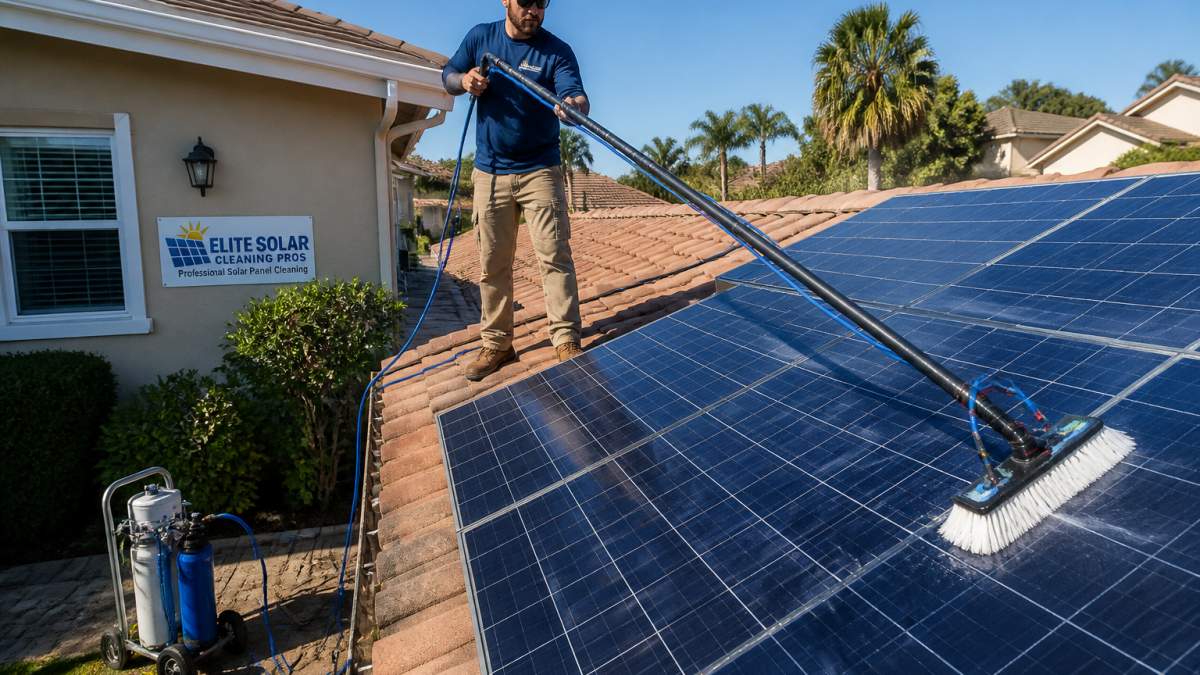
The safe method is simple: rinse first, scrub gently, rinse again, and let the glass air-dry. Never scrub dry glass, and never use abrasive pads.
What You'll Need Before You Start
Gather these before you climb anything:
- Deionized or pure water supply
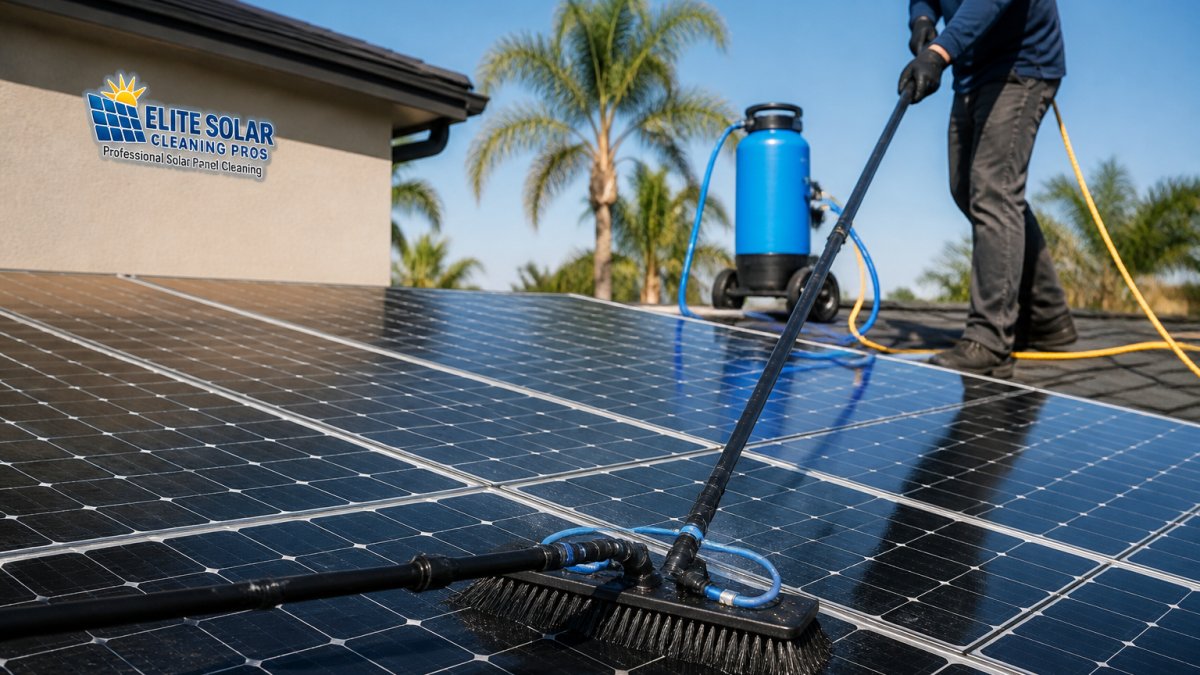
- A water-fed pole with a soft brush head
- A garden hose or pump for rinse pressure
- Soft sponges for spot work
Step-by-Step: A Safe Deionized-Water Cleaning Sequence
- Shut down and verify. If your inverter has a rapid shutdown or DC disconnect, follow the manufacturer's instructions before working near the array. Confirm the system is in a safe state. Never work on panels with exposed or damaged wiring.
- Work in the right window. Clean early morning or late afternoon when the glass is cool. Hot glass plus cold water can stress the surface, and water dries too fast to rinse clean.
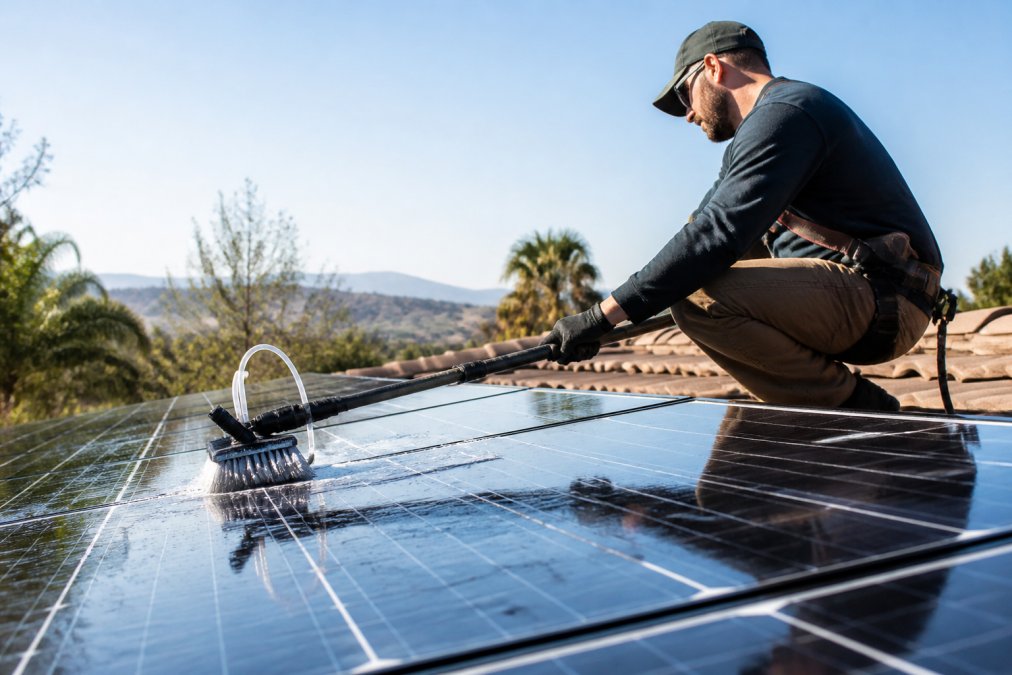
- Pre-rinse with DI water. Use the water-fed pole to flood the panel from the top down. This loosens dust and pollen and pre-wets the glass so the brush glides instead of dragging grit.
- Agitate gently. With a soft brush, work in overlapping passes. Let the bristles do the work, do not press. For stubborn spots like bird droppings, soften them with water first, then lift them with a soft sponge. Never scrape.
- Rinse top-down with DI water. Start at the highest point and let water carry debris down and off the array. This is the step that determines whether you get a spot-free finish.
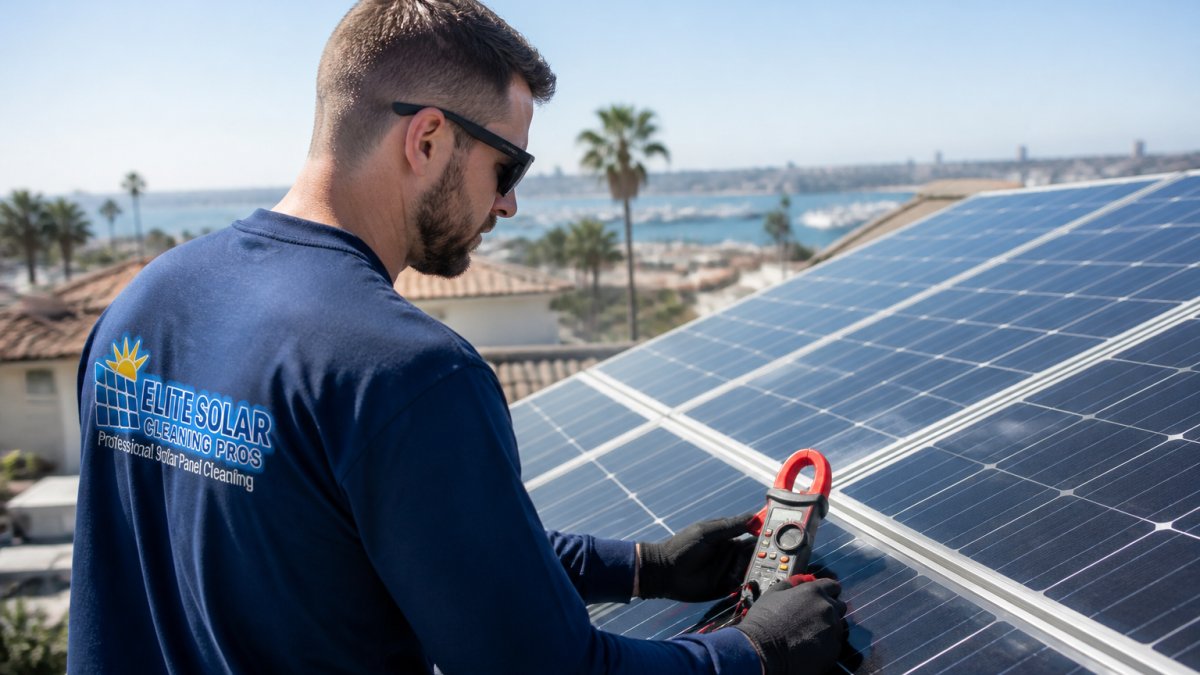
- Check the meter before the final rinse. If TDS has climbed above your target, stop and service the resin before continuing. A final rinse with exhausted resin undoes the whole job.
- Let it air-dry. DI water dries clear on its own. Wiping introduces lint and, on hot glass, can leave streaks.
- Inspect and document. Look for cracked glass, loose frames, or damaged wiring. Note anything unusual and stop if you see it.
Common Mistakes That Damage Panels or Waste Water
A common mistake is washing in full sun. Hot glass plus cold water can stress the surface, and water dries too fast to rinse clean. Wash early morning or late afternoon instead.
Another mistake is using hard tap water for the final rinse. You will undo an hour of work in ten seconds. Always finish with deionized water.
Other frequent errors:
- Scrubbing dry glass. Dry grit acts like sandpaper on the anti-reflective coating.
- Using a pressure washer. High pressure can force water past frame seals and damage the panel. Most manufacturers warn against it.
- Skipping the pre-rinse. Going straight to the brush drags abrasive dust across the glass.
- Cleaning when the array is hot. Thermal shock and fast drying both work against you.
- Ignoring the meter. Rinsing with exhausted resin is the most common cause of a streaky finish.
When to Stop and Call a Professional
Some conditions mean the job is not a DIY task:
- The roof is steep, fragile, or above two stories.
- You see cracked glass, loose wiring, or signs of water intrusion.
- The array is on a commercial building or under a warranty that specifies approved service.
- Local water restrictions limit outdoor use, check before you plan a wash.
Solar Panel Cleaning Tools That Protect the Glass
The right tools matter more than effort. Soft bristles lift dirt without scratching. Hard bristles and scouring pads leave micro-scratches that dull the glass over time.
Your core kit should include:
- A water-fed pole with soft nylon or boar's-hair brush
- A microfiber cloth for edges and frames
- A gentle, non-abrasive cleaner if needed
- A deionization cart or filter for the rinse
Skip anything labeled abrasive, and skip metal scrapers entirely. The glass surface and its anti-reflective coating are thin. Protect them.
How Often to Clean Solar Panels (and When Rain Is Enough)
Most homes need a cleaning two to four times a year. Homes near the coast, under trees, or in dusty areas often need more.
Rain helps, but only sometimes. A steady, heavy rain can rinse light dust off a tilted array. Light drizzle does not. It mixes with dust and bakes into a film, which is worse than leaving the panel alone.
Warranty, Safety, and When Not to Clean Panels Yourself
Manufacturers expect regular cleaning, but they also expect it done safely. Scratching the glass or forcing water into the frame can affect your warranty coverage. Check your paperwork before you start.
Skip the DIY route if any of these apply:
- Your roof is steep or fragile
- Your array sits above two stories
- Your HOA controls roof access
- You see cracked glass or loose wiring
Elite Solar Cleaning Pros is licensed and insured.
Conclusion: Is Deionized Water Cleaning Worth It?
Deionized water solar cleaning is worth it when you want clean glass without spots, streaks, or mineral buildup. The water does the hard work. You just need the right tools and a safe approach.
If you would rather not climb your own roof, Elite Solar Cleaning Pros handles it for you. Our licensed and insured team uses eco-friendly DI water cleaning and aims to restore up to 30% of your energy output.
Frequently Asked Questions
Why use deionized water to clean solar panels instead of tap water?
Tap water carries dissolved minerals like calcium and magnesium. When it dries on hot glass, those minerals stay behind as spots, film, and residue that block sunlight and cut energy output. Deionized water has had those minerals removed through ion exchange, so it dries clean without leaving anything behind. It also lifts dust, pollen, ash, and bird droppings without soap, which keeps the panel coating intact and avoids chemical runoff onto your roof and landscaping.
Does deionized water leave spots on solar panels?
No. Spotting happens when water evaporates and leaves dissolved solids on the glass. Deionized water is mineral-free, so there is nothing left to deposit. That is the main reason professional crews use it for a final rinse: the panel dries streak-free, and you skip the mineral buildup that slowly dulls the glass surface over months of tap-water washing.
Can you clean solar panels with tap water if you dry them quickly?
You can rinse with tap water in a pinch, but drying fast is harder than it sounds on a hot roof. Water in direct sun can flash dry in under a minute, and any dissolved minerals stay on the glass. If tap water is your only option, rinse in early morning or late afternoon when panels are cool, then squeegee or wipe immediately. For regular maintenance, deionized water removes the timing problem entirely.
How often should solar panels be cleaned?
Most homes need a cleaning every six to twelve months. Dust, pollen, ash, and bird droppings build up faster in dry, dusty, or wildfire-prone areas, so those systems may need attention every three to six months. Rain helps rinse light dust but does not remove baked-on droppings or mineral film. Check your panels after a dry stretch; if you can see a dull haze or visible spots, it is time to clean.