 comparison
DIY vs Professional Solar Cleaning: Which Wins?
Table of Contents
- DIY vs Professional Solar Cleaning: A Quick Comparison
- The Best Way to Clean Solar Panels Safely
- Solar Panel Cleaning Tools: What You Need
- Solar Panel Cleaning Cost: DIY vs Professional
- How Often to Clean Solar Panels
- When to Hire a Professional Solar Cleaning Service
- Frequently Asked Questions
Last Updated: October 7, 2026
DIY vs Professional Solar Cleaning: A Quick Comparison
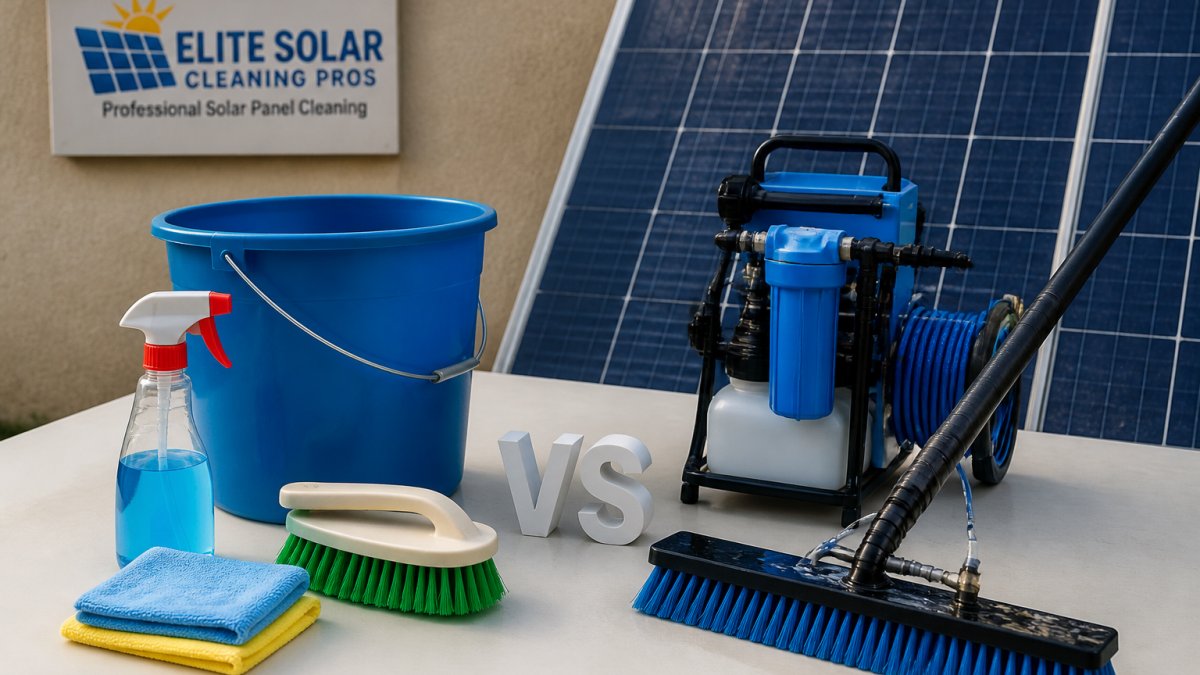
DIY vs professional solar cleaning is a simple trade-off: you save money doing it yourself, but you take on roof access risk and the chance of voiding your panel warranty.
Solar cleaning removes dust, pollen, bird droppings, and mineral deposits from photovoltaic panels to maintain energy production. Uncleaned panels lose output, and the loss compounds as soiling builds up.
The short version: if your panels sit on a single-story roof you can reach from the ground, DIY works fine.
The Best Way to Clean Solar Panels Safely
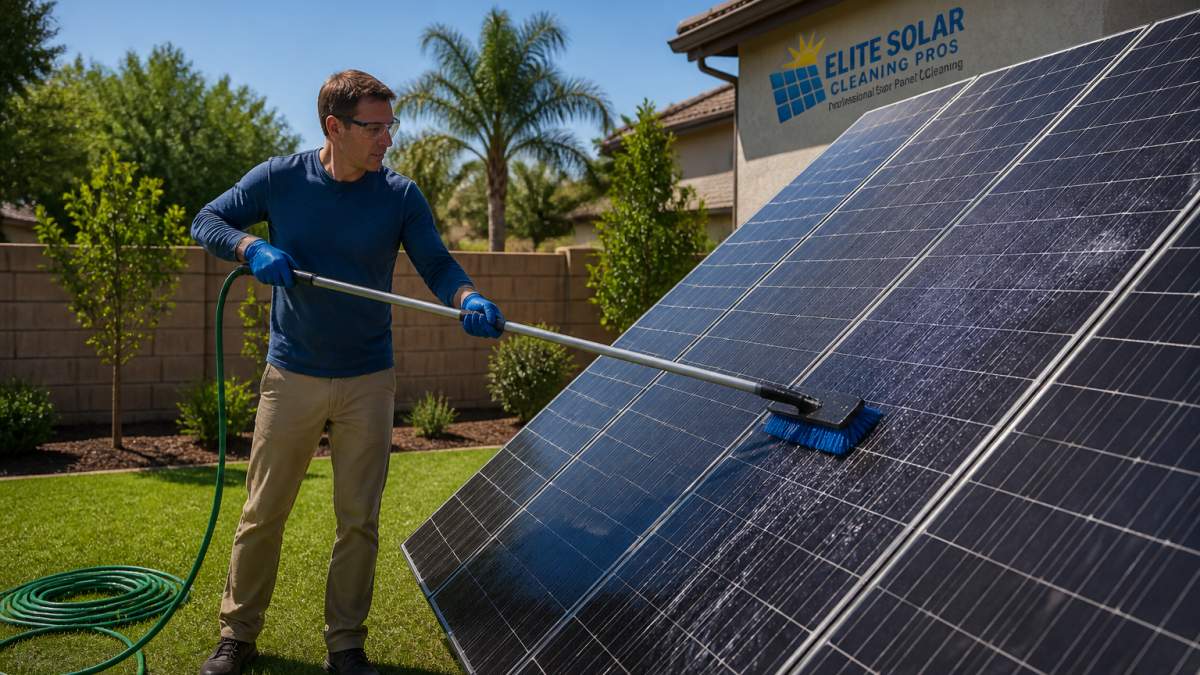
The best way to clean solar panels safely is to stay off the roof entirely.
Ground-mounted arrays are easiest: you walk right up to the panel surface, removing the fall risk completely. Roof-mounted systems are where things get complicated.
Roof Access and Fall Safety
Falls are the biggest reason we tell homeowners to think twice about DIY. A roof pitch that looks gentle from the ground can turn slick within seconds once water hits it.
Before anyone climbs up, three things need to be true:
- The roof pitch is low enough to walk on without a harness
- The roofing material can take foot traffic without cracking
- Someone else is home and knows you are up there
Personal protective equipment matters, but it does not replace judgment. A safety harness only helps if anchored to a rated point, and most residential roofs lack one. Ladder safety means three points of contact, level ground, and a spotter.
Water Quality and Cleaning Methods
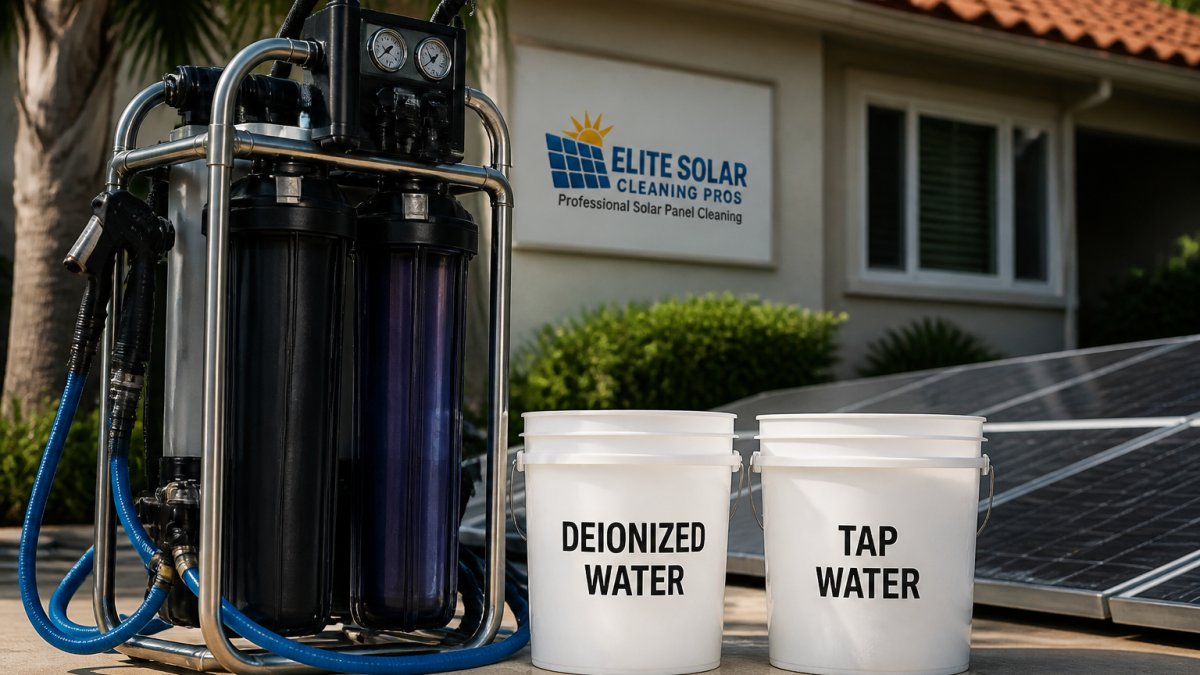
Water quality decides whether your cleaning helps or hurts. Tap water carries dissolved minerals that dry on hot glass as spots and film, the exact soiling you were trying to remove.
Deionized (DI) water solves this: its mineral content is stripped out, so it dries without residue. Many professional services, including ours, use DI water for that reason. If you clean with a garden hose, dry the panels with a soft squeegee or microfiber cloth before the water evaporates.
Two more rules protect the glass coating:
- Never use abrasive pads, scouring powder, or harsh soaps. Soap residue leaves a film that attracts more dust.
- Never spray cold water on hot panels. Thermal shock from a big temperature swing can stress the glass.
Solar Panel Cleaning Tools: What You Need
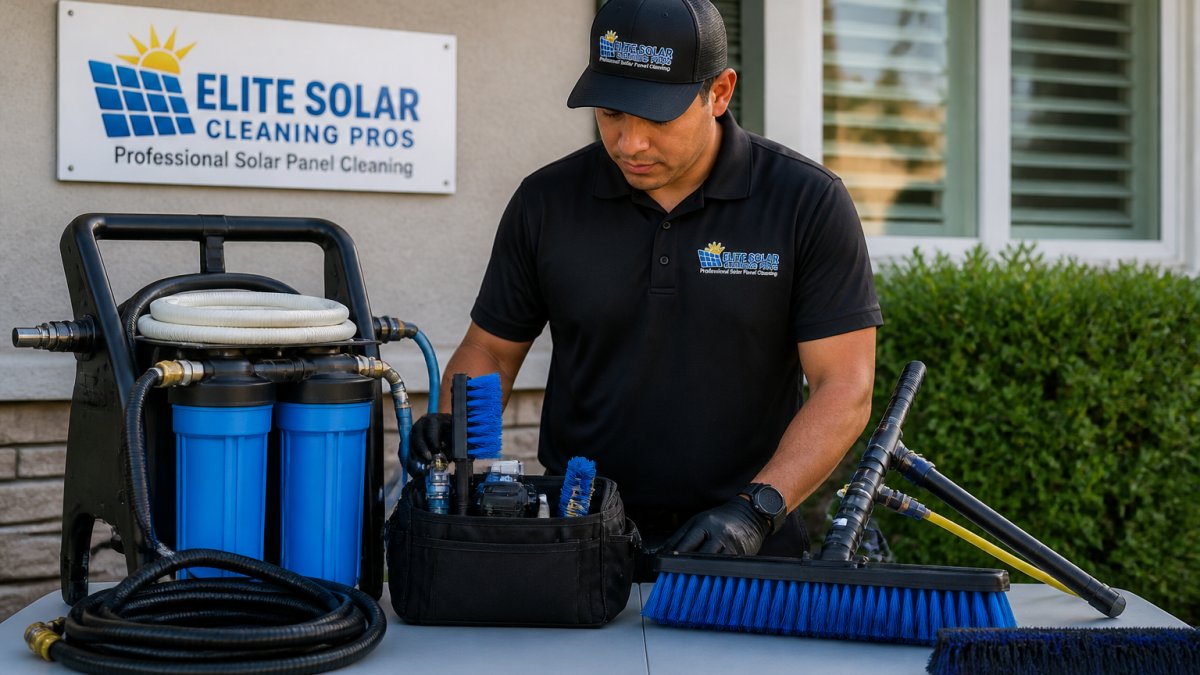
A basic DIY solar panel cleaning kit costs far less than a single professional visit and covers most of what a ground-level job requires, but the tools only work if you can reach the panels safely.
Here is what a practical kit includes:
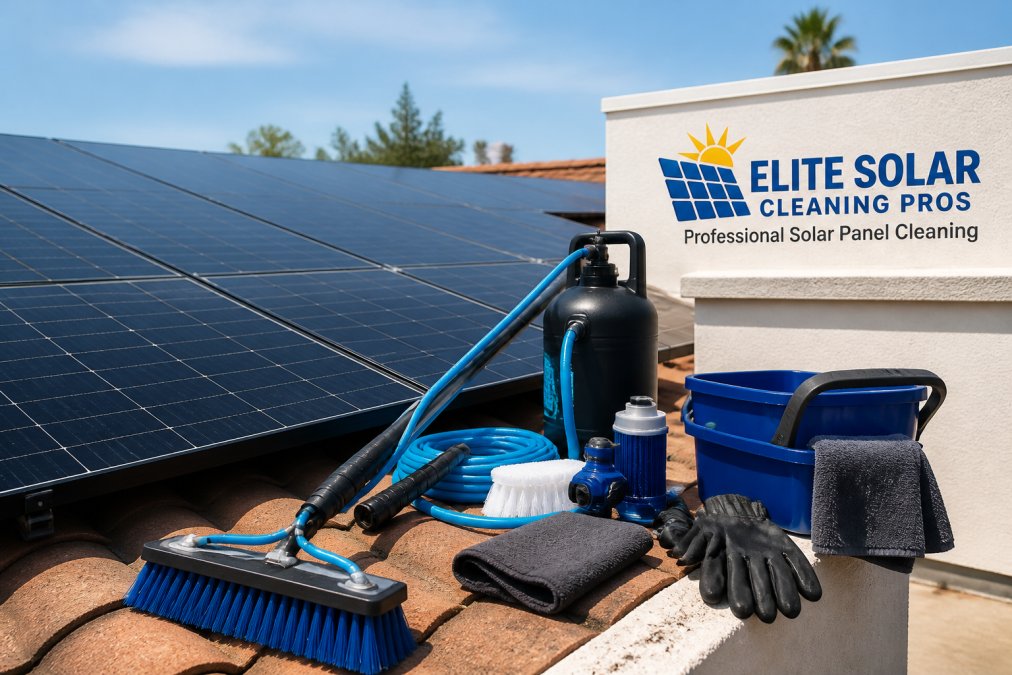
- Soft-bristle brush on a telescoping pole, long enough to reach the array from the ground
- Garden hose with a gentle spray nozzle, or a water-fed pole with a DI cartridge
- Squeegee or microfiber cloths to dry the surface before water spots form
Non-abrasive tools are non-negotiable. A stiff brush or rough sponge scratches the glass coating, and those scratches scatter light instead of letting it through. Once scratched, no cleaning method restores performance.
Solar Panel Cleaning Cost: DIY vs Professional
Professional solar panel cleaning runs higher per visit than a DIY kit, but the DIY number hides the cost of your time and equipment.
The DIY side. A basic kit, telescoping soft-bristle pole, gentle spray nozzle, squeegee, microfiber cloths, gloves, and eye protection, is a one-time purchase in the low hundreds of dollars.
The professional side. Most residential cleaning services price per visit rather than per panel, and the quote moves with three variables: system size, roof access difficulty, and soiling buildup.
| Factor | DIY | Professional |
|---|---|---|
| Upfront cost | Kit purchase (low hundreds; more with a DI water-fed pole) | None |
| Per-visit cost | Your time: roughly 1-3 hours per clean | Service fee, quoted per job |
| Recurring supplies | DI resin replacements, cloths, brush wear | Included in the service fee |
| Safety risk | You carry it | Handled by trained, insured crew |
| Water quality | Tap water unless you buy DI | DI water standard |
| Warranty exposure | Risk of improper-method claims | Documented, method-compliant clean |
| Best for | Ground-mounted, single-story access | Two-story, steep, or tile roofs |
Calculating Your Payback Period
A payback calculation tells you how many months of recovered energy output it takes to cover the cost of cleaning. You need four inputs.
- Current production. Pull your system's recent output from your monitoring app, ideally a clear-sky day so weather is not skewing the number.
- Soiling loss estimate. Compare current output to a clean-panel baseline, a reading captured right after the last cleaning, or your installer's guidance for your region and season.
- Electric rate. Find the per-kWh rate on your utility bill. This is what each recovered kilowatt-hour is worth to you.
- Cleaning cost. For DIY, your time plus supplies used. For professional, the quoted service fee.
Then run the math: recovered output (kWh) × your electric rate = monthly dollar recovery. Divide the cleaning cost by that monthly recovery to get your payback period in months.
That is the honest version of the "restore up to 30% energy output" claim you see in marketing: the gain depends on how dirty the panels were to begin with, and payback depends on your electric rate and service quote.
What Actually Drives the Professional Quote
When you request a quote, expect the provider to ask about system size, roof type and pitch, number of stories, and time since the last cleaning. Those four answers set the labor and equipment needed: a ground-mount array with a hose bib nearby is a short job, while a steep tile roof with a long hose run and heavy mineral spotting is not.
How Often to Clean Solar Panels
Most residential systems need cleaning once or twice a year, more often in dusty, agricultural, or high-pollen areas. Rain helps but does not replace cleaning, light rain often just spreads dust into a film that dries in place.
Your cleaning frequency should track your local conditions:
- Coastal or dusty areas: every four to six months
- Heavy pollen season: an extra clean after the peak
- Bird activity nearby: more often, since droppings are stubborn and shade small areas
Check your manufacturer instructions before setting a schedule. Some specify cleaning intervals or approved methods, and following them protects your warranty coverage.
When to Hire a Professional Solar Cleaning Service
Hire a professional solar cleaning service when roof access is unsafe, when your panels are under warranty, or when the system is large enough that DIY becomes a full weekend. Since "unsafe" and "large enough" are judgment calls, here is a decision path to walk through.
A Decision Path Based on Roof Type, Access, and Layout
Work through these questions in order. The first "yes" that lands you in the professional column is your answer.
1. Can you reach every panel from the ground or a stable, level ladder position?
- Ground-mounted array, or a first-story roof edge reachable with a long pole from standing height: DIY is reasonable.
- Any panel you cannot reach without stepping onto the roof surface: move to question 2.
2. What is your roof pitch and material?
- Low-slope (roughly walkable) asphalt shingle or standing-seam metal, dry conditions, spotter present: DIY is possible with care.
- Steep pitch, tile, slate, wood shake, or fragile roofing: hire out. Foot traffic cracks tile and slate, and repairs cost more than a season of professional cleaning.
3. How many stories up is the array?
- Single story with safe ladder placement: DIY remains on the table.
- Two stories or more: hire out. The fall risk is not worth the savings, and most residential roofs lack a rated harness anchor.
4. Is the array obstructed or irregular?
- Panels shaded by trees, split across roof planes, or mounted on a detached structure: hire out. Reaching them safely takes equipment and technique most homeowners lack.
5. Is the system large or shared?
- Commercial array, HOA-managed system, or a multi-unit property: hire out. You need documentation, insurance, and a paper trail.
6. Are the panels under warranty?
- Yes: check the manufacturer's documentation before anyone touches the glass, and prefer a provider who documents the method used.
If you reached the end of that list still in the DIY column, you have a genuinely safe DIY case. If you hit a professional answer at any step, stop there, the later questions do not override the earlier ones.
Warranty and Manufacturer Guidance
Manufacturer guidance matters here and is more specific than most homeowners expect. Some warranties exclude damage from improper cleaning, and a scratched anti-reflective coating from an abrasive brush can turn a repair claim into a denial.
Before you clean or hire, do three things:
- Find your panel documentation. Check the installation manual and warranty booklet, or download the current version from the manufacturer's site using your panel model number.
- Look for a cleaning clause. Search for "cleaning," "maintenance," and "warranty exclusions." Note any approved methods, prohibited tools, or required intervals.
- Keep a record. Note the date, method, and who did the work. If a warranty claim comes up, that record is your evidence the clean was method-compliant.
Be skeptical of any claim that cleaning automatically preserves your warranty, or that skipping a professional clean automatically voids it. Neither is universally true.
Water Restrictions, Runoff, and Environmental Factors
Water use and runoff are worth checking before you clean, and they can tip a borderline DIY case toward hiring out.
- Drought or watering restrictions. Some utilities and municipalities limit outdoor water use during dry periods. A professional service using a water-fed pole with a DI cartridge often uses less water than a garden hose because the water is applied precisely and does not need rinsing.
- Runoff. Cleaning water carries dust, pollen, and any detergent you used. Avoid letting it run into storm drains, and skip detergents entirely, they leave a film that attracts more dust and can carry residue into runoff.
- Mineral spotting. Hard tap water leaves calcium and magnesium deposits that bake onto hot glass. DI water avoids this, which is one reason professional services standardize on it.
What a Licensed and Insured Crew Actually Covers
This is where a licensed and insured crew earns its fee. If something goes wrong on your roof, a cracked tile, a scratched panel, a fall, the liability sits with them, not you. Ask for proof of licensing and insurance before work begins, and confirm the policy covers roof work, not just general business operations. Elite Solar Cleaning Pros carries licensing and insurance for exactly that reason, and we clean with DI water and non-abrasive tools so the panel surface and coating stay intact.
Safe Alternatives If You Cannot or Should Not Climb
If your array fails the decision path above, you still have options short of hiring a crew:
- Monitor production instead of cleaning on a schedule. Track output against a clear-sky baseline in your monitoring app. A noticeable drop is your signal to act; a flat line means you can wait.
- Use ground-based tools within their limits. A long telescoping pole with a soft brush reaches first-story roof edges and ground-mount arrays. It cannot safely reach a second-story array, and stretching its reach is how people fall.
- Hire for inaccessible arrays. If panels are high, steep, or obstructed, the professional fee is the cost of not getting hurt.
Frequently Asked Questions
Does cleaning your solar panels really make a difference?
Yes, cleaning can restore lost energy output. Dust, pollen, bird droppings, and other debris block sunlight and reduce efficiency. Studies show that dirty panels can lose 15-25% of their output, and in dusty areas, the loss can be even higher. Professional cleaning with deionized water can recover up to 30% of lost output, depending on soiling levels. Regular cleaning ensures your system performs at its best.
What is the best method of cleaning solar panels?
The best method uses deionized water and a soft-bristle brush to avoid scratches and mineral deposits. For roof-mounted systems, a water-fed pole allows cleaning from the ground, reducing fall risk. Never use abrasive tools or high-pressure washers, which can damage the glass coating. If you're unsure, hire a professional who follows manufacturer guidelines and uses non-abrasive tools.
Is it safe to clean solar panels yourself?
It can be safe if you avoid walking on the roof and use a water-fed pole from the ground. However, roof access is the leading cause of fall injuries. If your panels are on a steep roof or you lack proper safety equipment, professional cleaning is safer. Professionals are trained in fall protection and use personal protective equipment, reducing the risk of accidents and panel damage.
How much does professional solar panel cleaning cost?
Pricing for professional solar panel cleaning depends on system size, roof pitch, and location. For an accurate quote, contact a local provider. While DIY may seem cheaper, factor in equipment costs, time, and safety risks. Many homeowners find professional cleaning pays for itself through restored energy output.
Can cleaning solar panels void the warranty?
Improper cleaning can void your warranty if it causes scratches, water damage, or other issues. Manufacturers often specify approved cleaning methods and may require professional service to maintain coverage. Always check your warranty terms before cleaning. Using deionized water and soft brushes, or hiring a licensed professional, helps ensure you don't accidentally void your warranty.