 comparison
Professional Solar Cleaning: Worth It or DIY?
Table of Contents
- How to Decide: DIY vs. Professional Solar Cleaning
- Cost of Professional Solar Panel Cleaning vs. DIY
- Solar Panel Cleaning Safety Precautions You Can't Ignore
- Best Tools for Cleaning Solar Panels: DIY vs. Professional
- The Hidden Risks of DIY Solar Cleaning
- When to Call a Professional Solar Cleaner
- Frequently Asked Questions
Last Updated: September 24, 2026
How to Decide: DIY vs. Professional Solar Cleaning
The question of whether to hire a professional solar cleaner or handle the job yourself comes down to three factors: safety, access, and how much output you're actually losing. This guide from Elite Solar Cleaning Pros breaks down the real trade-offs so you can make a confident call. Solar cleaning is the routine removal of dust, pollen, bird droppings, and other buildup from panel surfaces. In most cases, panels that haven't been cleaned in a year or more are operating well below their rated capacity, and the gap widens in dry, dusty climates.
Below, we'll show you exactly how to weigh the cost, the risks, and the tools involved.
Cost of Professional Solar Panel Cleaning vs. DIY
Professional solar panel cleaning costs more upfront, but the gap narrows once you account for equipment, water, and your own time. A professional visit is typically priced per panel or as a flat service fee, and most providers quote based on system size, roof pitch, and accessibility. DIY costs are lower in cash terms but require a water-fed pole, a soft brush, deionized water or a spot-free rinse system, and safety gear.
| Factor | DIY | Professional |
|---|---|---|
| Upfront cash | Equipment purchase | Per-visit fee |
| Time | Several hours per cleaning | None |
| Safety risk | High on roofs | Handled by insured crew |
| Water spotting | Likely without DI water | Avoided with DI water |
| Warranty risk | Real if done wrong | Covered by provider |
According to SolarReviews' solar panel cleaning guide, the cost-benefit calculation depends heavily on how much output your system is actually losing to soiling. For homeowners in dusty areas, that loss adds up quickly.
Solar Panel Cleaning Safety Precautions You Can't Ignore
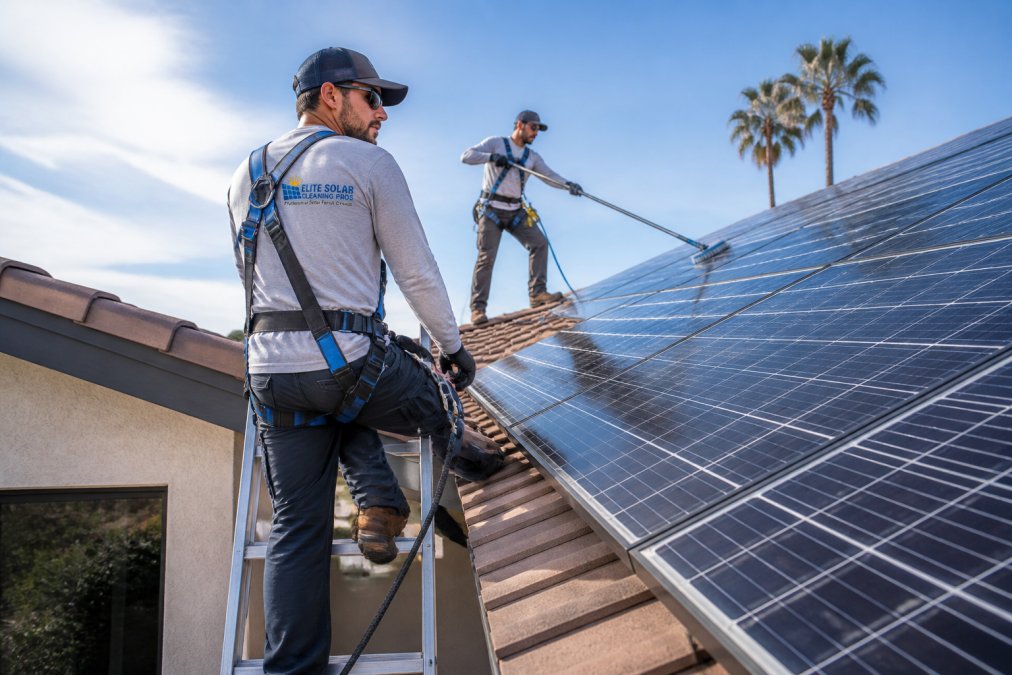
The most important safety rule is simple: never walk on your roof to clean panels unless you have proper fall protection and roof-access training. Falls are the leading cause of serious injury in home maintenance, and wet panels are slippery. Other precautions include shutting down the system if your manufacturer requires it, avoiding cleaning during peak sun when panels are hot, and never using a pressure washer, which can force water past seals.
Additional precautions worth following:
- Wear rubber-soled shoes and non-slip gloves
- Keep both feet on stable ground whenever possible
- Never reach across a panel to clean the far edge
- Avoid metal scrapers or abrasive pads that scratch glass
Best Tools for Cleaning Solar Panels: DIY vs. Professional
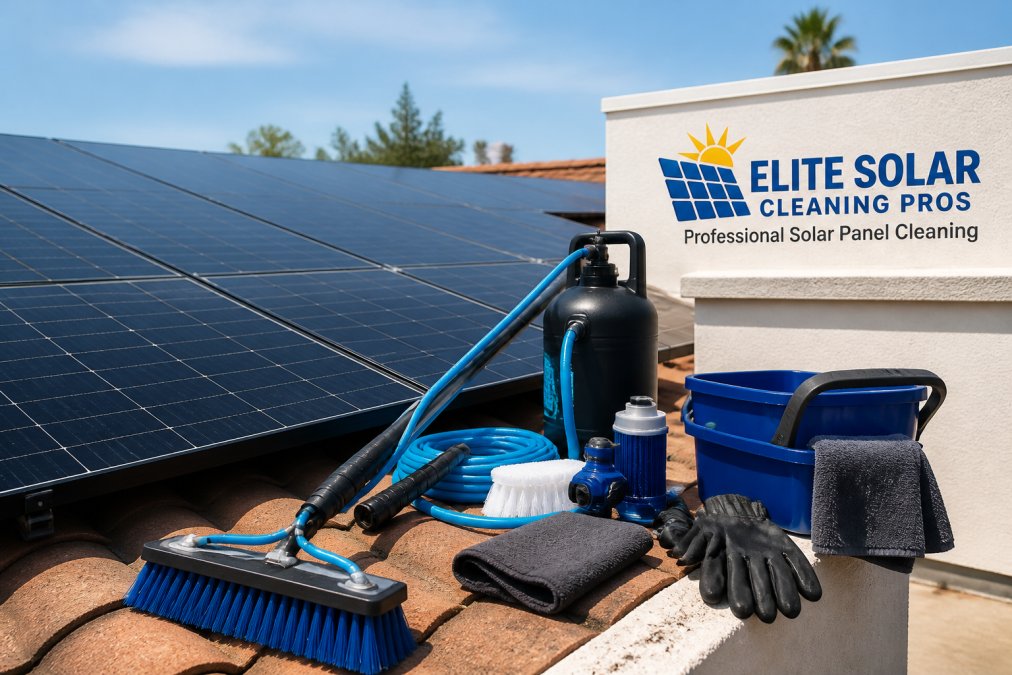
The best tools for cleaning solar panels depend on whether you're working from the ground or the roof. DIY setups usually center on a telescoping water-fed pole with a soft-bristle brush, a garden hose with a spray nozzle, and a squeegee for spot-free drying. Professionals use the same basic tools but add deionized water systems, which leave no mineral residue.
What most guides miss is that the tool matters less than the water. Deionized water is the single biggest difference between a DIY job and a professional one.
The Hidden Risks of DIY Solar Cleaning
The hidden risks of DIY solar cleaning are mostly invisible until they cause a problem: scratched glass, compromised panel seals, voided warranties, and roof damage. A common mistake is using a pressure washer, which can push water behind the frame and into the junction box. Another is scrubbing with abrasive pads, which leaves micro-scratches that trap dirt and reduce output over time.
According to Gardner Energy's solar maintenance guidance, improper cleaning techniques can void manufacturer warranties and damage wiring or panel seals. That's a costly outcome for a job that seemed simple.
When to Call a Professional Solar Cleaner
Call a professional solar cleaner when your panels are roof-mounted, your roof is steep or multi-story, or you've noticed a drop in output that you can't explain. Other triggers include heavy bird activity, nearby construction, and any system where you're not comfortable with the access. Elite Solar Cleaning Pros handles these cases with eco-friendly deionized water cleaning, a licensed and insured crew, and a method designed to restore up to 30% of energy output. For homeowners who want the job done without roof risk or warranty concerns, that's the practical choice.
Frequently Asked Questions
How often should solar panels be cleaned to maintain efficiency?
Most homes need cleaning once or twice a year, but in dusty or high-pollen areas, quarterly may be better. Rain alone often leaves behind mineral spots and grime. Professional solar cleaning removes buildup that can cut output by up to 30%. Check your panels monthly and clean when you see a film or after heavy dust events.
Can cleaning solar panels myself void my manufacturer's warranty?
Yes, if you use harsh chemicals, abrasive tools, or high-pressure water, you risk voiding your warranty. Manufacturers require gentle cleaning with soft brushes and deionized water. Professional solar cleaning services use approved methods that keep your warranty intact. Always check your warranty terms before attempting DIY cleaning.
What are the safety risks of cleaning solar panels on a roof?
Falls are the biggest danger, especially on steep or wet roofs. Electrocution is also possible if you touch live wiring or damaged panels. Many homeowners lack fall protection and proper training. Professional solar cleaning teams are licensed and insured, reducing these risks significantly.
Does rainwater effectively clean solar panels?
Rain helps but doesn't fully clean panels. It leaves behind dust, bird droppings, and mineral spots that reduce efficiency. In fact, light rain can make mud that bakes on. Professional solar cleaning with deionized water removes these residues without streaking, restoring up to 30% of lost energy output.
What equipment do professionals use that DIYers don't?
Professionals use water-fed poles with deionized water and soft-bristle brushes to inspect panels. They also have safety harnesses, roof anchors, and pure water systems that prevent streaks. DIYers often lack these tools, leading to scratches or incomplete cleaning. The best tools for cleaning solar panels are those designed for delicate surfaces.
Weighing DIY against professional solar cleaning comes down to your roof, your comfort level, and how much output you're willing to risk. Elite Solar Cleaning Pros offers eco-friendly DI water cleaning, a licensed and insured team, and a service built to restore up to 30% of your system's energy output. Get started with Elite Solar Cleaning Pros and protect your solar investment with a free quote.