 comparison
Does Cleaning Solar Panels Void Your Warranty?
Last Updated: November 1, 2026
Quick Summary
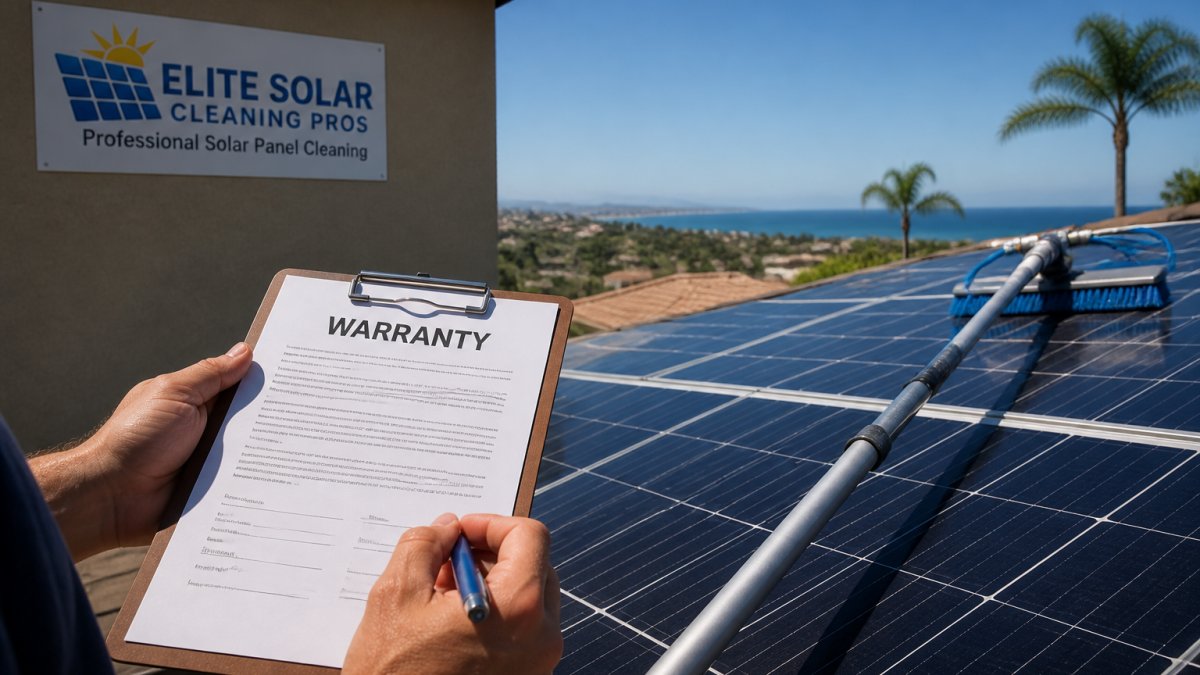
Cleaning your solar panels does not void the warranty, but poor cleaning methods can. Every major manufacturer permits cleaning while restricting abrasive tools, harsh chemicals, and high-pressure washing, so your solar panel cleaning warranty stays intact when you follow the manufacturer's published maintenance guidance.
- Product warranties typically cover manufacturing defects for 10 to 12 years on materials and workmanship.
- Performance warranties usually guarantee power output for 25 to 30 years with a defined degradation curve.
- The most common denial trigger is a scratched anti-reflective coating from abrasive pads or brushes.
- Document each cleaning with dates, methods, before-and-after photos, and monitoring output readings.
- Under a lease or PPA, the third-party owner may be responsible for maintenance and cleaning.
Table of Contents
- Does Cleaning Solar Panels Void Warranty? What Manufacturers Actually Say
- A Side-by-Side Look at Warranty Clauses From Major Manufacturers
- Solar Panel Cleaning Tools and Methods That Stay Within Warranty Terms
- DIY Solar Panel Cleaning Risks That Can Cost You Coverage
- Professional Solar Panel Cleaning: When It Protects Your Warranty
- How to Document Cleaning and Maintenance for a Warranty Claim
- Who Is Responsible for Cleaning Under Leases, Loans, and PPAs
- Get a Free Quote Before Your Next Cleaning
- Frequently Asked Questions
Does Cleaning Solar Panels Void Warranty? What Manufacturers Actually Say
Cleaning your solar panels does not void the warranty. Poor cleaning does. This guide explains the solar panel cleaning warranty concerns that actually matter, because the coverage you are protecting is worth far more than the panels themselves over a 25-year system life.
The short answer first: every major manufacturer permits cleaning. What they restrict is method. Abrasive tools, harsh chemicals, and high-pressure washing are the three failure points written into module warranty exclusions. Get those wrong and you are not just risking a scratched panel, you are risking the coverage on the whole array.
The Four Warranty Types That Matter
Most homeowners think they have one warranty. They actually have four, and each one behaves differently.
- Product warranty covers manufacturing defects in the panels themselves, typically 10 to 12 years on materials and workmanship.
- Performance warranty guarantees power output, usually 25 to 30 years, with a defined efficiency degradation curve.
- Inverter warranty covers the component most likely to fail, often 10 to 12 years with optional extensions.
- Installer or workmanship warranty covers the installation itself: roof penetrations, mounting, wiring, and flashing.
Why the distinction matters: a cleaning mistake almost never touches the product warranty. It shows up as a performance warranty dispute when output drops, or as a workmanship issue if water intrusion damages roof penetrations. Knowing which warranty applies tells you who to call and what evidence you need.
Clauses That Trigger a Denied Claim
Denied claims rarely come from the act of cleaning. They come from the method, and the language in manufacturer documentation is consistent on this point.
Watch out: the most common denial trigger is a scratched anti-reflective coating from abrasive pads or brushes. That damage is classified as customer-induced, and it is excluded from module coverage.
The clauses that get claims denied:
- Abrasive tools such as scouring pads, steel wool, or stiff bristle brushes
- Harsh chemicals including solvents, acids, and household glass cleaners with ammonia
- High-pressure washing that forces water past frame seals or cracks cells
- Cleaning in extreme heat when glass is hot enough to thermal-shock
- Unauthorized modifications to panels, wiring, or mounting hardware
Manufacturers typically require cleaning to follow their published maintenance guidance. Deviate from it and the burden of proof shifts to you.
A Side-by-Side Look at Warranty Clauses From Major Manufacturers
Most warranty guides tell you to "check your documentation." That is not useful when you are standing on a roof or filing a claim.
| Manufacturer | Product Warranty Term | Performance Warranty Term | Cleaning-Related Language (Summary) |
|---|---|---|---|
| SunPower | 25 years | 25 years | Requires installation and maintenance per published manual; excludes damage from improper cleaning, abrasives, or chemicals |
| LG | 25 years | 25 years | Excludes damage caused by improper maintenance or cleaning methods; requires adherence to installation manual |
| Panasonic | 25 years | 25 years | Excludes damage from improper cleaning, abrasive materials, or high-pressure washing |
| Canadian Solar | 12 years | 25 years | Excludes damage from improper cleaning or maintenance; requires compliance with manual |
| Jinko Solar | 12 years | 30 years | Excludes damage from improper cleaning, abrasives, or chemicals; requires manual compliance |
| Trina Solar | 12 years | 25 years | Excludes damage from improper cleaning or maintenance; requires manual compliance |
Read the "proper maintenance" condition and the "exclusions" section of your own warranty packet closely, since those clauses determine what cleaning-related damage is covered.
A practical takeaway: if your manufacturer's warranty names a specific cleaning method or prohibits a specific tool, treat that as the controlling instruction even if a general guide says otherwise. The manufacturer's document wins.
Solar Panel Cleaning Tools and Methods That Stay Within Warranty Terms
The safest cleaning method is the one your manufacturer's maintenance guidance describes. Check your own manual for the approved approach.
What stays within warranty terms:
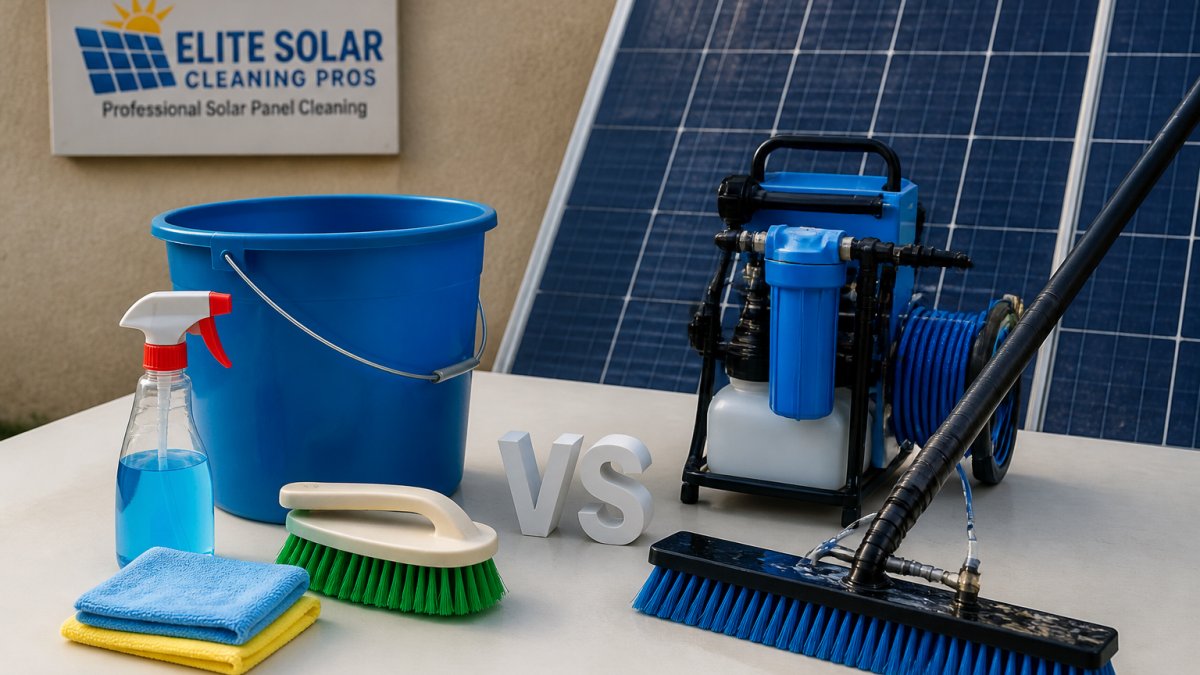
Cleaning methods that generally stay within common warranty terms use soft, non-abrasive tools, low-pressure rinsing, and water with minimal dissolved minerals. Anything that abrades the glass, uses harsh chemicals, or forces water into the frame or seals falls outside those terms. Confirm the specifics in your own warranty and manual.
Water Quality and Mineral Residue Rules
Water quality is an often-overlooked factor. Tap water carries dissolved minerals, and as it dries on hot glass those minerals can leave a film that dulls output.
Deionized water removes those minerals before it touches the panel, which is why it is commonly used for spot-free rinsing. Why Deionized Water for Solar Panel Cleaning explains how it avoids the mineral spotting that warranty clauses flag.
DIY Solar Panel Cleaning Risks That Can Cost You Coverage
Cleaning your own panels is generally permitted by manufacturers. The real risk of DIY cleaning often lies in roof access rather than the panels themselves.
Falls and electrical hazards are the two dangers that turn a routine chore into a claim. Panels stay energized whenever sunlight hits them, so a damaged connector or a compromised cable is a live hazard. Roof access adds fall exposure, and most homeowner policies treat improper roof work differently than ground-level maintenance. Solar Panel Cleaning Safety and Roof Access details the falls and electrical hazards that make DIY cleaning risky.
Physical damage from a fall, a dropped tool, or a misstep may be treated as customer-induced damage under many warranties, so check your own warranty terms.
Professional Solar Panel Cleaning: When It Protects Your Warranty
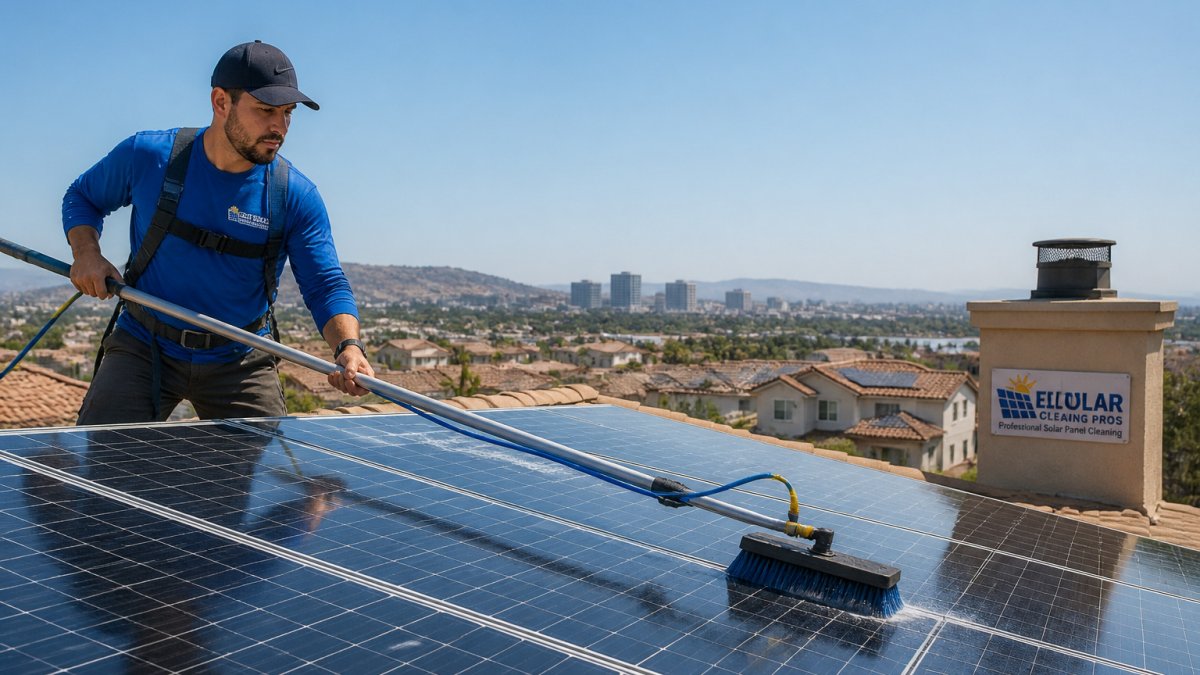
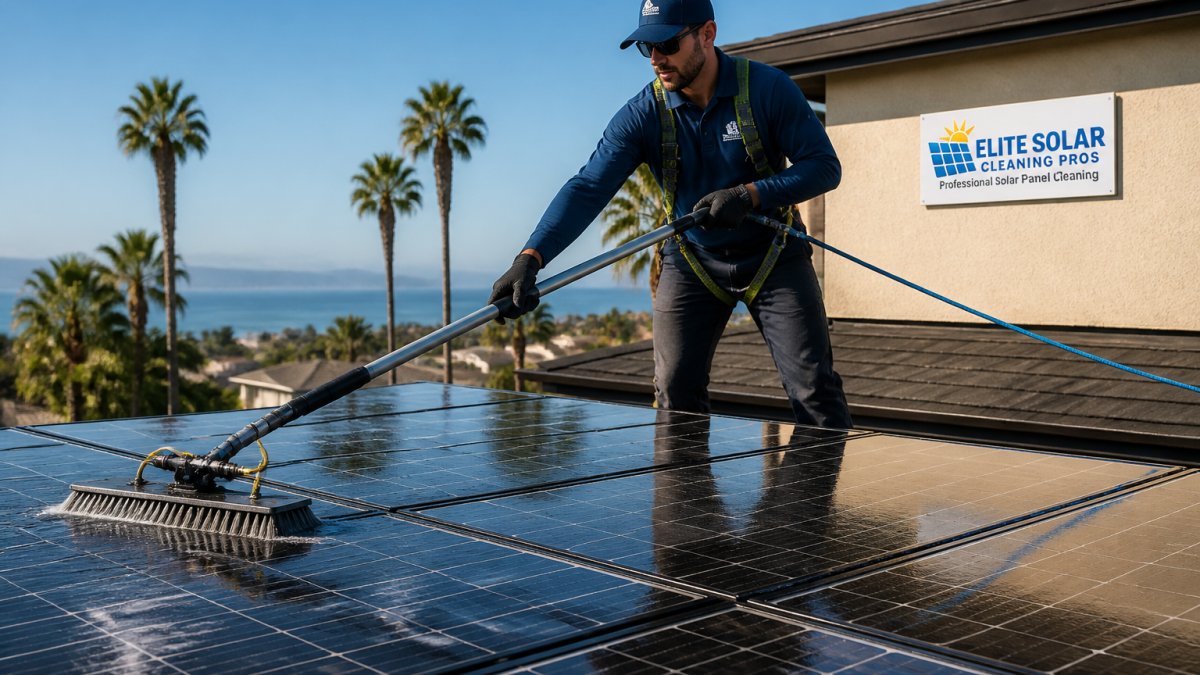
Professional cleaning protects coverage when it produces a documented, method-compliant record. Our Solar Panel Cleaning Process walks through the documented, chemical-free process a pro follows.
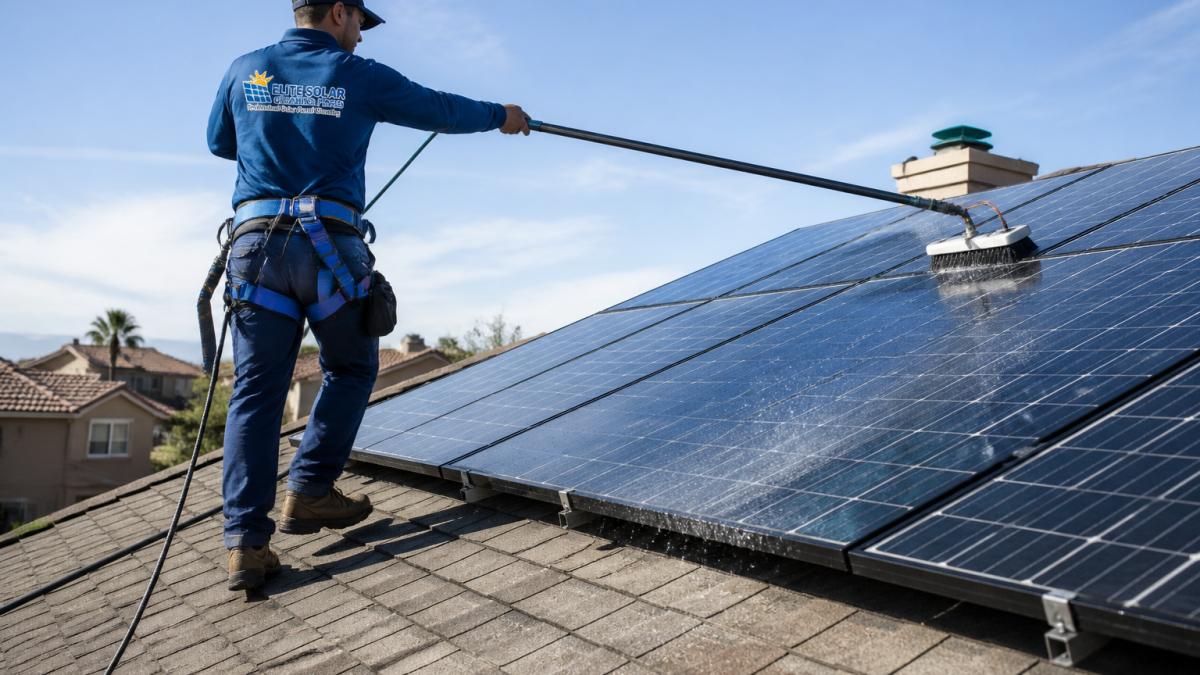
Professional cleaning can be worth considering for steep or fragile roofs, heavy soiling, and systems where a warranty claim may be involved.
How to Document Cleaning and Maintenance for a Warranty Claim
Documentation is the difference between a covered claim and a denied one. Manufacturers do not take your word for it. They want dates, methods, and evidence. The checklist below is the minimum file a claims reviewer will expect.
- Date of every cleaning and who performed it
- Method used, including water type and tools
- Before-and-after photos of the array
- Inverter and monitoring output readings around each service
- Any inspection notes, damage, or repairs
- Original installation paperwork and warranty registration
Keep it digital and backed up. A simple spreadsheet with one row per service is enough. Attach photos to each row and note the monitoring reading for the day before and the day after.
If You Damage a Panel or Suspect a Warranty-Voiding Cleaning
Stop work immediately. Do not try to "fix" a scratched coating, a cracked cell, or a water intrusion point yourself. The next steps protect your claim:
- Stop and make safe. Turn off the inverter if the damage involves wiring or a broken connector, and keep people off the roof.
- Photograph everything. Wide shots of the array, close-ups of the damage, and the tools or chemicals involved. Include a timestamp if your phone supports it.
- Preserve records. Save receipts for any cleaning products, the service invoice if a contractor did the work, and your monitoring data export.
- Contact your installer first, then the manufacturer, and ask the installer to inspect the damage before you file.
- Put it in writing. Send a short email summarizing what happened, with photos attached, so there is a dated record.
Distinguishing Cleaning-Related Output Loss From Equipment Failure
A drop in production does not automatically mean the panels are dirty, and it does not automatically mean a warranty claim. Use your monitoring data to separate the two.
- Soiling pattern: output drops gradually across the whole array, recovers after cleaning, and tracks local dust, pollen, or wildfire smoke events.
- Equipment failure pattern: output drops sharply on one string or one module, does not recover after cleaning, and may come with an inverter error code or a monitoring alert.
If output recovers after a cleaning, the loss was likely soiling. If it does not recover, the inverter or a module may be the cause, and your maintenance log can support a warranty discussion.
Who Is Responsible for Cleaning Under Leases, Loans, and PPAs
Under a power purchase agreement or solar lease, the third-party owner may be responsible for maintenance and cleaning, so check your agreement before touching the panels. Doing so without permission could affect the agreement and coverage.
For financed systems where you own the panels but carry a loan, the responsibility is yours, and so is the warranty compliance. Read the maintenance clause before your first cleaning. If it names the owner as responsible, get approval in writing before anyone climbs the roof, including a contractor.
Get a Free Quote Before Your Next Cleaning
Protecting a 25-year performance warranty comes down to method and records, and both are easier to get right the first time. Elite Solar Cleaning Pros is licensed and insured and uses eco-friendly DI water cleaning methods. Pricing depends on the scope of the job, so visit the Elite Solar Cleaning Pros website for current prices or to request a free quote. Solar Panel Cleaning Pricing & Maintenance Plans gives transparent pricing and plan options.
Frequently Asked Questions
Does cleaning solar panels void the warranty?
Cleaning itself does not necessarily void a solar panel warranty, but the method can matter. Warranty terms vary, so check your own documentation for any exclusions related to abrasive tools, harsh chemicals, or high-pressure washing. If a cleaning causes scratches, cracked glass, or seal damage, the manufacturer can deny a claim for that damage. Follow the manual's approved methods, use soft brushes and purified water, and keep records of every cleaning to stay protected.
Can DIY solar panel cleaning damage panels or affect coverage?
Yes. DIY solar panel cleaning risks include scratched glass from abrasive pads, soap residue that bakes on in the sun, and water intrusion from high-pressure nozzles. Working on a roof without fall protection also creates liability issues. Damage traced to improper cleaning may be excluded under some warranty terms. If you clean yourself, use a soft pole brush, deionized or filtered water, and avoid walking on the panels.
Does a solar panel warranty require regular cleaning?
Warranty terms differ on cleaning schedules, but many require reasonable maintenance. Heavy soiling that reduces output could be raised in a performance warranty discussion, so keep records of your upkeep. Check your owner's manual for recommended cleaning frequency, and keep dated records of cleanings and inspections to show you maintained the system.
Is professional solar panel cleaning safer for warranty coverage?
Professional solar panel cleaning can help when the provider follows manufacturer-approved methods. Elite Solar Cleaning Pros is licensed and insured. Ask for proof of insurance and confirm the company uses deionized water and soft brushes. Keep the invoice and service report; together they document that cleaning was done correctly if you ever file a claim.
The challenge is simple: most homeowners do not discover a warranty problem until they need to file a claim, and by then the evidence is gone. Elite Solar Cleaning Pros removes that risk with deionized water cleaning, soft brushes, spot-free drying, and photo documentation on every visit, all from a licensed and insured team. Get started with Elite Solar Cleaning Pros and protect both your energy output and your warranty coverage.