 comparison
Is Professional Solar Cleaning Worth It? A 2026 Cost Guide
Table of Contents
- Is Professional Solar Cleaning Worth It? The Honest ROI Breakdown
- The Best Way to Clean Solar Panels Safely (and What to Avoid)
- Solar Panel Cleaning Frequency: How Often Do You Actually Need It?
- DIY Solar Panel Cleaning Risks: Safety, Damage, and Warranty Voiding
- Environmental Impact of Cleaning Agents: Eco-Friendly vs Abrasive Methods
- The True Cost of Solar Cleaning: What You're Really Paying For
- Conclusion: Making the Right Call for Your System
- Frequently Asked Questions
Last Updated: October 4, 2026
Is Professional Solar Cleaning Worth It? The Honest ROI Breakdown
Is professional solar cleaning worth it? For most homeowners in sunny, dusty climates, yes, if soiling has built up enough to cut your output.
| Warranty impact | Documented, low risk | Scratching or voiding risk |
|---|---|---|
| Best for | Steep roofs, heavy soiling, large arrays | Single-story, light dust, confident homeowners |
Upfront Costs and Long-Term Savings
DIY looks cheaper on paper because you skip the service fee. But the true cost includes a water-fed pole, deionized water, and your own time on a ladder.
Pricing depends on panel count, roof pitch, and access. Ask for a quote based on your system size.
Equipment, Water Quality, and Surface Residue
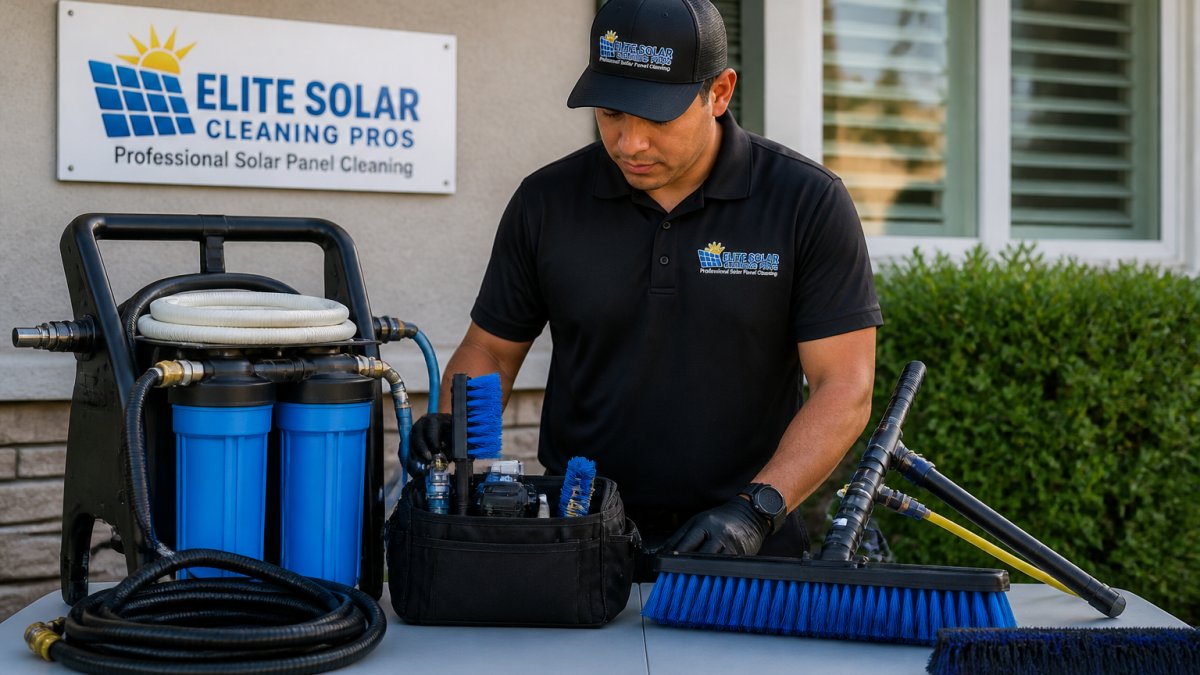
The gap that matters most is water. Tap water carries dissolved minerals that dry into a film on the glass, leaving surface residue that dulls output. A water-fed pole with deionized water rinses clean and dries without spotting.
The Best Way to Clean Solar Panels Safely (and What to Avoid)
The best way to clean solar panels safely is to use soft brushes, deionized water, and a water-fed pole from the ground where possible, never abrasive pads or pressure washers on the glass. Safety comes first: if reaching the array means walking a steep roof, that job belongs to a trained, insured crew.
What to avoid:
- Abrasive cleaning pads or scouring sponges
- High-pressure washers that can force water past seals
- Harsh soaps that leave residue
- Cleaning hot panels in direct midday sun
- Standing on the glass itself
Why Deionized Water and Water-Fed Poles Matter
Deionized water has had its mineral ions removed, so it dries without leaving spots or a conductive film on the glass.
This is the method Elite Solar Cleaning Pros uses, and it is why we can clean a full array without anyone walking the roof. For panels on a standard system size, that means a faster job and less wear on your roof.
Solar Panel Cleaning Frequency: How Often Do You Actually Need It?
Most homes need solar panel cleaning once or twice a year, though dusty or dry climates push that toward two to four times. Solar panel cleaning frequency is not a fixed number. It depends on how fast soiling accumulates where you live.
Signs it is time:
- Visible dust, pollen, or bird droppings on the glass
- A drop in your system output on your monitoring app
- Weeks without rain in a dusty season
- Nearby construction or agricultural activity
Climate and Geographic Factors That Change the Schedule
Dry, dusty regions and areas with heavy pollen see faster soiling and need more frequent cleaning. Coastal areas deal with salt and bird activity. Regions with regular rain get some natural rinsing, which stretches the interval between cleanings.
The practical move is to watch your production data, not the calendar. When output dips on clear days, soiling is usually the cause.
DIY Solar Panel Cleaning Risks: Safety, Damage, and Warranty Voiding
DIY solar panel cleaning risks fall into three buckets: falls from height, physical damage to the panels, and voided warranties.
Working at heights is the biggest risk. Ladder safety on a sloped roof is unforgiving, and a fall can cause serious injury.
Damage is the second risk. Abrasive pads and pressure washers can scratch the glass or introduce micro-cracks that grow with thermal cycling and quietly cut output for years.
Manufacturer Warranty Specifics You Need to Know
Most manufacturer warranties cover defects in materials and workmanship, not damage from improper cleaning or handling. That distinction is the whole game. The actions most commonly cited as grounds to deny a claim include:
- Pressure washing the glass. High-pressure water can force past frame seals and junction-box gaskets, and the resulting moisture intrusion is treated as customer-caused damage, not a defect.
- Abrasive tools and pads. Scouring sponges, steel wool, and gritty brushes can scratch the anti-reflective coating. Coating damage is typically excluded.
- Harsh or abrasive chemicals. Solvent-based or gritty cleaners can degrade the frame anodizing and the backsheet, and residue that bakes onto hot glass is often classified as improper maintenance.
- Walking or standing on the panels. Point-loading the glass can crack cells and break the laminate seal. This is one of the most commonly denied claims.
- Unauthorized repairs. Attempting to reseal a frame or replace a connector yourself can void coverage on the affected component even if the original issue was a defect.
What typically does not void a warranty: gentle cleaning with soft brushes and plain or deionized water, done during cooler parts of the day, following the manufacturer's own care instructions.
Using a licensed, insured professional keeps a documented record of proper care. If something goes wrong during the clean, the provider's insurance is the backstop rather than your homeowners policy, and a dated service record is the cleanest evidence you can produce if a warranty question ever arises.
Environmental Impact of Cleaning Agents: Eco-Friendly vs Abrasive Methods
Eco-friendly cleaning avoids the runoff problem that harsh soaps create. When you wash panels with detergent, that water runs off your roof into gutters, soil, and storm drains. Deionized water and soft brushes need no added chemicals, so what runs off is essentially the water you started with.
Abrasive methods carry a second environmental cost: damaged panels underperform, which means you draw more from the grid to make up the shortfall. Gentle cleaning protects both the array and the reason you installed it.
The True Cost of Solar Cleaning: What You're Really Paying For
The true cost of solar cleaning is not the invoice. It is the invoice minus the value of the energy you recover, plus the risk you avoid. Most guides stop at "it saves money" and never show the arithmetic.
The payback formula:
- Find your system's rated output in kilowatts (kW), it is on your monitoring app or your installation paperwork.
- Estimate your soiling loss as a percentage. A common pattern is roughly 5% loss in light-dust areas, 10-15% in moderate soiling, and 20% or more where dust, pollen, or bird activity is heavy and rain is scarce.
- Multiply: rated kW × your local peak sun hours per day × soiling loss % × your utility rate per kWh = dollars lost per day to soiling.
- Divide the cleaning quote by that daily figure to get your break-even in days.
A worked example. A 7 kW system in a moderate-soiling area, averaging about 5 peak sun hours per day, at a 10% soiling loss and a utility rate near the national residential average, loses roughly $0.15-$0.25 of production per day.
The costs the invoice hides:
- DIY gear. A water-fed pole, brush head, and deionized-water setup commonly run a few hundred dollars up front, and resin or filter replacements add recurring cost.
- Your time and risk. Ladder work on a sloped roof carries injury exposure that no service fee reflects.
- Damage downside. A scratched or micro-cracked panel can underperform for the life of the array, and a single denied warranty claim can exceed years of cleaning fees.
Pricing depends on panel count, roof pitch, and access, so most providers quote per job rather than publish a flat rate. Ask for a quote tied to your system size and your production data, not a generic per-panel number.
Residential utility rate data by state
Conclusion: Making the Right Call for Your System
The decision comes down to your soiling rate, your output data, and your comfort on a roof. If your panels are visibly dirty and your production has slipped, professional cleaning is usually the better financial call.
At Elite Solar Cleaning Pros, we use eco-friendly deionized water cleaning, we are licensed and insured, and we serve homeowners across the region. Our process is designed to restore output without the safety and warranty risks of a DIY job.
Frequently Asked Questions
Do solar panels really need to be professionally cleaned?
Not always, but professional solar cleaning is worth it when soiling, bird droppings, or pollen accumulation noticeably cuts your system output. Rain removes some dirt, yet it leaves behind surface residue that blocks sunlight. A professional service uses deionized water and a water-fed pole to clean without abrasives or mineral spots. If your panels are on a steep roof or your output has dropped, hiring a licensed and insured team protects both your safety and your equipment.
How often should solar panels be cleaned for maximum efficiency?
Solar panel cleaning frequency depends on your climate and surroundings. In dry, dusty regions or areas with heavy bird activity, cleaning every three to six months keeps energy production steady. In wetter climates, once or twice a year may be enough. Check your system output monthly; a consistent drop of 5% or more usually signals it is time for cleaning. Your manufacturer warranty may also specify a maintenance schedule, so review those terms first.
Can DIY cleaning void my solar panel manufacturer's warranty?
Yes, DIY solar panel cleaning risks can include voiding your warranty if you use abrasive tools, harsh chemicals, or high-pressure water that damages the panels. Many manufacturer warranties require cleaning with approved methods such as soft brushes and deionized water. Scratches, micro-cracks, or seal damage caused by improper cleaning are typically not covered. Hiring a professional service that documents its process helps you maintain warranty compliance and avoid costly repairs.
What is the best way to clean solar panels safely?
The best way to clean solar panels safely is to use deionized water, a soft-bristled brush or water-fed pole, and to work from the ground when possible. Avoid abrasive cleaning, harsh soaps, and high-pressure washers. If you must go on the roof, use a safety harness and follow ladder safety rules. For panels that are hard to reach or part of a large array, a professional service with the right equipment and insurance removes the risk of falls and accidental damage.
Does cleaning solar panels make a significant difference in energy output?
Cleaning can restore a meaningful portion of lost energy production. Soiling from dust, pollen, and bird droppings can reduce system output, and in dusty areas the loss can reach double digits. Professional cleaning with deionized water removes buildup without leaving residue, helping your photovoltaic panels return to peak efficiency. The exact gain depends on how dirty your panels are and your local conditions. Monitoring your system output before and after cleaning shows the real impact.
Get started with Elite Solar Cleaning Pros and see what your system can produce at its best. Request a free quote and we will assess your array, explain the expected return, and schedule a cleaning that fits your roof and your budget.