 how-to
How Often Should Solar Panels Be Cleaned? 2026 Guide
Table of Contents
- How Often Should Solar Panels Be Cleaned? The Short Answer
- Signs Solar Panels Need Cleaning
- DIY vs Professional Solar Cleaning: Which Is Right for You?
- Best Tools for Cleaning Solar Panels
- How Rain, Water Quality, and Mineral Buildup Affect Your Schedule
- Seasonal Maintenance Checklist for Solar Arrays
- Conclusion
- Frequently Asked Questions
Last Updated: September 13, 2026
How Often Should Solar Panels Be Cleaned? The Short Answer
Most homeowners should clean their solar panels once or twice a year, though homes near the coast, under heavy tree cover, or in dusty areas often need attention every three to four months (energy.gov). That range is the honest answer, and any provider promising a single universal schedule is oversimplifying.
Solar panel cleaning is the practice of removing dust, bird droppings, and environmental pollutants from photovoltaic glass so the system keeps converting sunlight at its rated capacity. Skipping it lets efficiency loss compound quietly, and you usually notice the hit on your utility bill before you notice it on the roof.
Below, we'll show you exactly how to read your own system's signals and build a cleaning schedule that fits your property, not a generic calendar.
Signs Solar Panels Need Cleaning
The clearest sign is a sustained drop in energy output that doesn't track with weather or season. If your inverter monitoring shows production falling while sunny days continue, soiling is the first suspect.
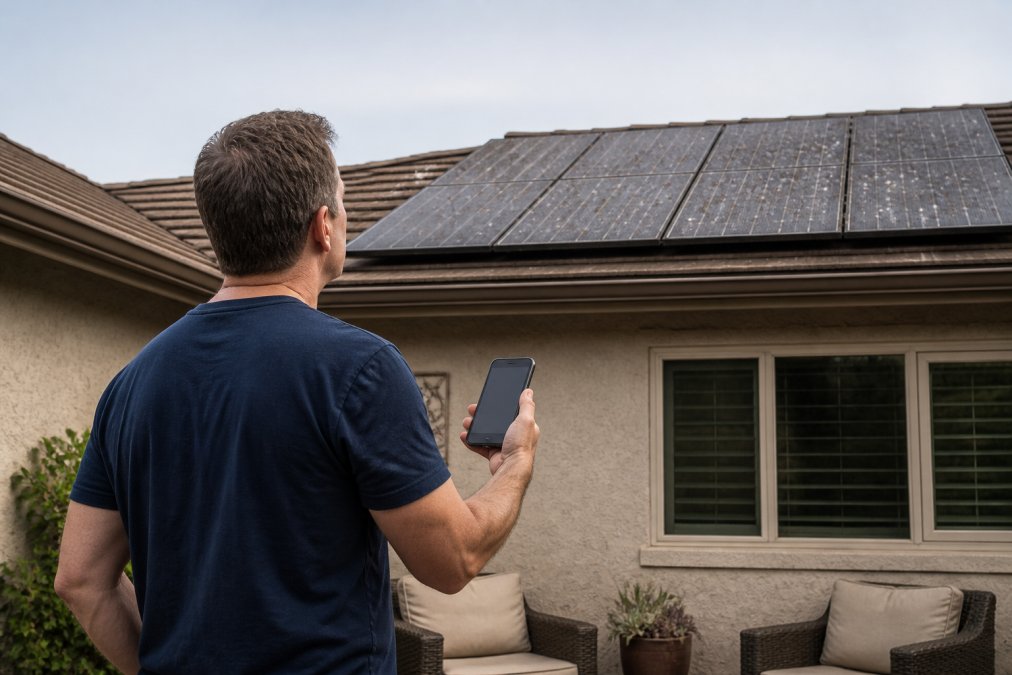
Watch for these visual and data cues:
- Visible dust film, pollen, or a dull haze across the glass
- Bird droppings or leaf litter clustered in the corners of panels
- A production dip of 5% or more compared with the same period last year
- Water spots or streaking that persists after rain
What Your Inverter Monitoring Data Tells You
Your inverter monitoring platform is the cheapest diagnostic tool you own. Compare daily and weekly energy yield against a clean baseline, ideally recorded right after your last cleaning. A gradual decline over several weeks points to soiling; a sudden drop often means debris accumulation, a shading issue, or an equipment fault worth a professional inspection.
DIY vs Professional Solar Cleaning: Which Is Right for You?
For single-story homes with safe roof access, DIY cleaning can work. For anything taller, steeper, or under warranty scrutiny, professional service is the better call.
The deciding factors are access, safety, and your comfort with the equipment. Roof access on a two-story home means ladders, harnesses, and fall risk, which is where most DIY attempts go wrong. A common mistake is underestimating how slick wet panels become and how quickly a garden hose leaves mineral residue behind.
| Factor | DIY Cleaning | Professional Cleaning |
|---|---|---|
| Best for | Single-story, easy access | Two-story, steep, or complex roofs |
| Safety risk | High without harness | Managed by trained crew |
| Water quality | Tap water, spot risk | Deionized water |
| Warranty | May be affected | Documented, compliant |
| Time | Several hours | Scheduled visit |
Warranty Implications of DIY Cleaning
Before you climb up with a bucket, read your system's warranty terms. Many manufacturers require that cleaning be done with non-abrasive methods and approved water, and some specify that physical damage from improper cleaning isn't covered. Scratching the glass with a stiff brush, using abrasive materials, or causing thermal shock by hosing hot panels with cold water can all create problems you'll pay for yourself.
Best Tools for Cleaning Solar Panels
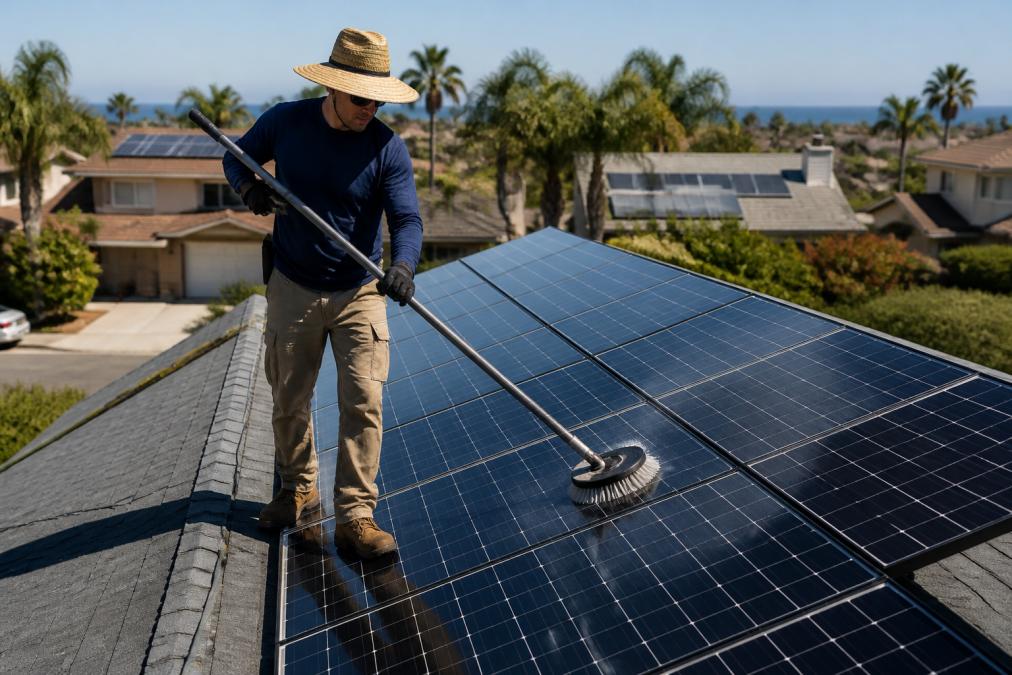
A soft-bristle brush, a microfiber cloth, and deionized water cover almost every residential job. The tools matter less than the technique, but the wrong ones cause real damage.
What you actually need:
- A soft-bristle brush on an extension pole for reaching panels safely
- Deionized or purified water to avoid water spots and mineral buildup
- A microfiber cloth for spot-treating bird droppings and stubborn marks
- A safety harness if you're working at height
- A squeegee or gentle rinse to finish without streaking
Skip anything abrasive: scouring pads, hard brushes, and household glass cleaners with ammonia all degrade the anti-reflective coating over time. A cleaning solution designed for photovoltaic glass is fine, but plain deionized water handles most jobs.
How Rain, Water Quality, and Mineral Buildup Affect Your Schedule
Rain helps, but it rarely cleans panels on its own. Light rain mixes with dust to form a muddy film that dries in place, and that film is worse than the dust was. The National Renewable Energy Laboratory has documented that soiling losses in dry, dusty regions can reach several percent of annual production, and rain only resets that clock when it falls hard enough and often enough to actually sheet dirt off the glass.
A useful rule of thumb: a single storm delivering roughly a quarter inch or more of rain, arriving after a dry stretch, will rinse most loose dust. Anything lighter than that tends to streak and bake. This is why a homeowner in a wet climate can sometimes go a full year between cleanings while a homeowner in a dry climate may need service every three months, same panels, same wattage, completely different soiling curve.
Climate-by-Climate Cleaning Cadence
Generic "every six months" advice ignores the single biggest variable: your local climate. Here is how the schedule actually shifts.
- Arid and desert climates: Dust, pollen, and agricultural tillage create continuous soiling. Expect to clean every two to four months, and more often if you're downwind of a dirt road or construction site. Rain is rare and often too light to help.
- Humid and subtropical climates: Pollen season and frequent light rain produce a sticky film that dries in place. Clean two to three times a year, with an extra pass at the end of spring pollen drop.
- Snowy climates: Winter cleaning is usually unnecessary, snow slides off tilted arrays and cold panels don't bake residue. Focus on a thorough spring cleaning to remove winter grime, road salt, and any debris left by ice dams.
- Coastal climates: Salt spray leaves a conductive, light-blocking film that plain rain won't strip. Clean every three to four months, and rinse after major storms. Salt also accelerates corrosion on racking and connectors, so pair cleaning with a hardware inspection.
- Wooded and agricultural properties: Tree sap, leaf litter, and bird activity dominate. Clean two to four times a year, with extra attention to panel corners where debris collects and holds moisture.
Why Deionized Water Matters for Spot-Free Results
Deionized water has had its dissolved minerals removed, so it dries without leaving the calcium and magnesium deposits that tap water leaves behind. Those deposits, not the dust, are what create the stubborn water spots that reduce light transmission.
The mechanism is worth understanding. When tap water sits on hot photovoltaic glass, the water evaporates and the dissolved minerals, primarily calcium carbonate, precipitate out and bond to the surface. On a cool surface this is a mild film you can wipe away. On glass that's been sitting at 140°F or higher in direct sun, the minerals fuse into the anti-reflective coating (Solar Photovoltaic Hardening for Resilience - Winter Weather). Once that happens, no amount of scrubbing fixes it without risking the coating itself, and the panel permanently transmits less light. This is why the water you use matters more than the brush you use.
If you're cleaning yourself, use deionized or purified water, or at minimum a water-fed pole with a resin filter. If you hire out, ask the provider what water they use. A crew that shows up with a garden hose and a bucket is leaving minerals behind on every visit.
Seasonal Maintenance Checklist for Solar Arrays
A seasonal routine beats a rigid calendar. Walk your property four times a year and let what you see set the schedule. The checklist below is built not just around cleaning, but around the documentation that protects your warranty, the part most guides skip entirely.
Why Documentation Matters More Than the Cleaning Itself
Most manufacturer warranties on photovoltaic modules cover defects in materials and workmanship, but they exclude damage caused by improper maintenance, abrasive cleaning, or unauthorized modification (energy.gov). That means the burden of proof often falls on you. If a claim arises and you can't show how the array was maintained, the manufacturer has an easy path to deny it.
The practical fix is simple: keep a maintenance log. Note the date, what was done, who did it, and what water or products were used. Photograph the array before and after each cleaning. If you hire a professional, keep the invoices. This log is your evidence that the array was cared for according to the manufacturer's instructions.
The Seasonal Checklist
- Spring: Clear pollen buildup and inspect for winter storm damage. Check mounting hardware for loosening caused by freeze-thaw cycles. Photograph the array and log the cleaning date.
- Summer: Check for dust film and bird droppings; monitor energy output weekly against your clean baseline. Avoid cleaning during peak afternoon heat, thermal shock risk is highest then. Log any production anomalies.
- Fall: Remove leaf litter and debris accumulation before the rainy season. Inspect the racking and roof penetrations for signs of water intrusion. Clear gutters that drain toward the array.
- Winter: Inspect for cracks, check mounting hardware, and review inverter data for the year. Do not attempt to chip ice or snow off panels, you'll scratch the glass. Let it slide off naturally, and note any persistent shading from snow piles.
What to Inspect Beyond the Glass
Cleaning is only part of maintenance. Each seasonal walk-through should also cover:
- Racking and mounting hardware: Look for rust, loose bolts, or corrosion, especially on coastal properties where salt accelerates degradation.
- Wiring and connectors: Check for rodent damage, UV cracking, or loose MC4 connectors. These are common failure points and often excluded from warranty if damage is attributed to pests.
- Junction box and inverter: Confirm the inverter is reporting normally and that no error codes have appeared. Inverter issues often masquerade as soiling losses.
- Roof condition: Look for lifted flashing, cracked sealant, or debris dams behind the array that can cause water backup.
Regional Climate Adjusts the Rhythm
Coastal homes deal with salt and marine layer; inland homes deal with dust and pollen; properties near agriculture or construction see heavier soiling. Snowy climates shift the heavy lifting to spring, while arid climates need year-round attention. Pair this checklist with an annual check-up from a qualified provider, and you'll catch small issues before they turn into efficiency loss you can't reverse, and you'll have the paper trail to back a warranty claim if one ever becomes necessary.
Conclusion
The honest answer to how often should solar panels be cleaned is "it depends," and the variables are yours to control: your climate, your tree cover, your water quality, and how closely you watch your production data. If reading inverter charts and hauling equipment onto your roof isn't how you want to spend weekends, that's exactly the work Elite Solar Cleaning Pros handles. Our licensed and insured team uses eco-friendly deionized water cleaning and works with HOA approval processes. Get started with Elite Solar Cleaning Pros and protect your solar panel investment while restoring lost energy output.
Frequently Asked Questions
How do I know if my solar panels need to be cleaned?
Check your inverter monitoring app for a drop in energy output that doesn't match weather patterns. Visible dust, bird droppings, pollen buildup, or water spots on the glass are clear signs. If your system's performance has dropped 5% or more without a weather explanation, it's time for a cleaning. Elite Solar Cleaning Pros offers free quotes to assess your specific situation.
Does rain effectively clean solar panels?
Rain provides minimal cleaning. Light rain actually makes things worse by mixing with dust to create mud that dries into water spots. Heavy rain can rinse away some loose debris, but it won't remove bird droppings, pollen buildup, or the mineral deposits left behind when water evaporates. Most systems still need manual cleaning two to four times per year even with regular rainfall.
Can I clean my own solar panels or should I hire a professional?
You can clean ground-mounted panels yourself with a soft-bristle brush and deionized water. Rooftop arrays are a different story. Roof access, electrical hazards, and thermal shock from cold water on hot glass make DIY risky. Professional cleaning also protects your warranty, since many manufacturers require documented maintenance. Elite Solar Cleaning Pros is licensed and insured, so you're covered if anything goes wrong.
What happens if you don't clean your solar panels?
Soiling from dust, pollen, and bird droppings blocks sunlight and reduces energy output. In dry, dusty regions, uncleaned panels can lose 15% to 25% of their production capacity. Over time, hardened debris and mineral buildup can cause permanent performance degradation and may void warranty compliance if the manufacturer requires regular maintenance.