 how-to
How to Make Solar Maintenance Pay Off for Your Business
Last Updated: November 7, 2026
Quick Summary
Preventative solar maintenance is essential for a business because small, unnoticed losses in output add up to real money over a year, and a single neglected fault can become an expensive repair. Scheduled inspection, cleaning and testing catch problems early, protect energy production, and make costs easier to budget than emergency repairs.
- Soiled panels and loose connections quietly reduce production over time.
- Scheduled inspections catch failing inverters and wiring before they cause downtime.
- Some equipment warranties may expect documented, regular upkeep.
- Assign each maintenance task to a named role so the schedule does not slip.
- Investigate output that stays below expected levels for several weeks, not single bad days.
Table of Contents
- Commercial Solar Panel Maintenance: What the Work Actually Covers
- A Solar Panel Maintenance Schedule by Component and Season
- Solar Panel Performance Monitoring and Underperformance Thresholds
- What Solar Maintenance Costs and How to Weigh It Against Lost Output
- Choosing a Qualified Contractor and Keeping Maintenance Safe
- Set Up Your Maintenance Plan and Request a Quote From Elite Solar Cleaning Pros
- Frequently Asked Questions
Solar maintenance is what keeps a commercial array producing the energy its owner paid for. For a business, preventative solar maintenance is essential because small, unnoticed losses in output add up to real money over a year, and a single neglected fault can turn into an expensive repair. This guide explains what the work covers, how often it should happen, and how to judge whether it is paying off.
Dirt, debris and component wear reduce output slowly, so the drop is easy to miss on a monthly bill. Preventative solar maintenance means inspecting, cleaning and testing on a set schedule so problems are caught early. Reactive repairs, by contrast, happen after output has already fallen.
The main reasons a business should plan for preventative care:
- Protect energy output. Soiled panels and loose connections quietly reduce production.
- Catch faults early. A failing inverter or wiring issue is cheaper to fix before it causes downtime.
- Protect warranties. Some equipment warranties may expect documented, regular upkeep.
- Extend system life. Steady care slows wear on panels, mounts and electrical components.
- Reduce surprise costs. Planned service is easier to budget than emergency calls.
Commercial Solar Panel Maintenance: What the Work Actually Covers
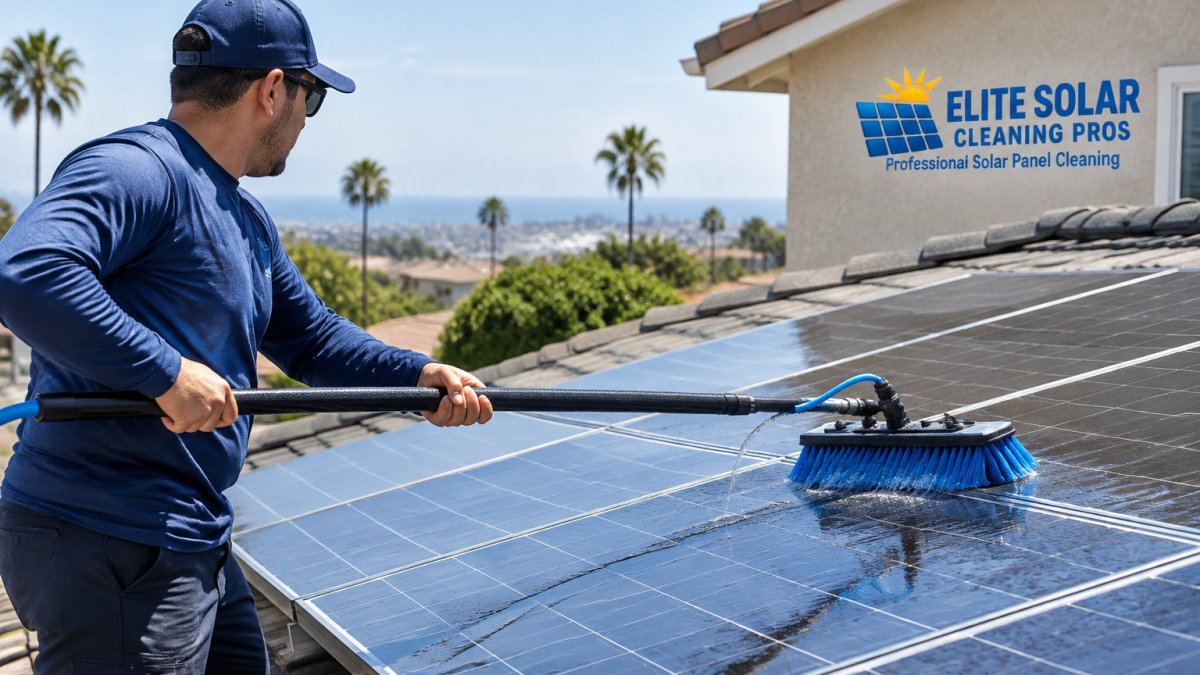
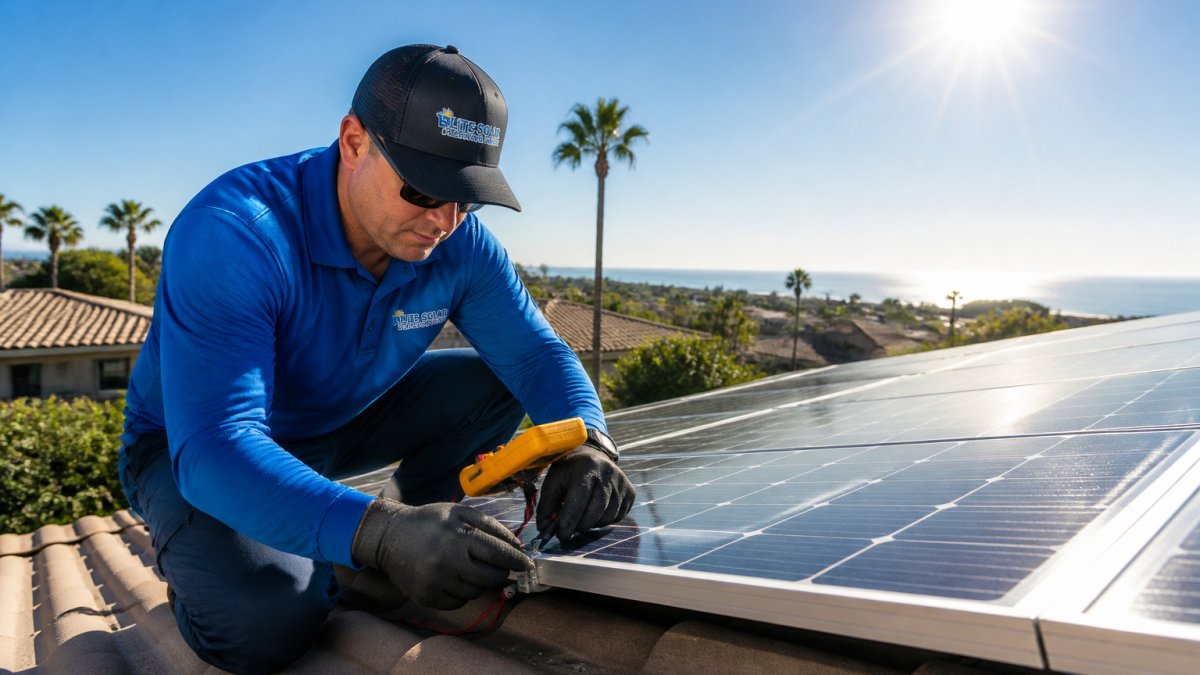
Commercial solar panel maintenance is a bundle of tasks, not just washing panels. Typical maintenance tasks can include visual inspection of panels and mounting hardware, checks of wiring and connections, inverter status review, and cleaning or debris removal where soiling is affecting output.
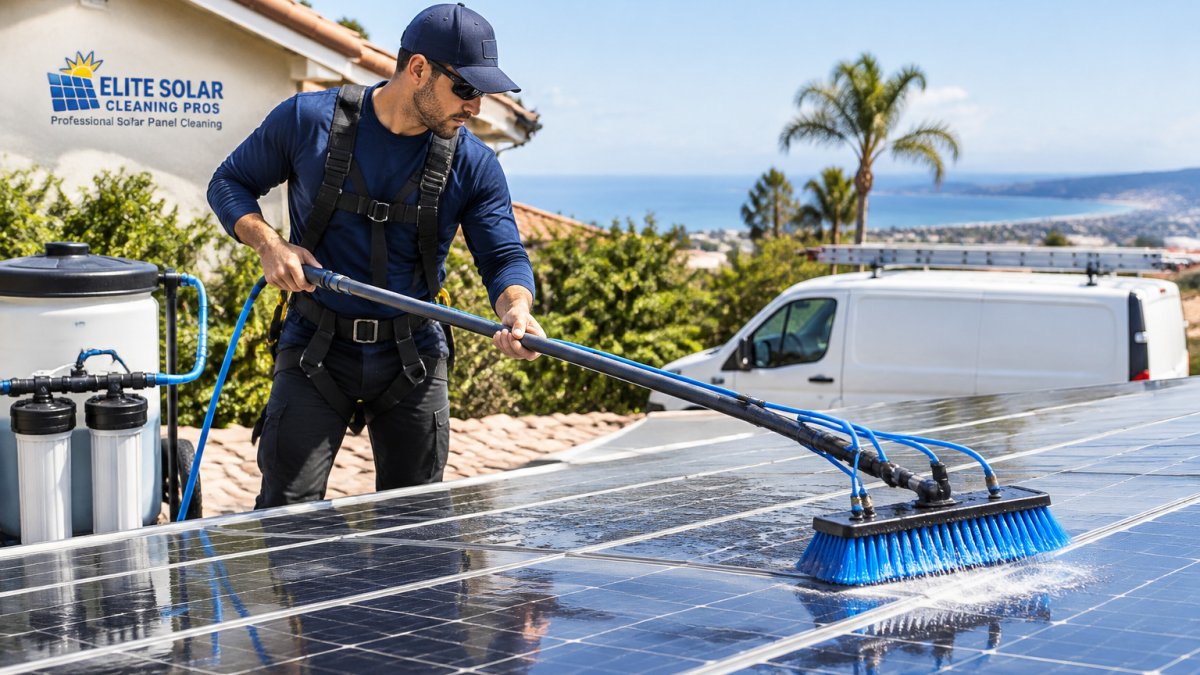
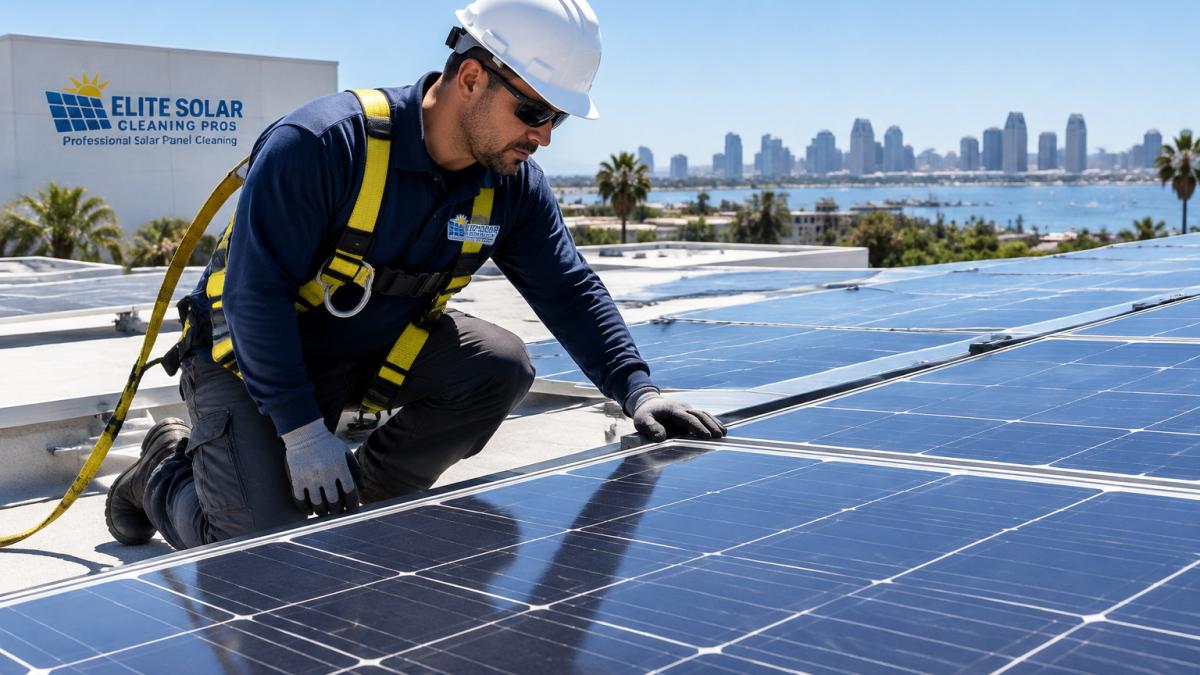
Some tasks happen on the roof, which requires trained crews, fall protection and a documented safety plan. Others, like reviewing monitoring data, can happen remotely. A clear scope in the service agreement helps a business know exactly what it is paying for.
Watch out: Ask any provider how roof access and fall protection are handled before work begins. Safe access is part of the job, not an extra. Our professional roof access and safety planning explains how we plan access and when we clean from the ground instead.
A Solar Panel Maintenance Schedule by Component and Season
A schedule is only useful if it tells someone what to do, when, and who should do it. The table below turns general advice into a working calendar. Frequencies are starting points; a site with heavy dust, nearby construction, or a lot of snow will need more frequent attention than a clean rooftop in a mild climate.
| Component | Monthly | Quarterly | Annually | Who should do it |
|---|---|---|---|---|
| Panels and glass | Review production data for unexplained dips; note visible soiling from the ground | Visual walk-through for cracks, hot spots, and new shading | Full inspection with thermal imaging where warranted | Facility staff for visual; qualified technician for thermal and electrical |
| Mounts and racking | , | Check for corrosion, loose bolts, and movement | Torque checks and structural review | Qualified technician |
| Inverter | Review error codes and fault logs remotely | Confirm cooling fans and vents are clear | On-site performance test and firmware check | Facility staff for remote review; technician for on-site |
| Wiring and connections | , | , | Inspect for heat marks, loose terminals, and conduit damage | Licensed electrician or qualified solar technician |
| Monitoring system | Confirm data is flowing and complete | Reconcile reported output against expected generation | Verify sensor accuracy and communications | Facility staff with provider support |
| Vegetation and drainage | Note new growth or debris near arrays | Clear shading sources and check roof drains | Full site review before storm season | Grounds crew; technician for roof-level work |
Monthly and quarterly checks
Monthly work is mostly remote and can be handled by facility staff. Pull the production report, compare it with the same period in prior years, and flag any sustained gap. Walk the ground perimeter to spot new shading from trees, stacked pallets, or construction equipment. Quarterly, schedule a roof-level visual inspection if access is safe and trained staff are available; otherwise, fold it into the provider's routine visit. Confirm that monitoring data has no unexplained gaps, because a communications failure can hide a production problem for weeks.
Seasonal and annual service
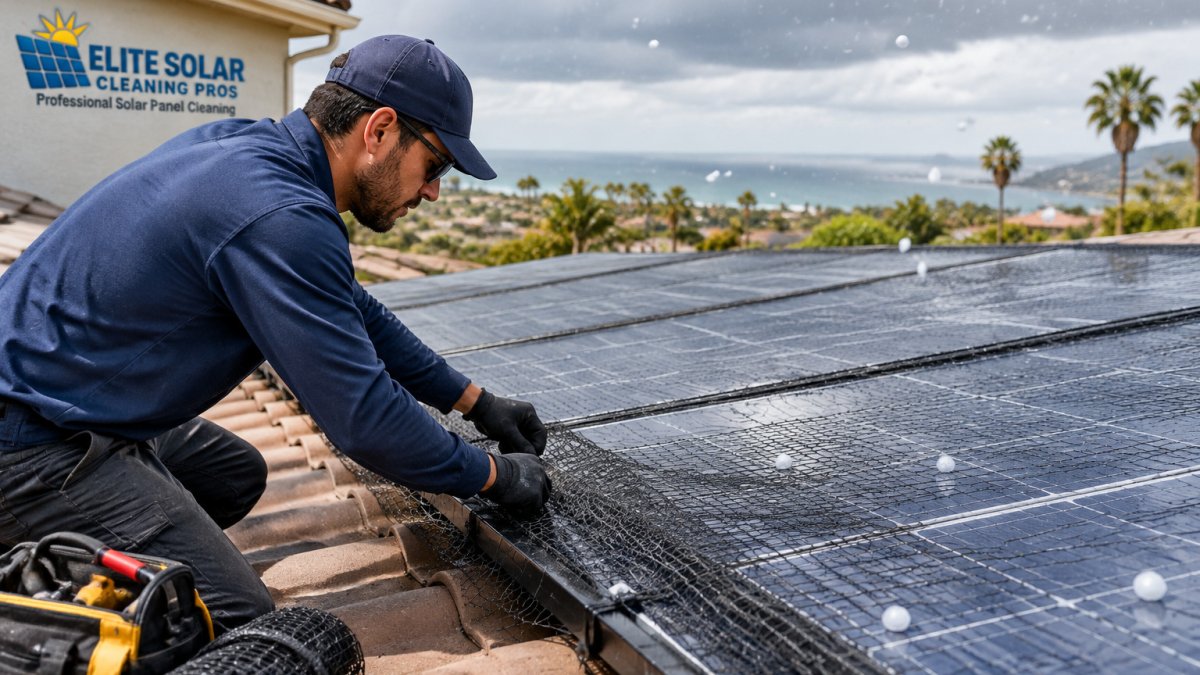
Seasonal timing matters for maintenance planning. Before the dry, dusty season, clean panels if soiling is visible and confirm that inverter cooling is not blocked. After winter storms, inspect for debris, loose mounts, and damaged conduit. In snowy regions, plan for snow removal only through qualified crews, since roof access and panel stress are real risks. Once a year, schedule a full inspection that covers electrical connections, inverter performance, torque on mounting hardware, and a written report suitable for warranty records. An annual report can also be useful documentation for a lender or buyer during financing or resale.
Watch out: A schedule that lists tasks but not owners tends to slip. Assign each row to a named role, facility manager, grounds crew, or service provider, and put the dates on a shared calendar so nothing depends on memory.
Solar Panel Performance Monitoring and Underperformance Thresholds
Performance monitoring is how a business knows the system is working. Most systems report output data, and that data is the first sign of a problem.
A common approach is to compare actual output with the output expected for the same weather and season. Our guide to how dirty panels affect output explains how soiling reduces yield and what cleaning is worth. A sustained gap, rather than a single bad day, usually signals a real issue such as soiling, shading or an equipment fault. Set an internal threshold, then investigate any time output stays below it for several weeks.
Watch out: Monitoring data is only useful if it is accurate and complete. Check that the monitoring connection is working and that data is not missing for stretches of time.
What Solar Maintenance Costs and How to Weigh It Against Lost Output
Maintenance pricing is not a single number. It is built from a few cost drivers that a business can inspect before requesting a quote. The largest is system size and array count, since labor scales with the number of panels and roof sections. Roof type and access come next: a flat commercial roof with safe hatches and walkways is cheaper to service than a steep or crowded roof that requires lifts or fall-protection setups. Travel distance and site scheduling also matter, because a provider serving many sites in one area can spread mobilization costs. Finally, scope drives price, a visual inspection and cleaning visit costs less than one that includes thermal imaging, torque checks, and a written engineering report.
A useful way to think about the decision is planned versus reactive. Planned maintenance is a known, budgetable line item scheduled in advance. Reactive repairs arrive after output has already fallen, often at emergency rates, and may include expedited equipment shipping. The cost of a single emergency inverter replacement or a rushed roof repair can exceed several years of routine service, though the exact figures depend on system size and equipment. Rather than rely on a rule of thumb, build the comparison from your own numbers.
To weigh cost against lost output, estimate the value of production at risk. Multiply the kilowatt-hours you would lose during a fault by your electricity rate, then compare that figure with the cost of a planned service visit. For example, if a monitoring gap or a soiled array reduces output for several months before anyone notices, the lost energy value can exceed the service cost. The point is not to promise a specific savings figure but to make the trade-off visible on paper.
Three practical steps make the comparison defensible:
- Establish a baseline. Record expected generation for each month using prior-year data or the provider's model, so you can measure deviation rather than guess.
- Price the risk, not just the visit. Ask the provider what a typical corrective repair costs for your equipment, and compare that with the annual service price.
- Keep records. Documented service history supports warranty claims, simplifies resale and financing, and gives you data to renegotiate scope as the system ages.
Watch out: Quotes that bundle cleaning, inspection, and reporting into one line item make it hard to compare providers. Ask for a breakdown by task so you can see what you are paying for and whether the scope matches your warranty requirements.
Choosing a Qualified Contractor and Keeping Maintenance Safe
Solar work involves heights and live electrical equipment, so contractor choice matters. Look for a provider that carries liability insurance and workers' compensation, uses trained crews, and can explain its safety procedures in writing.
Ask specific questions: How is roof access planned? Who is responsible if equipment is damaged? Will you receive a written report after each visit?
For larger sites, ask whether the provider supplies safety documentation and efficiency reporting. Those records help facilities managers track performance and show due diligence. Our commercial solar cleaning guide covers what facilities managers should ask for.
Set Up Your Maintenance Plan and Request a Quote From Elite Solar Cleaning Pros
A preventative plan works best when it is written down, scheduled and reviewed. Start by listing your system's components, your current output data and any warranty requirements. Then agree on a schedule and a monitoring routine. If you manage commercial properties, you can request a quote for commercial solar panel cleaning in San Diego.
Request a quote from Elite Solar Cleaning Pros to set up a plan for your property. For the full checklist, frequency guidance and when to call a pro, see our homeowner solar maintenance guide.
Frequently Asked Questions
How often should a commercial solar system be inspected?
Most commercial solar operators schedule a visual inspection at least twice a year, with a more detailed electrical check annually. Systems in dusty, coastal, or high-heat sites may need more frequent visits. Monitoring data can show when a formal inspection is needed sooner, such as after a drop in output that does not match weather conditions. Pairing inspections with cleaning and monitoring review gives a clearer picture of system health and helps catch wiring, connection, and inverter issues before they cause downtime.
How can businesses tell if their solar system is underperforming?
Compare actual energy production against the expected output for the same weather and season. A sustained gap, especially one that appears after a particular date, points to a problem worth investigating. Monitoring platforms can flag inverter faults, string-level drops, and unusual temperature readings. A licensed technician can then confirm whether the cause is soiling, a failed component, or a wiring fault. Catching the problem early limits lost production and keeps warranty claims intact.
Does regular solar maintenance improve energy production?
Regular maintenance helps protect the output a system was designed to deliver. Dust, pollen, bird droppings, and debris can reduce panel output, and loose connections or failing components can cut production further without obvious signs. Routine cleaning, inspection, and timely repairs address these causes directly. Gains depend on the site and the condition of the system, so the most useful check is comparing output before and after service.
How much does commercial solar maintenance cost?
Pricing depends on system size, site access, the scope of inspections and cleaning, and how often service is scheduled. Operations and maintenance agreements may bundle monitoring, inspections, and repairs. Contact Elite Solar Cleaning Pros for a quote tailored to your system, and compare the scope of each proposal rather than the headline price alone, since a lower quote may cover fewer inspections or exclude repair labor.