 ultimate-guide
Solar Panel Maintenance for Homeowners: 2026 Guide
Table of Contents
- Why Solar Panel Maintenance Matters for Homeowners
- How Often Should Solar Panels Be Cleaned?
- How to Clean Solar Panels Safely
- Solar Panel Maintenance Checklist
- Solar Panel Cleaning Cost: What to Expect
- Monitoring Performance and Troubleshooting Low Output
- When to Call a Professional for Solar Panel Maintenance
- Warranty, Lease, and Insurance Requirements
- Frequently Asked Questions
Last Updated: October 5, 2026
Why Solar Panel Maintenance Matters for Homeowners
Solar panel maintenance is the routine care that keeps a residential solar system producing at its rated capacity, and skipping it quietly costs homeowners money every month.
Here is the part most guides get wrong. Panels have no moving parts, so homeowners assume they need no attention at all.
Below, we break down how often to clean, how to do it safely, what a maintenance checklist looks like, and when to call a professional.
How Often Should Solar Panels Be Cleaned?
Most residential systems need cleaning once or twice a year, with more frequent service in dusty, pollen-heavy, or dry climates.
Rainfall helps, but it is not a cleaning service. Light rain leaves streaks and does not wash away baked-on bird droppings or pollen that has bonded to the glass. If your area goes weeks without meaningful rain, plan on a cleaning anyway.
Seasonal Cleaning Frequency by Climate
Cleaning frequency should track your local conditions, not a generic schedule:
- Dry, dusty regions: every 3 to 4 months, since dust settles fast and rarely gets rinsed off.
- High-pollen seasons: an extra cleaning after the peak pollen weeks in spring.
- Heavy tree cover: more frequent checks, because leaves and sap cause shading and stubborn spots.
How to Clean Solar Panels Safely
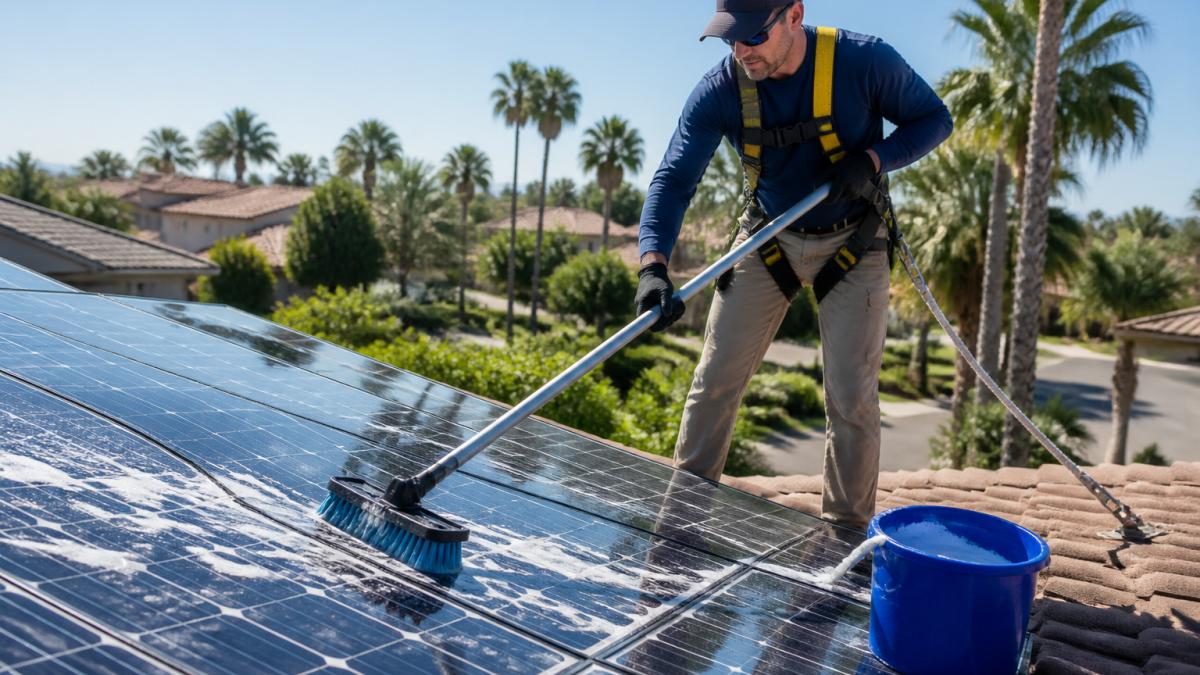
Safe cleaning comes down to three things: the right tools, plain water, and staying off the roof whenever you can. You can clean most ground-level or gently angled arrays from the ground with an extension pole and a soft brush, which removes the biggest safety risk entirely.
DIY Steps and Tools
- Check the manufacturer's manual first. It lists approved cleaning methods and any warranty conditions you must follow.
- Turn off the system if the manual advises it. Some manufacturers recommend shutting down before cleaning; follow their guidance.
- Work early morning or late afternoon. Cool panels clean better and are safer to touch than hot midday glass.
- Rinse loose dirt first with a garden hose to avoid scratching grit across the surface.
- Wash with a soft sponge or soft cloth and plain soapy water or a mild cleaning solution.
- Rinse thoroughly with clean water and let the panels air-dry.
- Stay on the ground with an extension pole whenever the array is reachable that way.
What Not to Do
- Never use abrasive pads, scouring powders, or harsh chemicals; they scratch the glass and can void coverage.
- Never use a pressure washer at close range; high pressure can force water past seals and damage the panel.
- Never walk on the panels or lean your weight on the glass.
Solar Panel Maintenance Checklist
A simple maintenance checklist keeps a residential solar system healthy and catches small problems before they become expensive ones. Run through it a few times a year.
- Visual panel inspection: look for cracks, chips, hot spots, discoloration, or loose frames.
- Clean the glass: remove dirt, dust, pollen, leaves, and bird droppings.
- Check the inverter display: confirm it shows normal operation and no fault codes.
Solar Panel Cleaning Cost: What to Expect
Professional solar panel cleaning cost depends on system size, roof height and pitch, access, and how much grime has built up. Because of that, most reputable providers quote per property rather than publishing a flat rate. Expect the price to rise with a larger array, a steeper or taller roof, or heavy debris that needs extra work.
What Actually Drives the Price
When you compare quotes, ask what is included. The variables that move the number most are:
- System size: a 20-panel array takes longer than a 10-panel array, and labor is the biggest line item.
- Roof height and pitch: a single-story, low-slope roof is the cheapest to service; two-story and steep-pitch roofs require fall protection and more time.
- Access: a clear driveway and room to set a ladder or lift keeps costs down. Tight lots, tile roofs, and arrays surrounded by obstructions add labor.
DIY vs. Professional: The Real Cost Trade-Off
A DIY cleaning costs you a soft brush, an extension pole, a garden hose, and an afternoon. That is the cheapest option, and for a ground-reachable array it is often the right one. The trade-off is risk: a fall from a roof is the most expensive outcome of any cleaning method, and improper tools or pressure can scratch glass or force water past seals.
A professional visit bundles cleaning with an inspection, which is where the value sits. A good service call should include:
- A pre-clean visual inspection for cracks, hot spots, and loose frames
- Cleaning with a soft brush and deionized or filtered water
- A check of the inverter display and any active fault codes
- A look at wiring, conduit, and mounting hardware for corrosion or sagging
How to Read a Quote
Ask for a free, no-obligation quote based on your actual system and access. Be cautious of any provider who quotes a suspiciously low flat rate before seeing your roof, since that usually means corners get cut on safety or care. A quote that is itemized by cleaning, inspection, and any add-ons lets you compare providers fairly.
The honest answer is that you should ask for a free, no-obligation quote based on your actual system and access.
Monitoring Performance and Troubleshooting Low Output
Production monitoring is how you catch problems early, and it is the single most useful maintenance habit a homeowner can build. Your inverter display and monitoring system show how much power your array is generating day to day.
Common causes of low production:
- Dirt and debris: the most common and easiest fix; clean the panels.
- Shading: new tree growth or a new structure casting shadows.
- Inverter faults: check the display for error codes and system alerts.
- Loose wiring or connections: a job for a qualified professional.
If output drops after cleaning and there is no obvious shading, stop guessing and get the system inspected. Electrical and roof safety boundaries are not a DIY zone.
When to Call a Professional for Solar Panel Maintenance
Call a professional when the work involves roof access, electrical components, or anything you are not fully equipped to handle safely. Anything beyond gentle cleaning from the ground belongs in the hands of a licensed and insured team.
The Safety Boundaries: When Not to DIY
Most guides say 'be careful' without drawing the line. Here is where the line actually sits.
Do not climb the roof if:
- The roof is steep, wet, icy, or more than one story with no safe anchor point.
- You do not have a fall-protection harness and a secure tie-off.
- The panels are on a tile, slate, or fragile roof surface that cracks under foot traffic.
- You would be working alone with no one to spot you or call for help.
Do not spray or handle equipment if:
- The inverter, wiring, or disconnects show burn marks, melted insulation, or a burning smell.
- You would need to remove a panel, open a junction box, or disconnect any DC wiring.
- Water could reach an open electrical enclosure or a damaged connector.
- The system is under a lease or service agreement that assigns maintenance to the provider.
DC circuits on a solar array stay energized whenever the sun is up, even when the system is switched off at the inverter.
What a Professional Visit Should Include
A qualified technician should do more than wash glass. A complete service visit typically covers:
- Cleaning with a soft brush and deionized or filtered water
- A thermal or visual scan for hot spots and micro-cracks
- Inverter and monitoring diagnostics, including fault-code history
- Torque checks on mounting hardware and a look at roof penetrations for leaks
Book a Professional When:
- Your array sits on a steep, tall, or hard-to-reach roof.
- Your monitoring shows a sustained drop in energy production.
- You spot visible damage, corrosion, or loose mounting hardware.
- Your inverter shows fault codes or repeated system alerts.
At Elite Solar Cleaning Pros, our licensed and insured team uses eco-friendly deionized water cleaning that avoids the scratching risk of harsh methods, and we work with HOA approval processes and property access rules. For homeowners who want the job done safely and correctly, that is the difference between protecting your investment and risking it.
Warranty, Lease, and Insurance Requirements
Your warranty, lease, and insurance documents decide who is allowed to touch your system, and ignoring them can cost you coverage.
Leased and financed systems add another layer. The leasing company usually owns the equipment and sets its own maintenance terms, so check with them before anyone services the array.
Keep records. Save cleaning dates, service receipts, monitoring screenshots, and inspection notes.
Maintaining a solar array is not complicated, but it does reward consistency.
Frequently Asked Questions
How often should solar panels be cleaned?
Most homes need cleaning every six months. If you live near dust, pollen, or heavy bird activity, clean quarterly. Rain helps but does not replace cleaning because it leaves streaks and does not remove baked-on grime. Check your owner's manual for manufacturer guidance. Monitoring energy output can tell you when production drops enough to warrant a cleaning.
Do solar panels need regular maintenance?
Yes. Beyond cleaning, schedule an annual checkup to inspect wiring, mounting hardware, and the inverter. Look for visible damage, loose connections, and shading from trees. Keep records of energy production to spot performance loss early. This routine maintenance protects your solar investment and helps you avoid costly repairs.
Can I clean solar panels myself?
You can clean solar panels yourself if you follow safety guidelines. Use a soft sponge or cloth with soapy water, then rinse with a hose. Avoid harsh chemicals and abrasive tools. Never walk on the panels. If your roof is steep or you are uncomfortable working at height, hire a professional. Always check your warranty for any cleaning restrictions.
What is the safest way to clean solar panels?
The safest way is to use a soft sponge or cloth, mild soapy water, and a gentle water rinse. Work early morning or late afternoon when panels are cool. Do not use pressure washers or abrasive scrubbers. For roof safety, use fall protection and avoid reaching too far. If you are unsure, call a licensed professional.
Can dirty solar panels reduce energy production?
Yes. Dirt, dust, pollen, bird droppings, and leaves block sunlight and reduce energy output. A dirty solar array can lose a noticeable amount of production. Regular cleaning restores efficiency and helps you get the most from your system. Monitoring your energy production will show you how much grime is costing you.
How much does professional solar panel cleaning cost?
Professional solar panel cleaning cost varies based on system size, roof pitch, and local conditions. Get a free quote from a licensed and insured provider. Elite Solar Cleaning Pros offers free quotes tailored to your home.
When should I call a professional to inspect my solar panels?
Call a professional if you notice a sudden drop in energy output, visible damage, inverter alerts, or if it has been more than a year since your last inspection. Also call if your roof is steep or you lack safety equipment. A licensed technician can spot issues like loose wiring or micro-cracks that are hard to see from the ground.
Does rain clean solar panels well enough?
Rain helps rinse away loose dust but does not clean thoroughly. It can leave streaks, and it does not remove sticky bird droppings or baked-on grime. In dry climates, rain is infrequent, so panels need manual cleaning. Relying on rain alone can lead to performance loss over time. Schedule regular cleaning regardless of rainfall.