 ultimate-guide
Does Dirty Solar Panels Affect Output? 2026 Guide
Table of Contents
- How Dirty Solar Panels Affect Output and Energy Production
- The Impact of Dust on Photovoltaic Systems: What the Data Shows
- Common Pollutants That Drain Your Solar Array
- Solar Panel Cleaning Frequency: When to Schedule Service
- Professional Solar Panel Cleaning Benefits and ROI
- DIY vs. Professional Cleaning: Risks and Rewards
- Conclusion: Protecting Your Solar Investment
- Frequently Asked Questions
Last Updated: September 25, 2026
How Dirty Solar Panels Affect Output and Energy Production
Yes, dirty solar panels reduce output, and the effect is measurable. Soiling blocks sunlight before it reaches the photovoltaic cells, lowering production for every hour the grime sits there. At Elite Solar Cleaning Pros, we see this constantly: a system that performed beautifully in year one quietly underperforms by year three because nobody looked at the glass.
The mechanism is straightforward: anything between the sun and the cell surface taxes energy yield.
What Soiling Loss Actually Looks Like on Your Electric Bill
A soiling loss is the gap between what your array could produce clean and what it actually produces with dust, pollen, or debris on the glass. It shows up as lower production on your inverter data, not as a line item on your utility bill.
The Impact of Dust on Photovoltaic Systems: What the Data Shows
The impact of dust on photovoltaic systems depends on how much accumulates, how long it stays, and how the panels are mounted. The efficiency drop scales roughly with coverage rather than with how dirty the panels look from the ground.
Regional Climate and Soiling Rates
Soiling rates are climate-specific, which is why generic advice fails. A coastal array dealing with salt spray and marine layer accumulates differently than an inland array dealing with construction dust and pollen.
Environmental factors that drive accumulation include:
- Rainfall frequency and intensity. Natural precipitation is the cheapest cleaning mechanism you have, but light drizzle can make things worse by turning dust into a baked-on film.
- Local air quality. Atmospheric pollutants settle on glass and bond to it over time.
- Panel tilt. Steeper panel tilt sheds dust and water more effectively; flatter arrays hold more grime.
- Surroundings. Nearby fields, freeways, construction, and trees all change what lands on your array.
Common Pollutants That Drain Your Solar Array
Bird droppings, pollen, dust, smog particles, and salt are the main offenders, and they don't behave the same way. Some rinse off; others etch, bond, or create hot spots that persist long after the visible mess is gone.
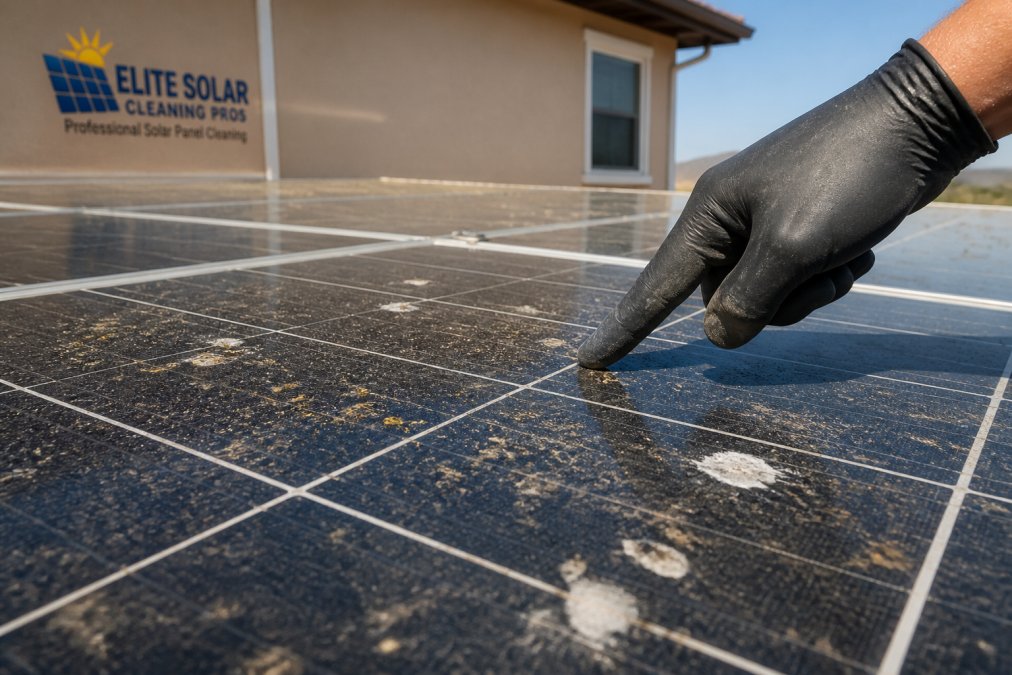
Pollutants differ in how they interact with the glass:
- Dust and grit form an even film that reduces irradiation reaching the cells.
- Pollen arrives in seasonal bursts and can cake on during dry spells.
- Smog and atmospheric pollutants leave a fine residue that builds up between rains.
- Salt from coastal air leaves a film that's easy to miss and hard to rinse fully.
- Bird droppings create concentrated shading and, if left long enough, can stain the glass.
Solar Panel Cleaning Frequency: When to Schedule Service
Solar panel cleaning frequency depends on your local soiling rate, not a fixed calendar. Most residential arrays land between one and four cleanings a year, decided by climate, tilt, and surroundings, "how often" is really a question about how fast your site accumulates grime.
Regional Soiling Rates: Desert, Coastal, Urban, and Agricultural
Treating soiling rates as one national number is why generic advice fails. Here is how the four common environments behave.
- Desert and arid inland sites. Low rainfall, high dust, and windblown grit mean continuous accumulation with few natural resets. Arrays here tend to soil fastest and benefit most from a spring cleaning timed after the windiest months and before peak summer production.
- Coastal sites. Salt spray and morning marine layer leave a film that is easy to miss from the ground. Salt also bonds to glass and is not fully rinsed by a light rain, so coastal arrays often need a cleaning after the dry season even when they look acceptable.
- Urban and freeway-adjacent sites. Atmospheric pollutants and brake dust settle as a fine residue that builds between rains. The film is thin but persistent, and it tends to reappear faster than homeowners expect.
- Agricultural and wooded sites. Pollen arrives in seasonal bursts, and nearby fields or trees add organic debris. The pattern is spiky rather than steady, so timing the cleaning after pollen season matters more than cleaning on a fixed interval.
A practical starting framework:
- Desert or dusty inland: inspect every two to three months, clean when soiling is visible.
- Coastal: clean after the dry season and after any period of heavy salt air.
- Urban or freeway-adjacent: inspect quarterly; the film returns faster than the calendar suggests.
- Wooded or agricultural: clean after pollen season and after any heavy dropping event.
- Typical suburban roof: annual cleaning with a mid-year visual check.
- After any wildfire, dust storm, or nearby construction: inspect and clean.
Does Rain Clean Solar Panels?
Rain is the cheapest cleaning mechanism you have, but an unreliable one. Intensity is the distinction: a steady, heavy rain can rinse loose dust off a tilted array and reset soiling to near zero, while a light drizzle wets the dust, and when the water evaporates the residue bakes into a film harder to remove than the original dust.
Signs Your Panels Need Cleaning
Your panels likely need cleaning when production drops without an obvious cause, when you see a dull film or streaks on the glass, or when droppings and debris have sat for weeks. Any one of these is reason enough to take a look.
Watch for these signs:
- Inverter data shows a decline that shading and weather do not explain.
- Visible dust, pollen, or streaking across the surface.
- Bird droppings concentrated in one area.
- A dull, hazy appearance even after rain.
- Production that lags the same month from last year.
Professional Solar Panel Cleaning Benefits and ROI
Professional solar panel cleaning benefits come down to restoring lost production without risking your panels, roof, or warranty. A trained crew uses deionized water and the right equipment, which matters more than most homeowners expect.
Calculating Your Return on Investment
Return on investment depends on how much output you recover and what you pay for power. You can run the framework yourself with three numbers: system size, electric rate, and cleaning quote.
The formula:
- 7 kW x 5 hours x 90 days = 3,150 kWh of potential production
- 3,150 kWh x 5% soiling loss = about 158 kWh lost
- 158 kWh x $0.30 = roughly $47 in lost value
- Find your expected production for the period from your inverter or monitoring app.
- Compare to actual production to estimate your loss.
- Estimate recovered output after cleaning, based on visible soiling severity.
- Multiply recovered kilowatt-hours by your electric rate to get the value.
- Compare that value to the cleaning cost from your quote.
| Soiling Level | Likely Recovery | Cleaning Worth It? |
|---|---|---|
| Light film | Small | Usually wait |
| Moderate dust and pollen | Moderate | Often yes |
| Heavy droppings or caked grime | Large | Yes |
| Post-wildfire or construction | Large | Yes |
DIY vs. Professional Cleaning: Risks and Rewards
DIY cleaning can work for a lightly soiled, easily reached array. For everything else, the risks usually outweigh the savings. The biggest one is micro-cracking: tiny fractures in the cell or glass caused by pressure, thermal shock, or abrasive scrubbing.
Other DIY risks:
- Abrasive cleaning with the wrong brush or cloth scratches the glass.
- Tap water leaves mineral spots that bake on in the sun.
- Pressure washers force water past seals and can crack cells.
- Roof access is a genuine safety hazard, especially on steep or tiled roofs.
- Warranty voiding can follow if damage traces back to your method.
Conclusion: Protecting Your Solar Investment
Soiling is one of the few performance problems you can actually fix. Shading from a new tree or a failing inverter may need hardware work, but dust, pollen, and droppings just need to come off.
National Renewable Energy Laboratory solar research
Frequently Asked Questions
What happens if my solar panels are dirty?
Dirty solar panels reduce energy production because dust, pollen, and bird droppings block sunlight from reaching the photovoltaic cells. According to the National Renewable Energy Laboratory, soiling can cause energy yield losses of 25% or more in extreme cases. This means your system generates less electricity, your utility bills stay higher, and your return on investment takes longer to achieve. Regular cleaning restores efficiency and protects your panels from long-term damage.
How much power do you lose from dirty solar panels?
Power loss depends on your location and the type of soiling. In dry, dusty regions, dirty solar panels can lose 15-25% of their energy output. Even in areas with regular rainfall, bird droppings and atmospheric pollutants can cause localized shading that reduces output by 5-10%. A study by the National Renewable Energy Laboratory found that soiling losses average around 5% nationwide but can exceed 25% in heavily polluted or agricultural areas.
Can rain effectively clean solar panels, or is professional service required?
Rain provides some natural cleaning, but it is rarely enough to maintain peak performance. Light rain can spread dust and create streaks, while heavy rain may wash away loose dirt but leave behind bird droppings and sticky pollen. Professional solar panel cleaning uses deionized water and specialized tools to remove stubborn contaminants without scratching the glass. If your panels are tilted at a low angle or you live in an area with high pollution, professional cleaning is recommended.
How often should solar panels be professionally cleaned to maintain peak output?
Most homeowners should schedule professional solar panel cleaning every 6 to 12 months. However, solar panel cleaning frequency depends on your environment. If you live near agricultural fields, construction sites, or areas with heavy bird activity, you may need cleaning every 3 to 4 months. Monitoring your inverter data for sudden drops in energy production can help you determine the right schedule. Elite Solar Cleaning Pros offers free quotes to assess your specific needs.