 how-to
How to Protect Solar Panels From Hail: 7 Steps
Quick Summary
To protect solar panels from hail, install overhead netting or removable covers before storm season, choose panels that passed the IEC 61215 impact test, and inspect the array after every storm. Hail can crack glass and reduce output long before the damage is visible from the ground.
- Hail can crack panel glass or leave tiny fractures that slowly reduce power output.
- Ask your installer whether your panels passed the IEC 61215 impact test using ice balls.
- Overhead netting offers the broadest coverage but must be engineered for wind loading.
- Removable covers only help if you have time to install them before the storm arrives.
- Compare monthly production data after a storm, since a sudden drop can signal damage.
Table of Contents
How Hail Damages Solar Panels and Why It Matters
If you own a solar system in San Diego, you probably rely on it to lower your monthly bill, so it pays to protect solar panels from hail before storm season arrives. Hail can quietly undo that investment. Protecting solar panels from hail starts with understanding exactly how the damage happens and what it costs you over time.
Hail hits panels with force. Stones can crack the front glass, chip the surface, or create tiny fractures that are hard to see from the ground. Even a small crack can let moisture reach the cells inside, which slowly reduces power output. Some damage shows up right away, while other damage only appears months later as performance drops. National Renewable Energy Laboratory research on PV module durability
Hail damage matters because it often goes unnoticed. A panel can look fine from the yard but produce noticeably less electricity. Homeowners tend to blame the inverter or the weather, when the real problem sits on the roof. Regular inspections after storms catch these issues early.
How Resilient Modern Solar Panels Are to Hail
Most modern panels are built to handle hail. Manufacturers design them with tempered glass and sturdy frames, though extra steps can help you protect solar panels from hail more effectively. Still, resilience depends on the specific product, the size of the hailstones, and how the panels are mounted. Not every panel handles big ice the same way.
Reading Hail Ratings and Impact Test Standards
Hail ratings tell you how a panel performed in a standard impact test. In the United States, a widely used benchmark for panel durability is the IEC 61215 standard, which includes an impact test using ice balls to simulate hail. Ask your installer whether your panels passed this test, and keep the datasheet for your records.
Glass Thickness, Tilt and Mounting Choices That Matter
Thicker front glass generally resists impact better. Panel tilt also plays a role. A steeper angle can let hail slide off rather than strike straight on, though this is not a guarantee. Good mounting hardware keeps panels from shifting during a storm. When you plan a new install in a hail-prone area, ask about these features first.
Ranking Hail Protection Options: Netting, Covers and Barriers
Not every protection method works equally well. Here is how the main options compare for most homeowners:
| Option | Best For | Main Trade-Off |
|---|---|---|
| Overhead hail netting | Ground-mounted or accessible arrays | Can block sunlight and needs proper anchoring |
| Removable panel covers | Short-notice storm response | Must be installed before the storm arrives |
| Permanent barriers | Long-term protection on large systems | Higher upfront cost and permitting needs |
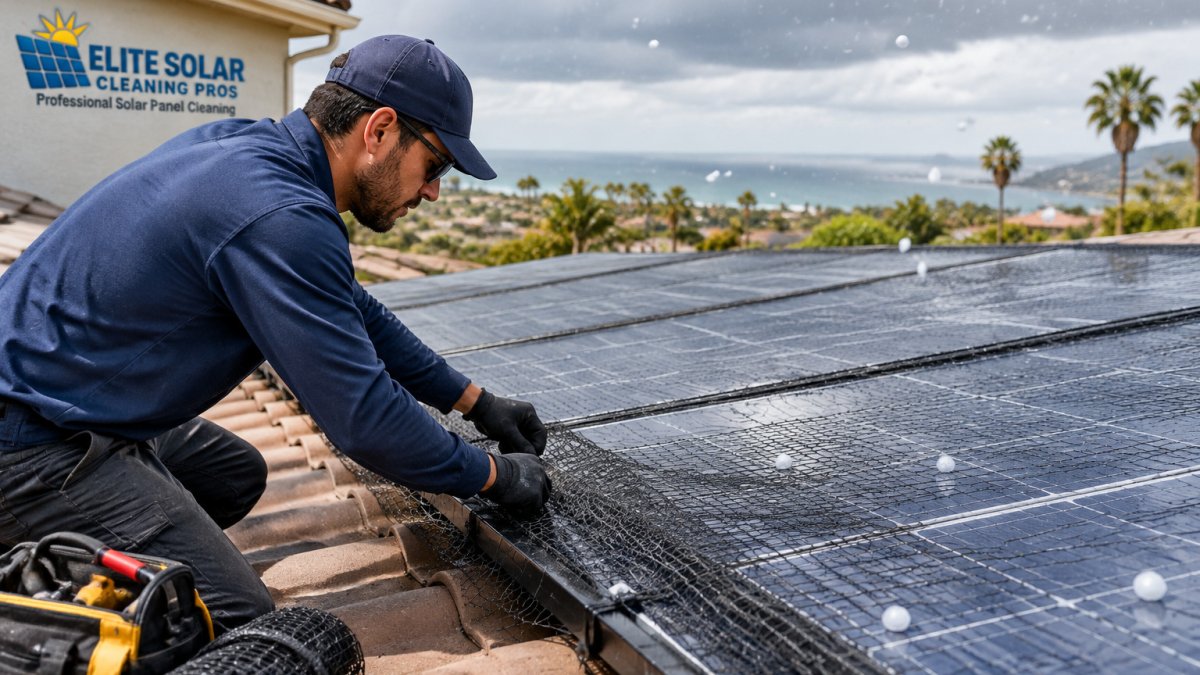
Netting offers the broadest coverage, but it must be engineered for wind loading. A net that tears loose can cause more harm than none at all. Covers work well for quick action, though they only help if you have time to install them. Permanent barriers suit larger systems where ongoing hail risk justifies the investment.
Installing a Solar Panel Protection Cover Safely
Working on a roof is dangerous, and electrical hazards add more risk. Do not climb onto the roof during or right after a storm. If you use a cover, install it from the ground or hire a professional with fall protection. Keep ladders stable, stay away from power lines, and turn off the system at the inverter if you must handle wiring.
Storm Preparation Steps to Take Before Hail Arrives
Follow these steps when a hail forecast appears:
- Check the forecast and watch for severe weather warnings from the National Weather Service.
- Confirm your panel covers or netting are secured and undamaged.
- Trim tree branches that could fall onto the array.
- Move loose items like patio furniture and planters away from the house.
- Photograph your system so you have a baseline record.
- Keep your installer's and insurer's contact details handy.
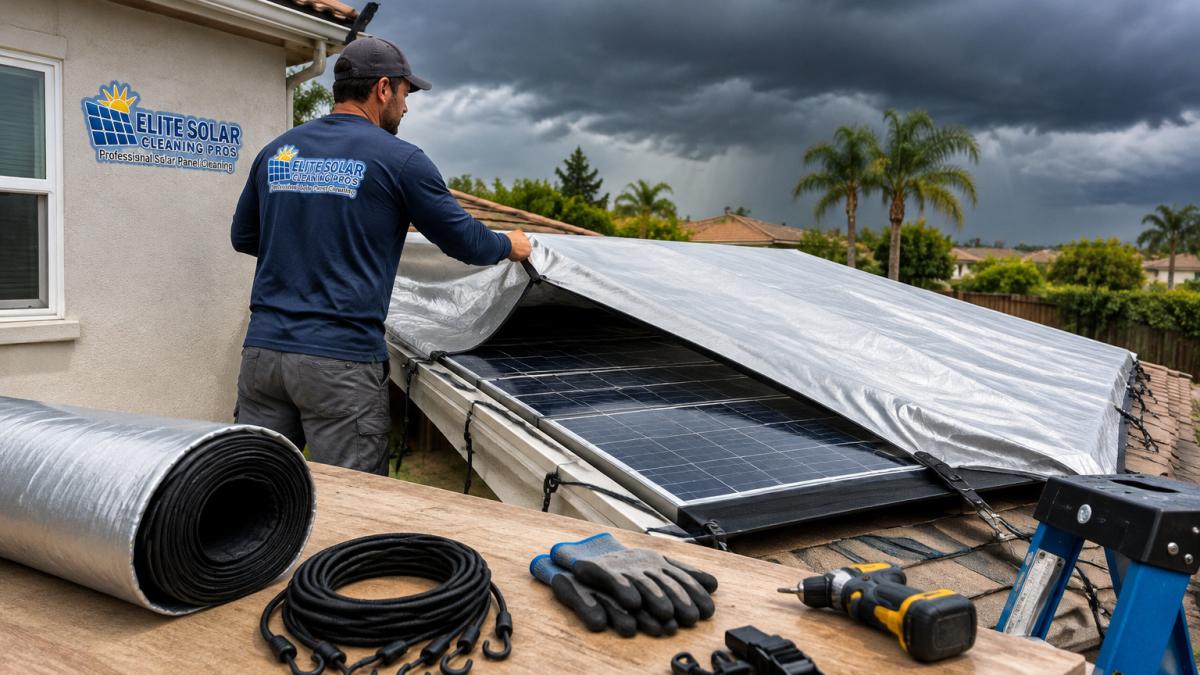
A homeowner in a San Diego backyard securing a lightweight protective cover over a rooftop-adjacent solar array as storm clouds gather overhead.
Regular cleaning also helps your panels perform well before and after storms. For guidance on timing, see our article on how often to clean solar panels in San Diego. For guidance on timing, see our article on how often to clean solar panels in San Diego.
How to Inspect Solar Panels After a Hailstorm
Wait until the storm fully passes and the area is safe. Then follow these steps:
- Look at the array from the ground with binoculars, checking for visible cracks, chips or dislodged panels.
- Compare your monthly production data to previous months. A sudden drop can signal damage.
- Check the inverter display or monitoring app for error codes.
- Call a qualified professional if you see damage. Do not attempt roof access alone. Learn how professional roof access is planned and when panels are cleaned from the ground.
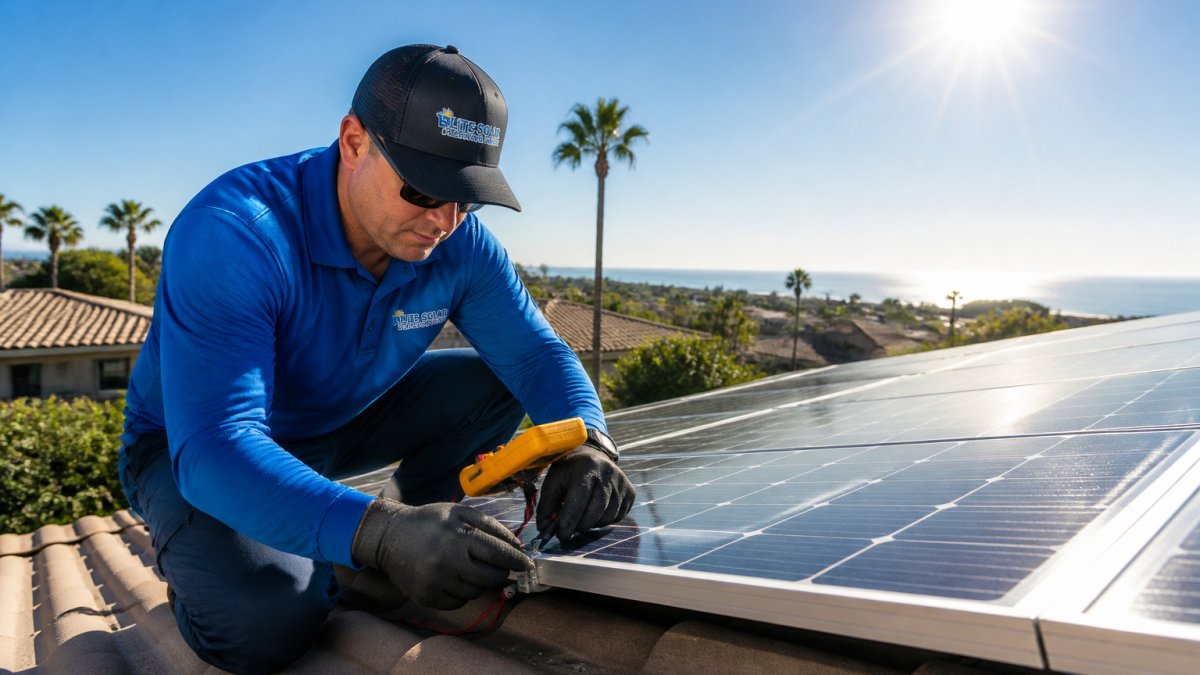
Professional technicians can inspect for microcracks, which often need specialized equipment. For safety guidance on roof access, read our article on solar panel cleaning safety and roof access.
Insurance, Warranty and Documentation Next Steps for Your San Diego System
Document everything after a hailstorm. Take dated photos and keep copies of your installation paperwork and warranty terms. Contact your homeowner's insurer promptly, since many policies have reporting deadlines. Your warranty may cover manufacturing defects but not storm damage, so read the terms carefully. Find out whether cleaning solar panels voids your warranty. For questions about warranties and service, see our answers in the solar panel cleaning FAQs.
Contact the team for a free quote and start protecting your system today.
Frequently Asked Questions
How do you protect solar panels from hail damage?
The most effective protection combines tempered front glass rated for impact, a tilt angle that lets hailstones slide off, and a temporary barrier such as a protective cover or overhead netting when a storm is forecast. Glass thickness and impact certification matter most for new purchases, while netting and covers are practical for existing systems. Pair physical protection with monitoring of your inverter output so you can catch performance loss early.
Can a solar panel withstand hail?
Most modern panels are tested to withstand hail, typically using impact tests that fire ice balls at the module. Standard certifications test against one-inch ice balls, which roughly match golf ball-sized hail, so panels built to that standard generally survive typical storms. Larger hailstones, cracked glass from earlier damage, or poorly secured mounts can still cause failure, so inspect your system after severe weather.
Does hail netting protect solar panels?
Yes, overhead nylon netting can intercept hailstones before they reach the panel surface, reducing impact damage in storms. Netting requires professional installation so the frame and net tension stay secure in wind, and it must be removed or checked after storms to avoid debris buildup. Compare the net opening size and material before purchasing, since trade-offs exist between coverage and airflow.
What should you do if hail damages a solar panel?
Shut down or avoid touching a damaged array until a qualified technician checks it, since cracked glass can create electrical hazards. Photograph the damage, note the storm date and check your inverter data for output drops. Contact your insurer and installer promptly, and keep records of the inspection and repair work for any claim or warranty request.