 how-to
How Can You Extend the Lifespan of Solar Panels?
Last Updated: October 28, 2026
Quick Summary
You can extend the lifespan of solar panels by cleaning them regularly, scheduling annual inspections with monthly monitoring, and protecting them from environmental hazards like micro-cracks and PID. Give the inverter attention too, since it is the part most likely to fail first and often needs replacing once during the system's life.
- Most solar panels carry a 25-year performance warranty, but warranties cover defects, not neglect.
- Clean panels with eco-friendly DI water, and work from the ground with a water-fed pole on steep or high roofs.
- Micro-cracks under a tenth of a millimeter wide can cause hot spots you will never spot from the ground.
- PID can cut system output by 5% to 30% in severe cases and shows as a uniform, gradual decline.
- Most inverters last 10 to 15 years, so one replacement over the system's life is normal.
Table of Contents
- Step 1: Understand What Determines Solar Panel Lifespan
- Step 2: How Often to Clean Solar Panels for Peak Performance
- Step 3: The Best Way to Clean Solar Panels Safely
- Step 4: Choose the Right Solar Panel Cleaning Tools
- Step 5: Schedule Annual Inspections and System Monitoring
- Step 6: Protect Panels from Environmental Hazards and Micro-Cracking
- Step 7: Maintain Inverters and Understand Solar Panel Warranty Coverage
- Step 8: Weigh DIY vs Professional Maintenance and Seasonal Checklists
- Frequently Asked Questions
Step 1: Understand What Determines Solar Panel Lifespan
Most solar panels are built to last 25 to 30 years, but that number assumes the system gets basic care along the way. The panels themselves are the tough part. The parts around them, like the inverter and the wiring, often set the real limit on how long a system keeps producing.
Panels that get regular attention hold their output far better than neglected ones.
Solar panel lifespan is the number of years a photovoltaic system keeps producing usable power at a reasonable efficiency. Three things drive that number:
- The panels: Most carry a 25-year performance warranty.
- The inverter: Often needs replacing once during the system's life.
- The conditions: Dust, bird droppings, tree shading and heat all speed up wear.
A common mistake is assuming the warranty does all the work. It doesn't. Warranties cover defects, not neglect. Keep reading and we'll walk through maintenance steps.
Step 2: How Often to Clean Solar Panels for Peak Performance
The short answer: cleaning frequency depends on the system and its surroundings.
Soiling, which is the buildup of dust, pollen and bird droppings, blocks sunlight before it reaches the cells. A dirty panel still works, just at a lower power output. That lost energy shows up on your bill.
For a detailed breakdown of local conditions and schedules, see our guide on how often to clean solar panels in San Diego.
Step 3: The Best Way to Clean Solar Panels Safely
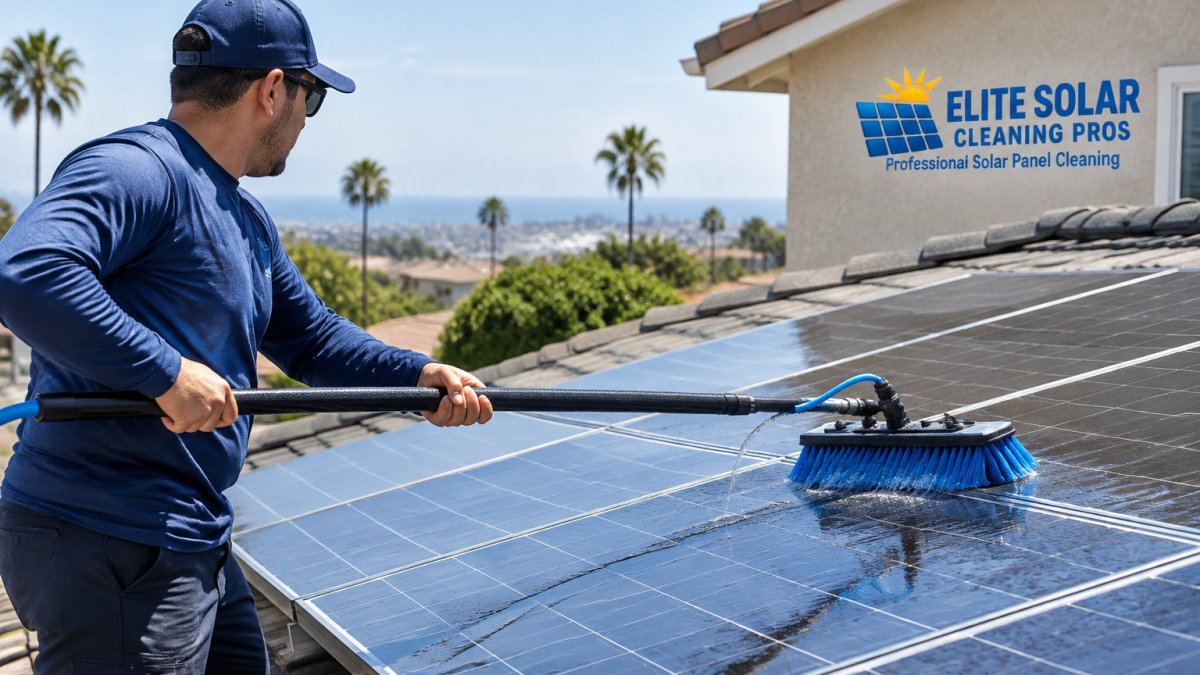
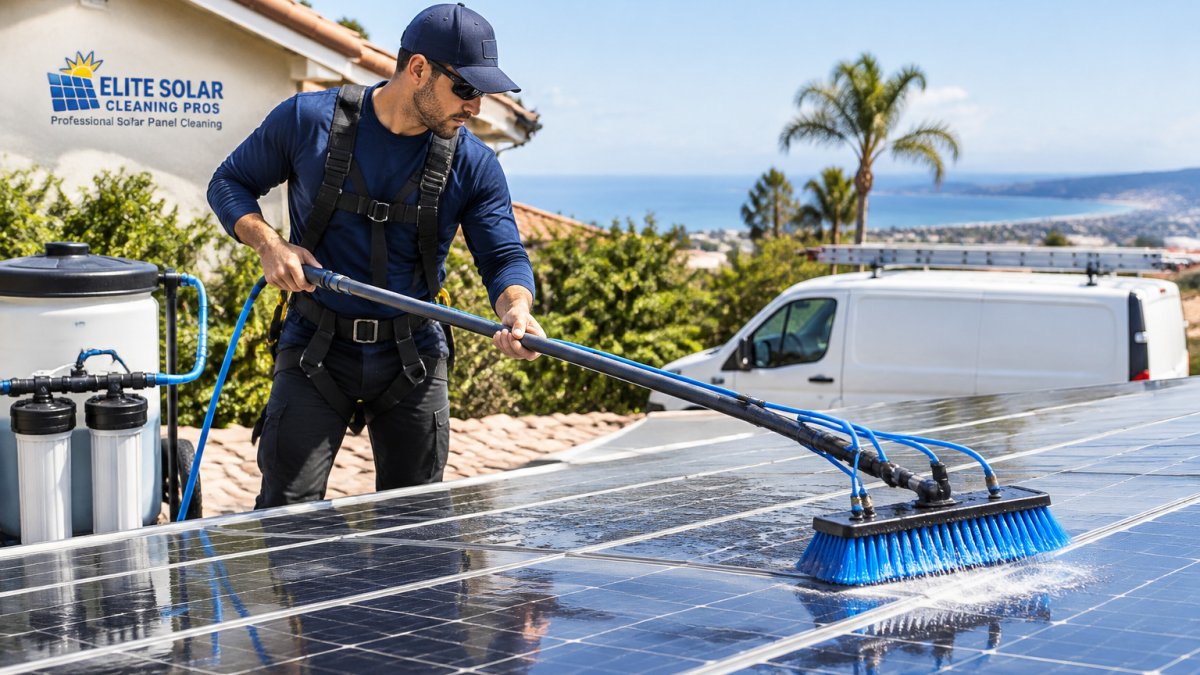
The best way to clean solar panels safely is to use eco-friendly DI water.
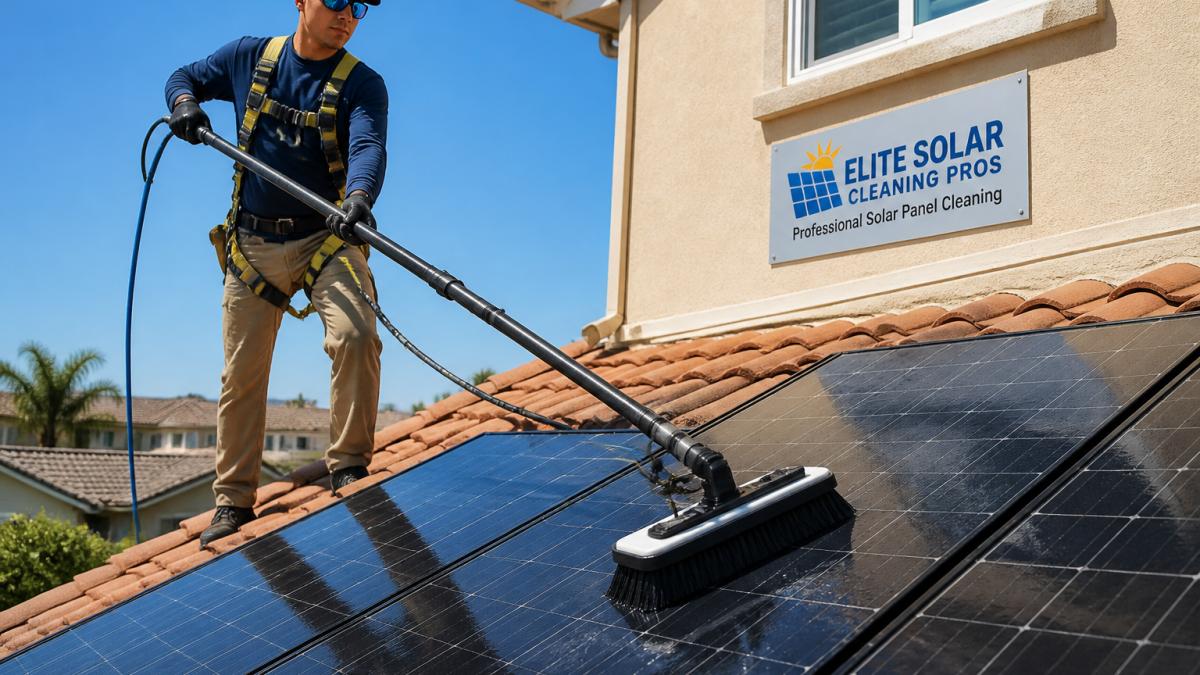
DIY Safety Protocols
If the roof is steep or the panels sit high, work from the ground with a water-fed pole. Our team explains how we plan safe roof access and when we clean from the ground in this guide to solar panel cleaning safety and roof access.
Step 4: Choose the Right Solar Panel Cleaning Tools
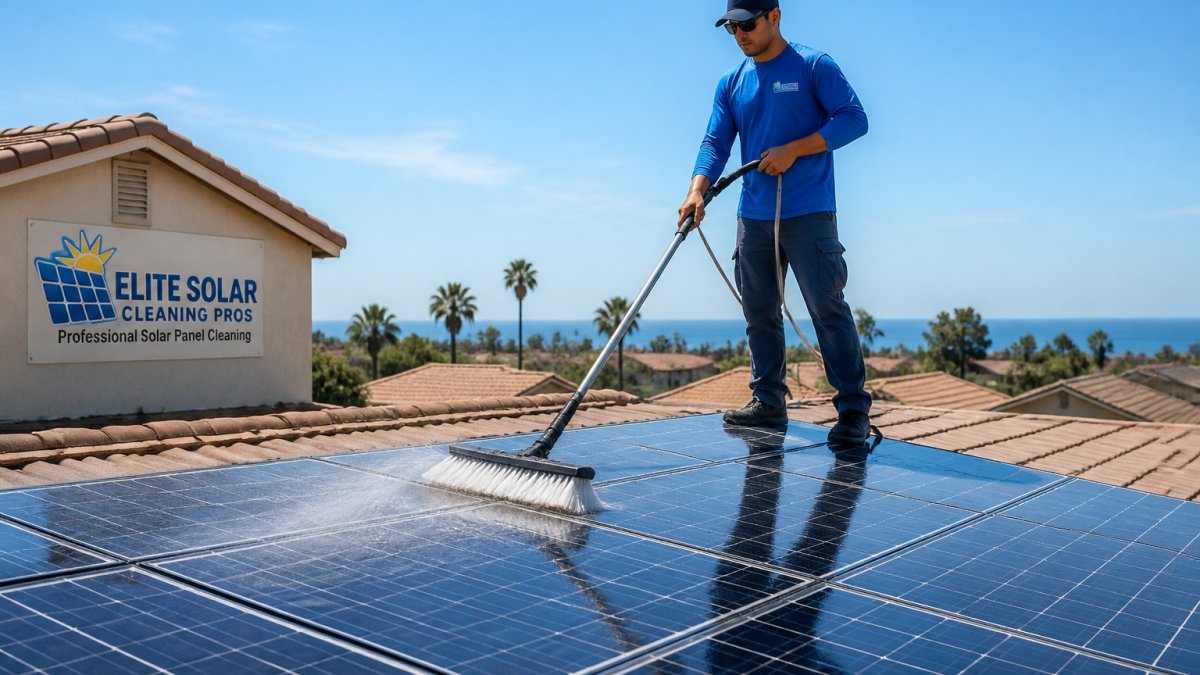
The right solar panel cleaning method matters. Elite Solar Cleaning Pros uses eco-friendly DI water.
We use eco-friendly DI water for solar panel cleaning.
Step 5: Schedule Annual Inspections and System Monitoring
A yearly inspection catches small problems before they become replacement costs. Pair it with monthly monitoring and you'll spot drops in output fast.
Visual Inspection and Damage Detection
Walk the system each season and look for:
- Cracked glass or chipped frames
- Loose mounting hardware
- Corrosion on electrical connections
- Debris piled against the panels
- Animal nests or chewed wiring
Catch these early and repairs stay cheap. Ignore them and roof integrity and wiring both suffer.
Monitoring Software and Performance Ratio
For a full month-by-month and season-by-season list, use our residential solar panel maintenance checklist.
Step 6: Protect Panels from Environmental Hazards and Micro-Cracking
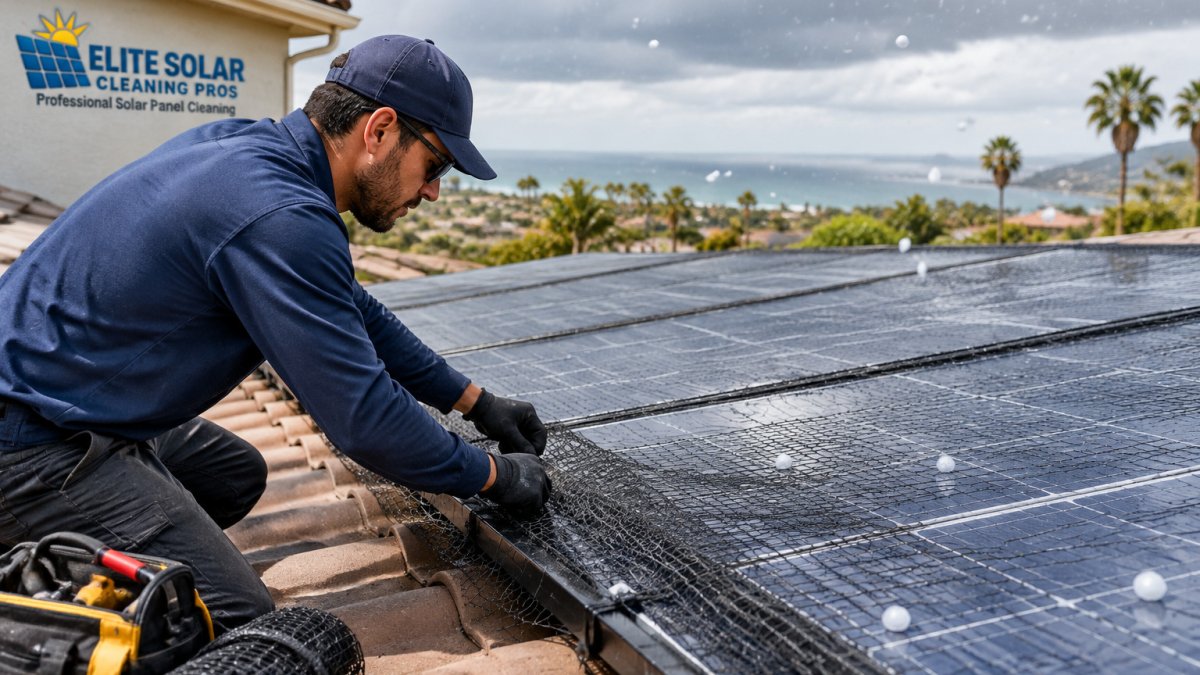
Environmental hazards do more long-term damage than dirt ever will. Hail, falling branches, and thermal stress from rapid temperature swings can all start problems that never show up in a visual inspection. This is where most maintenance guides stop at "trim your trees", the real work is understanding what happens inside the panel.
Micro-Cracks: The Damage You Can't See
Micro-cracks are hairline fractures in the silicon cells, often under a tenth of a millimeter wide. They usually start from three causes:
- Mechanical stress: hail impacts, falling branches, or someone stepping on a panel during installation or roof work.
- Thermal cycling: the panel expands in afternoon heat and contracts at night. Over thousands of cycles, solder joints and cell edges fatigue.
- Improper handling: flexing a panel during transport or mounting stresses the cells even when the glass looks fine.
A micro-crack doesn't kill a cell outright. It creates a high-resistance path, so the cell produces less current and heats up more. That heat accelerates the crack and can eventually burn through the backsheet, a failure mode installers call a "hot spot." Because the glass stays intact, you will never spot this from the ground.
PID: The Slow Voltage-Driven Loss
Potential Induced Degradation (PID) is a different mechanism entirely. It's an electrochemical reaction driven by the voltage difference between the solar cells and the grounded frame. Moisture and heat accelerate it. Over years, sodium ions migrate into the cells and shunt them, and the system's output drops steadily, often 5% to 30% in severe cases, according to patterns commonly reported by module manufacturers and testing labs.
PID shows up as a uniform, gradual decline across the whole array rather than one bad panel. That's why monitoring matters: a slow slide in performance ratio over multiple seasons is a PID signature, not a soiling problem.
How to Guard Against Both
If you want to see how we fold thermal imaging and crack detection into a routine service visit, read our guide to solar panel inspection and diagnostic services.
Step 7: Maintain Inverters and Understand Solar Panel Warranty Coverage
The inverter is the part most likely to fail first, so give it attention. Most inverters last 10 to 15 years, meaning one replacement over the system's life is normal.
Inverter Maintenance and Replacement
Keep the inverter in shade and free of dust. Check its fans and vents. Watch for voltage fluctuations or error codes, and call a pro if they appear. A failing inverter drags down the whole system, so don't wait.
What Warranty Coverage Really Covers
Watch out: skipping maintenance can put your coverage at risk. We break down exactly how in this guide on whether dirty solar panels can void your warranty.
Step 8: Weigh DIY vs Professional Maintenance and Seasonal Checklists
DIY cleaning works for simple, ground-level systems. Professional cleaning makes more sense for steep roofs, large arrays, or anyone who wants the job done safely and thoroughly. For an honest side-by-side of DIY vs professional solar panel cleaning, see our full comparison. But "it depends" isn't a decision framework. Here's how to actually choose.
Cost-Benefit Analysis of Professional Cleaning
Run the math honestly, with real inputs:
A simple rule of thumb many installers use: if your array is ground-mounted or on a single-story, low-pitch roof, DIY is reasonable. If it's two stories or steeper, if the array is large, or if you can't safely reach every panel from the ground with a pole, hire a pro.
When to Call a Professional, The Triggers
Don't wait for a schedule. Call a pro when any of these are true:
- Output drops noticeably and cleaning doesn't restore it.
- You see cracked glass, discolored cells, or burn marks.
- The inverter throws error codes or the monitoring app shows a sudden dip.
- A storm has passed through and you suspect impact damage.
- Your roof pitch or height makes safe access questionable.
- Your warranty requires documented professional maintenance.
Seasonal Maintenance Checklist
Use this as a calendar, not a to-do list you ignore:
| Season | Task | Frequency |
|---|---|---|
| Spring | Full wash to clear pollen and winter debris; inspect mounting hardware | Once |
| Summer | Check for heat stress and shading; monitor output during peak sun | Monthly |
| Fall | Clear leaves and debris; inspect after storms; check wiring connections | Once |
| Winter | Verify mounts and wiring; monitor output on clear days; watch for snow load | Monthly |
Frequently Asked Questions
What is the average lifespan of solar panels?
Most solar panels last 25 to 30 years, with many continuing to produce usable power beyond that. Their degradation rate is typically around 0.5% per year, meaning output drops gradually. Proper maintenance, including regular cleaning and annual inspections, helps you stay near the higher end of that range and protects your investment.
How often should solar panels be cleaned?
In most climates, cleaning every six to twelve months is enough. Areas with heavy dust, bird droppings, or tree shading may need quarterly cleaning. Check your system's performance ratio; a sudden drop often signals soiling. Professional services can assess your specific location and recommend a schedule that balances cost and energy efficiency.
Can improper cleaning void a solar panel warranty?
Yes, many manufacturers specify that damage from abrasive materials or high-pressure washing can void solar panel warranty coverage. Always use soft brushes, DI water, and avoid harsh chemicals. If you're unsure, hire a licensed professional. Keeping receipts for professional cleaning also helps document proper maintenance if a warranty claim arises.
Is it safe to clean solar panels yourself?
Elite Solar Cleaning Pros uses eco-friendly DI water for professional solar panel cleaning.
Extending the life of your system comes down to steady, simple care: clean panels, checked wiring, and a watchful eye on output. That's where Elite Solar Cleaning Pros comes in. We use eco-friendly deionized water cleaning, we're licensed and insured, and our service can restore up to 30% of your energy output. Get started with Elite Solar Cleaning Pros and protect your solar investment for the long haul.