 how-to
Best Time of Year to Clean Solar Panels
Table of Contents
- Why Timing Your Solar Panel Cleaning Matters
- The Best Time of Year to Clean Solar Panels: A Season-by-Season Guide
- How Often Should Solar Panels Be Cleaned?
- Signs Solar Panels Need Cleaning (Don't Wait for the Calendar)
- The Best Time of Day to Clean Solar Panels
- How to Clean Solar Panels Safely: Equipment and Step-by-Step
- How Climate and Location Change Your Cleaning Schedule
- Conclusion: Build a Cleaning Schedule That Protects Your Output
- Frequently Asked Questions
Last Updated: October 13, 2026
Why Timing Your Solar Panel Cleaning Matters
The best time of year to clean solar panels is late spring and early fall for most homes, plus extra cleanings after pollen season or heavy dust events.
Solar panel cleaning removes dust, pollen, bird droppings, and other debris from panel glass so sunlight reaches the cells underneath.
Cleaning at the right time and frequency keeps production where it should be.
The Best Time of Year to Clean Solar Panels: A Season-by-Season Guide
Late spring and early fall are the two default windows in most climates: spring clears winter grime and pollen before summer's peak sun, and early fall removes summer dust before winter's shorter, cloudier days. But the calendar alone is a weak guide, because pollen bursts, wildfire smoke, monsoon dust, leaf drop, and snowmelt arrive on regional clocks. Use the framework below, then shift the dates to your local pattern.
Why the Season Matters Mechanically
Soiling is not uniform. Pollen is sticky and waxy, bonding to glass and resisting a light rinse. Dust rinses easily but returns fast. Wildfire ash is fine and alkaline, and smears if scrubbed dry. Bird droppings are acidic and can etch glass if left through a hot week. Each peaks in a different season, so a single annual cleaning misses the point.
Spring: Pollen and Dust Season
Spring is prime cleaning season for one reason: pollen. Trees, grasses, and flowers release it for weeks, and a yellow-green film can coat glass in days.
- Southeast and Mid-Atlantic: tree pollen peaks from late February through April, with grass pollen in May and June. Clean after the tree pollen wave, then again after grass pollen if you live near open fields.
- Southwest and desert: spring winds lift dust before the monsoon. Clean in early spring, then again after the first monsoon storms re-deposit grit.
- Mountain West and Plains: pollen is lighter, but spring wind-driven dust is heavy. A rinse after the windiest stretch beats a fixed date.
Late Summer and Fall: Dust, Debris, and Bird Droppings
Late summer brings dust, dry air, falling leaves, and more bird droppings as birds perch on warm panels.
- West Coast wildfire zones: ash and smoke can coat panels for weeks during fire season, typically late summer into fall. Clean only after skies clear and ash settles, and rinse gently, dry ash smears.
- Desert Southwest: the monsoon (roughly June through September) drops dust-laden rain that leaves spotting. Clean after it ends.
- Northeast and Midwest: leaf drop is the main fall event. Clean after most leaves fall but before the first hard freeze.
Clean in early fall before the sun angle drops, so your solar array enters winter clean. Skip this window and grime sits on the glass for months.
Winter: Rain, Snow, and What to Skip
Winter is usually a skip season: short days mean less sun, and freezing temps make water dangerous on a roof.
- Snowy regions: let snow slide off on its own. Never chip at ice or packed snow on the glass. Clean in late spring once melt is done and pollen begins.
- Mild coastal climates: winter rain can rinse light dust, but rarely removes sticky grime or droppings. A short shower is not a cleaning plan.
- Sun Belt: winter is often the best production season, so a pre-winter cleaning in late fall pays off more than a mid-winter one.
A Regional Timing Cheat Sheet
| Region | Primary Cleaning Window | Secondary Window |
|---|---|---|
| Southeast / Mid-Atlantic | After tree pollen (late spring) | After grass pollen (early summer) |
| Desert Southwest | After monsoon (early fall) | Early spring before winds |
| West Coast wildfire zones | After fire season clears (fall) | After pollen (late spring) |
| Mountain West / Plains | After spring winds | Before winter |
| Pacific Northwest | After pollen (early summer) | Early fall before rains |
| Northeast / Midwest | After leaf drop (late fall) | After pollen (late spring) |
Treat this as a starting point, not a rule. The most reliable signal is your own production data: if output dips without a weather explanation, soiling is the likely cause.
How Often Should Solar Panels Be Cleaned?
The short answer: every 6 to 12 months for most homes, and every 3 to 4 months in dusty or high-pollen areas. Once a year is the floor, not the goal, for most solar panel owners.
Here is a simple schedule:
- Coastal homes with mild weather: once or twice a year
- Inland and dry climates: every 3 to 4 months
- Near farms, deserts, or construction: every 3 to 4 months
A cleaning schedule beats guesswork: set it by season, then adjust for an unusual dust or pollen year.
Signs Solar Panels Need Cleaning (Don't Wait for the Calendar)
Your system usually tells you before the calendar does. Watch for these signals:
- Visible dust, pollen film, or spotting on the glass
- Bird droppings on panels or the roof around them
- A drop in your daily or monthly power output
What most guides miss is that a dirty panel can look clean from the ground. Check from a safe angle or your monitoring app: a slow slide in production rate is the clearest sign that buildup is costing you money.
The Best Time of Day to Clean Solar Panels
The best time of day to clean solar panels is early morning or late afternoon, when panels are cool and the sun is weak. Cleaning hot glass in full sun is the most common mistake we see.
Why timing matters:
- Cool glass is less likely to crack from a sudden temperature change
- Water dries slower in mild temps, so it leaves fewer spots
- You avoid the hottest, most dangerous hours on the roof
How to Clean Solar Panels Safely: Equipment and Step-by-Step
Safe cleaning comes down to three things: the right tools, plain water, and gentle pressure. Harsh chemicals and abrasive brushes can scratch glass or void your warranty.
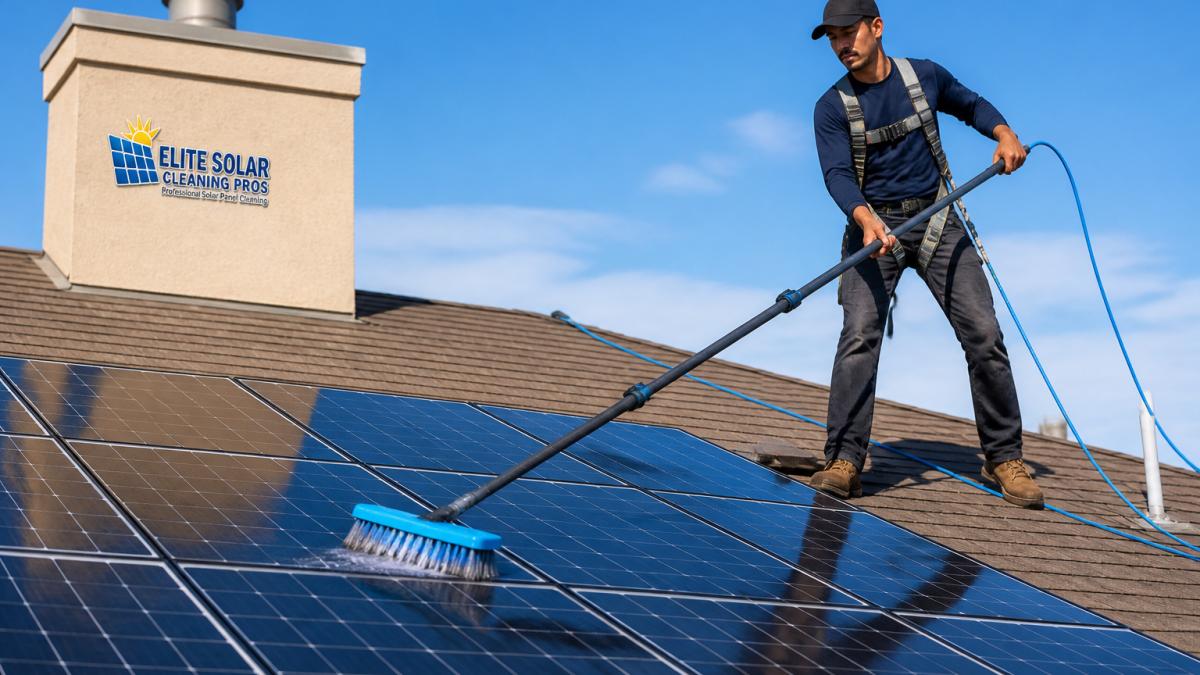
Here is the step-by-step method we use:
- Turn off the system if your manual says to, and work only in cool conditions.
- Rinse loose dust off the glass with a gentle spray. Never scrub dry grit, or you will scratch the surface.
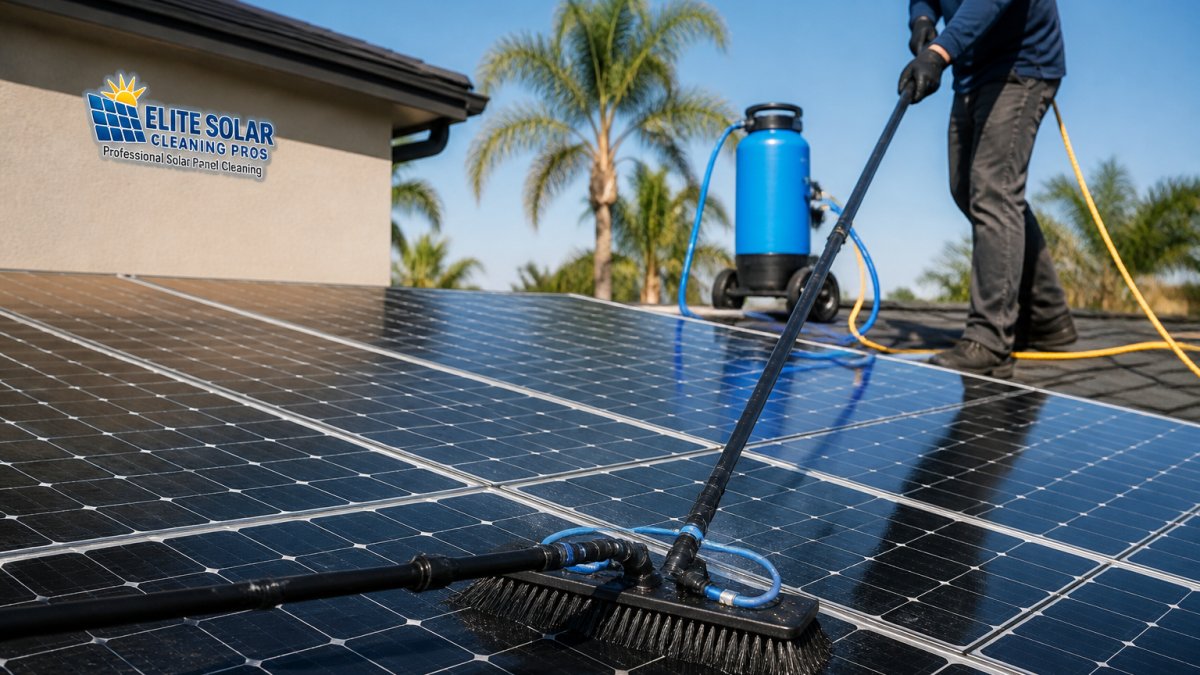
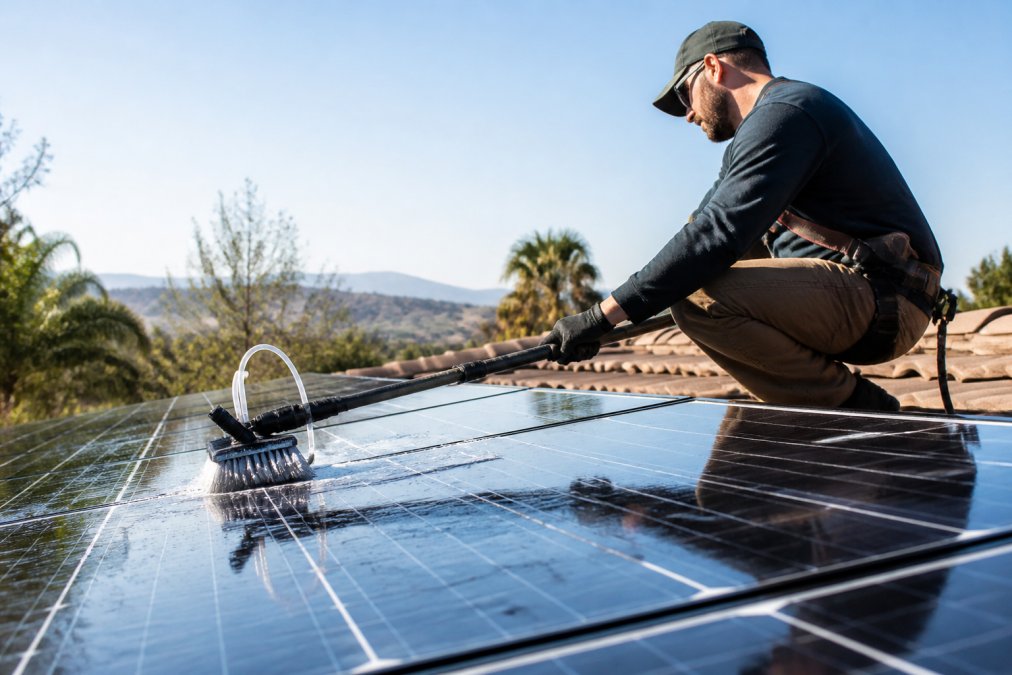
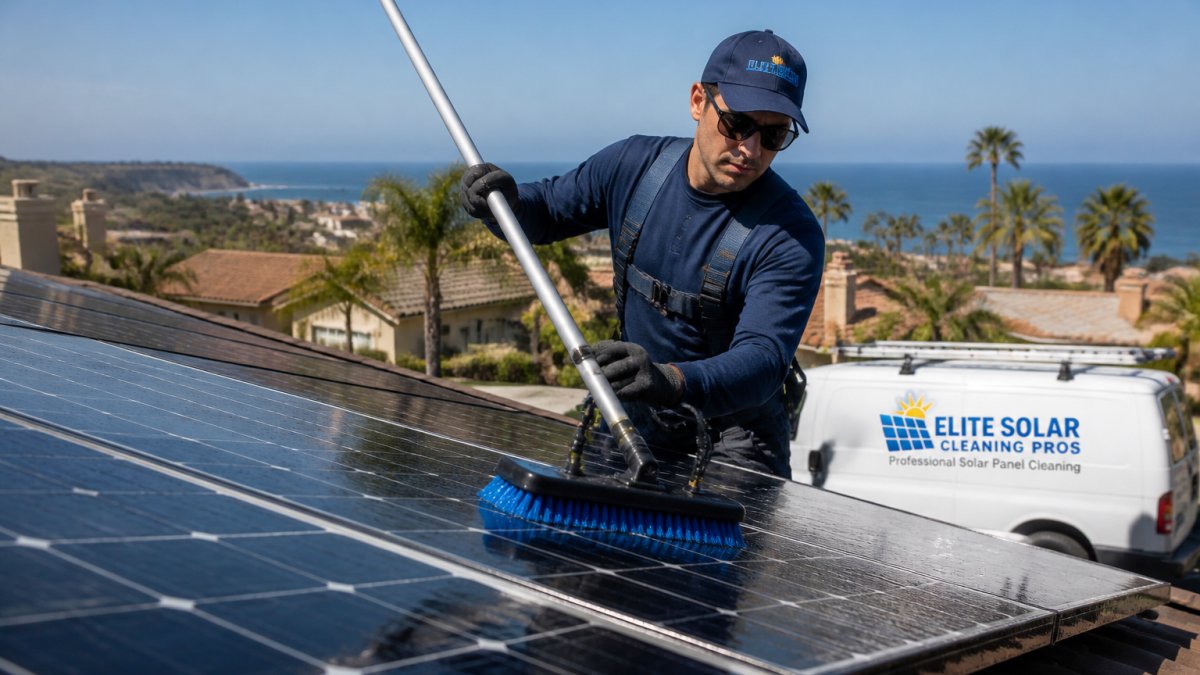
- Wash with soft tools. Use a soft-bristle brush or microfiber pad on a water-fed pole. Skip abrasive pads and scouring sponges.
- Use plain water, not soap. Soap leaves a film that attracts more dust.
- Rinse again from the top down so dirty water runs off.
- Squeegee or let it air dry in the shade to avoid water spots.
- Check your output over the next few days to confirm the gain.
For hard water and stubborn residue, deionized water is the fix. It dries without leaving mineral spots, which is why we use it on every job.
Safety, Warranties, and When Not to DIY
Stay off the roof if it is wet, steep, or above your comfort level. Falls are the real risk, not the panels.
Check your warranty before you clean. Some makers require certain methods, and a DIY mistake can void coverage. If your panels are old, cracked, or under a workmanship warranty, call a pro.
How Climate and Location Change Your Cleaning Schedule
Climate drives the schedule more than the calendar does: a dry, dusty area needs more cleanings than a wet, mild one. The more useful question is "what is landing on my panels, and how fast is it costing me output?" That reframes the schedule as triggers rather than a fixed number.
The Three Triggers That Beat a Fixed Calendar
Most guides say clean every 6 to 12 months. That default ignores the two variables that matter most: how fast your local environment soils panels, and how sensitive your system is to that soiling.
- Visible soiling. Check panels from a safe angle in low-angle morning or evening light. A dull, hazy film, visible spotting, or droppings means it is time. A panel that looks clean from the ground can still carry a film that cuts output.
- Local conditions. Dust storms, wildfire smoke, pollen bursts, construction nearby, agricultural activity, and salt spray all accelerate soiling. After any of these events, plan a cleaning once conditions settle.
- Production trend. Your monitoring app is the most objective signal. A gradual decline in daily or monthly output not explained by weather, shading, or equipment changes usually points to soiling. Compare the same month year over year, or the same week across seasons, to isolate the trend.
When two of the three triggers fire, clean. When none fire, a fixed annual cleaning is usually enough.
Matching the Schedule to Your Conditions
- Desert and dusty areas: every 3 to 4 months, plus after dust storms. Dry deposition is steady, and a single storm can undo months of cleanliness.
- Farms and open land: every 3 to 4 months during planting and harvest. Pollen, chaff, and soil dust all peak together.
- Coastal areas: once or twice a year, plus after salt spray events. Salt leaves a conductive film that can also affect hardware over time.
Why Rain Is Not a Cleaning Plan
A light shower rinses loose dust but leaves sticky grime, pollen residue, and droppings behind. Rain also arrives with its own contaminants, dust from upwind dry areas, smoke particles, or minerals that dry into spots. Rely on rain and your power output slides. Even heavy, sustained rain does not remove bonded soiling.
A Simple Decision Framework
Ask three questions before scheduling a cleaning:
- Has anything unusual happened locally, a storm, a fire, a pollen burst, nearby construction?
- Does the glass look dull, spotted, or streaked from a safe viewing angle?
- Has output drifted down without a weather or equipment explanation?
Two or more "yes" answers mean clean now. One "yes" means schedule within the next few weeks. Zero means you are on track with your normal cadence.
If you want a system that fits your roof, the U.S. Department of Energy's guide to home solar explains how soiling and shade affect output. For air-quality and dust events that dirty panels fast, AirNow's local air quality reports are worth checking.
| Season | Best Action | Watch For |
|---|---|---|
| Spring | Clean after pollen ends | Yellow pollen film |
| Late summer | Rinse off dust | Dry, dusty air |
| Fall | Clean before sun drops | Leaves, bird droppings |
| Winter | Skip unless needed | Snow, ice, short days |
Conclusion: Build a Cleaning Schedule That Protects Your Output
Soiling is slow and quiet, which is why a set schedule beats cleaning on a whim. Build your plan around spring and early fall, then add cleanings when your climate or output tells you to.
Elite Solar Cleaning Pros makes that easy for San Diego homeowners.
Get started with Elite Solar Cleaning Pros and keep your panels producing at their best. Request a free quote today.
Frequently Asked Questions
How do I know if my solar panels need cleaning?
Watch for visible dust, pollen, bird droppings, or a film of grime on the glass. A clearer signal is a drop in your system's energy production that does not match the weather. If your inverter app shows output falling below what similar sunny days used to produce, buildup is likely the cause. Many homeowners notice the difference most after pollen season or a long dry stretch. When in doubt, a quick visual check from ground level tells you plenty.
Can I clean solar panels in hot weather?
You can, but not at the hottest part of the day. Cleaning panels when the glass is hot can cause water to evaporate too fast, leaving streaks and mineral spots behind. It can also create a thermal shock risk if cold water hits very hot glass. The best time of day to clean solar panels is early morning or late afternoon when the surface is cool and the sun is less intense. This timing also makes the work safer for anyone on the roof.
Should solar panels be cleaned after rain?
Usually not. A short rain shower often leaves dust and pollen behind, and it can even make things worse by turning dry dirt into a muddy film that dries in place. A heavy, sustained rain does rinse away some loose debris, but it rarely removes bird droppings or baked-on grime. After a big storm, check your panels visually. If they still look dirty or your production has not recovered, a proper cleaning is the better move.
How often should solar panels be cleaned in a dusty or dry climate?
In dry, dusty areas, plan on cleaning every 3 to 4 months. Dust, sand, and pollen build up faster when there is little rain to wash them away. In milder climates with regular rainfall, every 6 to 12 months is often enough. Homes near farms, construction, or busy roads may need more frequent cleaning because of extra airborne debris. Track your energy production between cleanings to fine-tune the schedule for your specific system.